
Electronic Woven Glass Fabric in PCB Substrates: Material Science and Selection Criteria
Electronic woven glass fabric is a foundational reinforcement material in Copper Clad Laminates (CCL) and Printed Circuit Boards (PCB). Alongside
Are you planning to buy an ESP32 Cheap Yellow Display (CYD) for your next project, but are unsure which version to choose? You're not alone. The popular ESP32-2432S028R—affectionately known as the "Cheap Yellow Display"—has spawned multiple variants, each with its own quirks, features, and ideal use cases. This guide cuts through the confusion, helping you understand the differences, choose the right model, and buy with confidence.
The original CYD, popularized by the maker community and documented in the witnessmenow GitHub repository , combined an ESP32 with a 2.8-inch touchscreen, RGB LED, LDR, and microSD slot—all for an unbeatable price. Its success has led to an explosion of similar boards from multiple manufacturers.
Why this matters for buyers: Not all CYDs are created equal. Choosing the wrong variant could mean missing features, compatibility issues, or a board that doesn't fit your project's needs.
Recent months have seen the emergence of significantly different CYD patterns. Here's what you need to know:
| Feature | Original CYD (ESP32-2432S028R) | New Variants |
|---|---|---|
| Display Controller | ILI9341 (typically) | ILI9341 or ST7789 |
| Ambient Light Sensor (LDR) | Present (GPIO34) | Often removed |
| Backlight Control | Basic | PWM-controllable in some |
| Battery Support | None | Some models support LiPo |
| Button Placement | Standard | Repositioned (cases may not fit) |
| Manufacturers | Sunton (original) | Guiton, Freenove, and others |
One of the most significant differences is the display driver. New variants may use ST7789 instead of the traditional ILI9341. This affects:
Which libraries you need (TFT_eSPI supports both, but the configuration differs)
Color depth and performance characteristics
Pin assignments
Many new variants omit the ambient light sensor entirely. While this frees up a GPIO pin (GPIO34), it means:
No automatic backlight adjustment
You'll need external light sensing if required
One less thing to configure—but also one less feature
Some new models add lithium battery charging circuitry, opening possibilities for:
Portable, battery-operated projects
Remote sensors without USB power
Wearable or handheld devices
Buttons have been relocated on some variants. This seemingly minor change means:
3D-printed cases designed for original CYDs may not fit
Your enclosure plans need verification
Always check button positions before ordering cases
Display controller mentioned: "ILI9341" or "ST7789"
LDR presence: Some listings specify "with light sensor"
Battery support: Look for "LiPo charging" or "battery connector."
Photos: Examine button placement and board layout
| Project Type | Recommended Variant | Why |
|---|---|---|
| Home Assistant Dashboard | Original CYD with LDR | Auto-brightness is nice for always-on displays |
| Battery-Powered Sensor | New variant with LiPo support | Built-in charging simplifies design |
| Portable Device | Any variant + external battery | Choose based on other features |
| Enclosure Required | Original CYD | Proven case designs available |
| Custom Library Development | Original ILI9341 | Best community support and documentation |
| Experimenting with Graphics | Either | Both work with LVGL and TFT_eSPI |
Buy from reputable sellers with good feedback. The official esp32s.com store is a safe bet.
Check return policies—just in case you receive an unexpected variant.
Read recent reviews to see what other buyers received recently.
Consider bundles—3-packs can be excellent value for prototyping.
Document your board—once received, note the display controller and test all features.
The emergence of multiple variants is both exciting and challenging. On one hand, we get battery support, PWM backlight control, and more choices. On the other hand, fragmentation threatens the "works out of the box" experience that made the original CYD so popular.
The community is adapting. Libraries like TFT_eSPI support both ILI9341 and ST7789. ESPHome configurations can be adjusted. But as a buyer, you need to be informed.
The Cheap Yellow Display ecosystem is evolving rapidly. What was once a single board is now a family of devices with different strengths. By understanding the variants—ILI9341 vs. ST7789, LDR vs. no LDR, battery support vs. USB-only—you can choose the perfect board for your specific project and avoid unpleasant surprises.
Ready to start building? Pick your variant and dive in—the maker community is here to help!
======================================
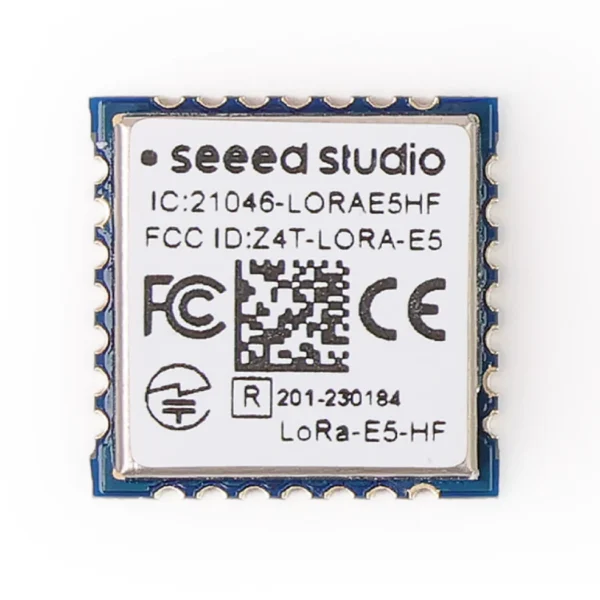 Lora Module 868mhz 915mhz Receiver and Transmitter- Wio E5 Wireless Module(Bulk &Tape Reel)-STM32WLE5JC,ARM Cortex-M4 and SX126x
$15.90
Lora Module 868mhz 915mhz Receiver and Transmitter- Wio E5 Wireless Module(Bulk &Tape Reel)-STM32WLE5JC,ARM Cortex-M4 and SX126x
$15.90
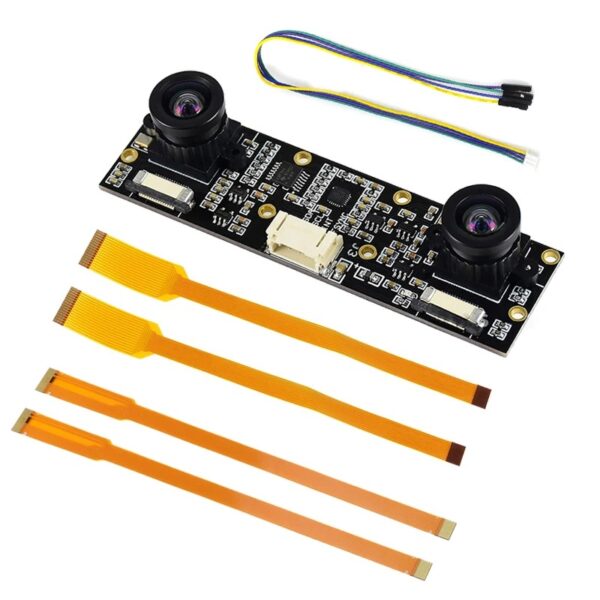 Jetson Nano Camera 8MP IMX219 Binocular Camera Stereo Vision Depth Vision Stereo Camera for Raspberry Pi 5 CM4 Orin
$47.90
Jetson Nano Camera 8MP IMX219 Binocular Camera Stereo Vision Depth Vision Stereo Camera for Raspberry Pi 5 CM4 Orin
$47.90
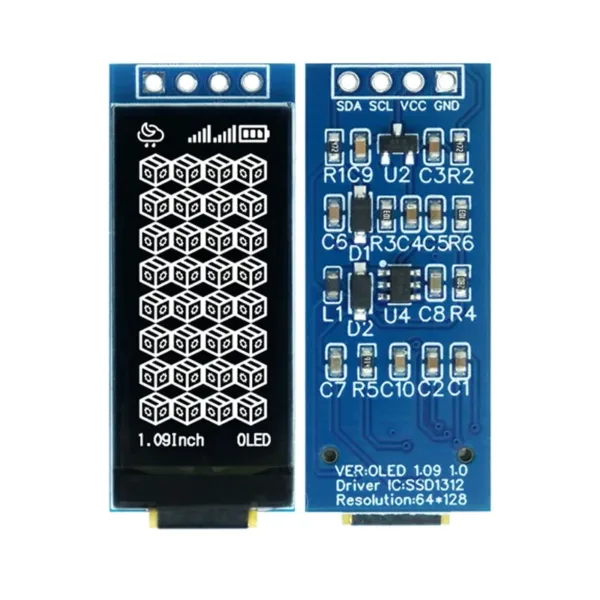 1.09 Inch 128x64 White OLED Display Module SSD1312 Driver I2C 4-Pin Interface Low Power Consumption Wide Viewing Angle
 Stock PXDNGL01TOBO1 EVAL DONGLE USB password lock PX-DNGL
$258.90
Stock PXDNGL01TOBO1 EVAL DONGLE USB password lock PX-DNGL
$258.90
 Grove PN532 NFC Module WIth NFC Antenna 13.56MHz Contactless Communication Support ISO14443 Type A and Type B protocols I2C UART
$34.90
Grove PN532 NFC Module WIth NFC Antenna 13.56MHz Contactless Communication Support ISO14443 Type A and Type B protocols I2C UART
$34.90
Electronic woven glass fabric is a foundational reinforcement material in Copper Clad Laminates (CCL) and Printed Circuit Boards (PCB). Alongside
The rapid advancement of humanoid and autonomous robots has shifted the engineering bottleneck from mechanical actuators to the central computational
In automotive cockpit system-on-chip (SoC) selection, a critical gap often exists between marketing materials and engineering reality. Planning parameters, AIoT
Theoretical ESD protection design—placing clamps, sizing diodes, and optimizing RC trigger networks—addresses how a chip should handle electrostatic discharge. However,
Component selection in aerospace and high-reliability electronics frequently involves conflicting terminologies. A supplier may claim a device is "space-grade," procurement
In high-reliability electronics manufacturing, visual inspection is not a subjective assessment of aesthetics. It is a rigorous evaluation of metallurgical
No account yet?
Create an Account