In automotive cockpit system-on-chip (SoC) selection, a critical gap often exists between marketing materials and engineering reality. Planning parameters, AIoT (Artificial Intelligence of Things) specifications, and verified automotive-grade evidence represent three entirely different levels of confidence.
Relying on unverified roadmap parameters or conflating commercial AIoT specs with automotive requirements is a primary cause of project delays, redesigns, and qualification failures. This document provides a rigorous, evidence-based framework for evaluating Rockchip cockpit SoCs (RK3588M, RK3576M, RK3572, RK3568M, RK3358M, and the unreleased RK3688M), focusing strictly on what can be legally and technically committed to a vehicle Bill of Materials (BOM).
1. The Evidence Hierarchy: What Belongs in the BOM
Vehicle program nomination, Design Validation (DV), Product Validation (PV), EMC testing, and functional safety certification must be built exclusively on formal automotive-grade part numbers, signed datasheets, PPAP (Production Part Approval Process) commitments, and proven Tier 1 mass-production track records.
- Mass-Production Ready: RK3588M. Supported by public mass-production announcements and a complete capability profile.
- Customer Sampling Phase: RK3576M. Requires formal datasheet closure and automotive-specific validation before nomination.
- Cost-Optimized Mature: RK3568M / RK3358M. Suitable for cost-reduction in central control displays, Around View Monitor (AVM), and digital instrument clusters.
- Under Development: RK3688M / RK3668M. Do not write into current vehicle BOMs. These remain in the R&D phase.
Executive Summary: For immediate mass production, RK3588M is the viable Rockchip candidate. For future central computing architectures, parallel Proof of Concept (PoC) evaluations with Qualcomm, MediaTek, or dedicated automotive silicon vendors are recommended. RK3688M should be tracked for roadmap purposes only, with zero delivery commitments.
2. Resolving Specification Discrepancies
Engineers must reconcile conflicting public data before locking architectural requirements.
- RK3588M: 100K vs. 94K DMIPS: Early 2024 materials cited 100K DMIPS, while 2026 official mass-production communications cite 94K DMIPS. This likely reflects the difference between peak theoretical CPU configuration and validated typical mass-production configurations under Android/Hypervisor load. Engineering Action: Do not contractually guarantee 100K DMIPS. Specify acceptance criteria based on measured DMIPS at the target frequency under typical system load and power constraints.
- RK3576M: 4 TOPS vs. 6 TOPS: Official 2023 automotive roadmaps positioned the RK3576M at 60K DMIPS and 4 TOPS. However, the commercial AIoT product page for the non-automotive RK3576 lists 6 TOPS. Conflating AIoT specs with automotive-grade requirements is a frequent and costly error. Engineering Action: Baseline architecture planning on 4 TOPS / 60K DMIPS. Treat 6 TOPS as pending verification via a signed automotive datasheet.
- Market Rumors vs. Official Disclosures: Claims of massive adoption by specific OEMs (e.g., BYD) often originate from teardowns or supply chain media, lacking joint official announcements from the silicon vendor, OEM, or Tier 1. Distinguish between "cumulative company-wide shipments" (which include AIoT and audio chips) and actual cockpit SoC nominations.
3. Product Matrix and Strategic Positioning
Critical Warning: The RK3588M is a capable chip, but labeling it a "direct replacement for the Qualcomm SA8295P" is technically inaccurate and risks project failure. The SA8295P (5nm, ~220K DMIPS, ~30 TOPS, ~3000 GFLOPS) operates in a different performance tier. The RK3588M excels in providing mature multi-screen support, AVM, DMS, and lightweight edge AI (0.5–3B parameter models) at a highly competitive system cost. It is not designed for sustained high-load 3D HMI rendering, 7B+ resident models, or L3 cockpit-driving fusion.
4. The RK3576M: Mandating Datasheet Closure
The RK3576M targets the mid-range market, but its automotive qualification details require strict validation before nomination. Do not assume AEC-Q100 Grade 2 (-40°C to 125°C) coverage without explicit, part-number-specific certification.
Pre-Nomination Hard Gates for RK3576M:
- Signed automotive datasheet (not a web summary or AIoT spec sheet).
- AEC-Q100 certificate specifying the exact part number and certifying body.
- Explicit temperature grading documentation.
- Validated reference designs.
- Stable Android/Linux BSP and display/camera adaptation lists.
- Formal mass-production supply commitment.
Until these are secured, the RK3588M remains the lower-risk fallback. Cost-reduction projects cannot afford the expense of a board spin due to incomplete silicon documentation.
5. The RK3688M Trap: Do Not Speculate in the BOM
Search results for the RK3688M yield impressive specifications: 4-5nm process, 12-core CPU, 300K DMIPS, 32 TOPS NPU, and support for 20B parameter edge models. However, as of late 2026, the official corporate stance remains "increasing R&D resources to launch as soon as possible."
"Planning to launch" does not equal "available for vehicle nomination." Furthermore, a standalone 32 TOPS figure is misleading for central computing. True capability requires a holistic evaluation of CPU + GPU + NPU + memory bandwidth (e.g., LPDDR5X) + functional safety islands + Hypervisor support. Competing dedicated automotive SoCs (e.g., 200+ TOPS with dedicated safety islands) set a much higher bar for true cockpit-driving fusion. Track RK3688M for 2027+ pre-research, but do not freeze it in current BOMs.
6. The AI Box Architecture: A Pragmatic Decoupling Strategy
Rockchip's introduction of an automotive AI Box solution (e.g., RK3576M SoC + RK1828 AI co-processor) represents a highly pragmatic architectural choice.
This decouples two distinct development cycles:
- The Main SoC (RK3576M): Handles stable, long-lifecycle tasks (boot, display, audio, camera interfaces, vehicle networking).
- The AI Co-processor (RK1828): Handles rapidly evolving Transformer inference and visual token encoding, featuring high-bandwidth DRAM for 7B LLM/VLM edge inference.
This allows OEMs to upgrade AI capabilities via the co-processor without redesigning the entire domain controller. However, engineers must discount marketing benchmark numbers (e.g., "100ms TTFT, 120 tokens/s"). Real-world evaluation requires end-to-end benchmarking under unified conditions: identical model, context length, quantization, and concurrency.
Furthermore, integrating an AI Box introduces hidden engineering costs: PCIe signal integrity, thermal design power (TDP) management, cold-start latency, model OTA mechanisms, and rigorous functional safety reviews if the AI output influences vehicle control (e.g., climate or lighting).
7. Validating Architecture Limits During NPI
Marketing specifications cannot predict real-world thermal throttling, memory bandwidth contention, or signal integrity issues. For instance, validating the RK3588M’s GPU performance under sustained 3D HMI load, or verifying the PCIe Gen3/Gen4 signal integrity between an RK3576M and an RK1828 AI co-processor, requires physical hardware.
Iterating through multiple prototype builds to test thermal dissipation, power delivery networks (PDN), and high-speed interface stability is essential but can strain R&D budgets. To remove the financial barrier to this critical physical validation, we maintain a strategic prototyping initiative: $2 for 5 pieces for any custom PCB under 50mm x 50mm.
Hardware architects can utilize this program to fabricate dedicated interface test coupons or thermal validation boards. This allows for empirical verification of high-speed routing, thermal via effectiveness, and power plane stability before committing to expensive, multi-layer automotive-grade tooling.
8. Five Critical Engineering Pitfalls
- "7 Screens" ≠ 7x 4K Concurrent Output: Actual feasibility is constrained by DPU capabilities, Video Output Processor (VOP) limits, interface bandwidth, memory bandwidth, and PCB routing. Screen counts must be translated into rigorous bandwidth calculations, not accepted as PRD guarantees.
- "Wide Temperature" is Not a Specification: Engineers must obtain the specific AEC-Q100 Grade certificate for the exact part number. Junction temperature, ambient temperature, and case temperature (T-case) limits must be cross-referenced with the PCB layout, package thermal resistance, and active cooling solutions.
- Running QNX ≠ ASIL-B/D Compliance: If the SoC itself lacks ASIL-D certification, achieving system-level safety requires external MCUs, safety islands, monitoring chains, and system redundancy. This significantly increases BOM cost, software partitioning complexity, and certification workload.
- Toolchain Availability ≠ Automotive Software Maintenance: A usable RKNN toolchain does not equate to automotive-grade software lifecycle management. This requires dedicated branch maintenance, certification, version freezing, OTA capabilities, diagnostic logging, security patching (CVE management), and long-term support (LTS).
- Cockpit-Parking Integration Depends on Architecture, Not Just TOPS: While AVM, lightweight APA, and DMS are viable on RK3588M/RK3576M, L3 decision-making, closed-loop braking/steering, and complex parking planning require dedicated functional safety islands, not just raw NPU compute claims.
9. Pre-Nomination Sign-Off Checklist
Before committing a Rockchip SoC to a vehicle program BOM, ensure the following ten items are formally signed off:
- Signed Automotive Datasheet: Obtained the official, version-controlled automotive datasheet (not an AIoT summary or web extract).
- AEC-Q100 Certification: Certificate explicitly states the part number, temperature Grade, and the certifying entity.
- Thermal Derating Data: Confirmed junction, ambient, and case temperature limits, validated against the proposed PCB and cooling solution.
- Validated CPU Performance: DMIPS signed off based on measured data at the target frequency under typical OS load, not theoretical peaks.
- GPU HMI Validation: Real-vehicle HMI testing confirms target frame rates, 95th/99th percentile frame times, and acceptable thermal throttling behavior.
- Bandwidth Verification: Display and camera concurrency requirements have been mathematically validated against memory and interface bandwidth limits.
- Software Stack Validation: QNX Hypervisor, Android/Linux BSP, or target domestic OS versions have been tested and proven stable on the target hardware.
- Functional Safety Documentation: Safety manual, FMEA, FMEDA, and safety case documentation are complete and align with the target ASIL level.
- Supply Chain Commitment: 5–10 year lifecycle commitment, defined PCN/PDN (Product/Process Change Notification) processes, and EOL (End of Life) notification protocols.
- AI Box Re-validation (If Applicable): End-to-end latency and throughput re-tested under unified, production-representative model, context, and concurrency conditions.
FAQ
Q: Can the RK3588M truly replace the Qualcomm SA8295P in a flagship vehicle?
A: No. The SA8295P operates at a significantly higher performance tier (5nm, ~220K DMIPS, ~30 TOPS, superior GPU). The RK3588M is optimally positioned for cost-effective, multi-screen cockpits, AVM, DMS, and lightweight edge AI, not for sustained high-load 3D rendering or L3 cockpit-driving fusion.
Q: Why is it dangerous to use RK3576 (AIoT) specifications for RK3576M (Automotive) planning?
A: Automotive-grade chips undergo rigorous screening, specific packaging, reliability validation, and often frequency derating to meet AEC-Q100 standards. Assuming the AIoT version's peak specs apply to the automotive variant without a signed datasheet risks severe under-provisioning of compute resources or thermal headroom.
Q: What are the hidden costs of adopting an "SoC + AI Box" architecture?
A: Beyond the hardware cost of the co-processor, engineers must account for PCIe signal integrity validation, complex thermal management for concentrated heat sources, software stack integration for inter-processor communication, and rigorous functional safety reviews if the AI output interfaces with vehicle control systems.
Q: Does running a QNX Hypervisor on the SoC guarantee ASIL-B or ASIL-D compliance?
A: No. QNX provides a robust foundation, but system-level ASIL compliance depends on the entire hardware-software architecture. If the SoC lacks native ASIL-D features, achieving that level requires external safety MCUs, hardware monitoring chains, and extensive system-level validation, which increases both BOM and certification complexity.

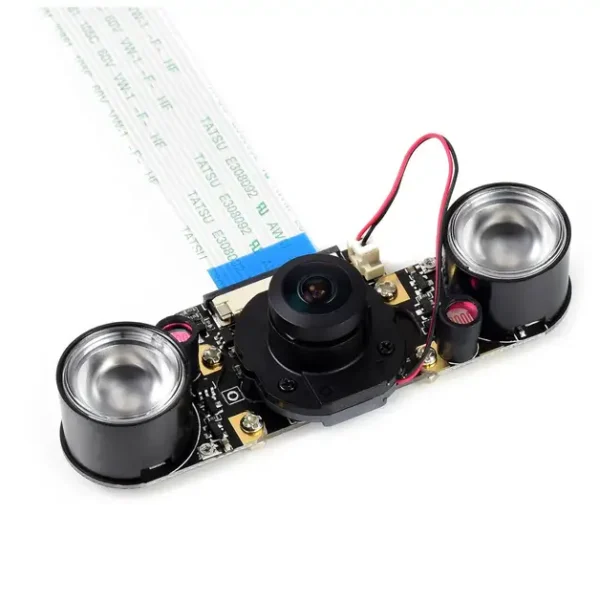 IMX219-160 8MP IR-CUT Camera 162 Degree FOV IR-CUT Infrared Applicable For Jetson Nano Compute Module
$29.80
IMX219-160 8MP IR-CUT Camera 162 Degree FOV IR-CUT Infrared Applicable For Jetson Nano Compute Module
$29.80
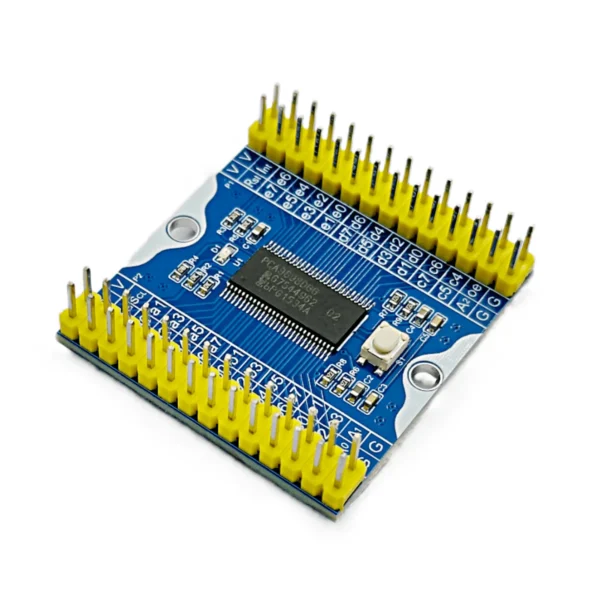 PCA9698 module I2C cascade 40-channel IO expansion module GPIO I/O expansion board non-MCP23017
$8.90
PCA9698 module I2C cascade 40-channel IO expansion module GPIO I/O expansion board non-MCP23017
$8.90
 Smart Fingerbot - Bluetooth Button Pusher for Voice & App Control (Works with Alexa & Google Home)
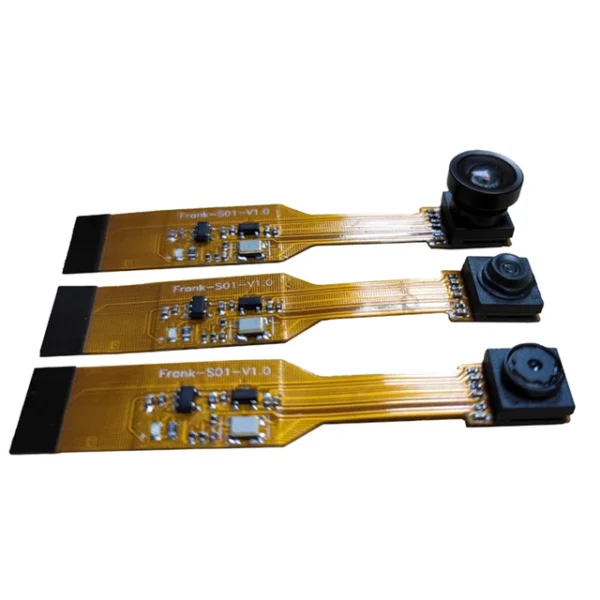 OV5647 camera module for Raspberry Pi Zero (65°, 120°, 160°), 5-megapixel, 1/4-inch
$4.70 – $6.30Price range: $4.70 through $6.30
OV5647 camera module for Raspberry Pi Zero (65°, 120°, 160°), 5-megapixel, 1/4-inch
$4.70 – $6.30Price range: $4.70 through $6.30
 ESP32-S3-Touch-LCD-1.69 ESP32-S3 1.69inch Touch Display Development Board 240×280 Micro LCD Display ESP32