The rapid advancement of humanoid and autonomous robots has shifted the engineering bottleneck from mechanical actuators to the central computational core. A modern robotic controller is not merely a high-performance desktop computer repackaged in an enclosure. It is a deterministic, high-throughput System-on-Chip (SoC) platform responsible for real-time kinematics, multi-sensor fusion, obstacle avoidance, and edge AI inference simultaneously.
As robotic systems scale in complexity, the computational load increases exponentially. This is why high-performance ARM platforms, specifically the Rockchip RK3588, have become the de facto standard for next-generation robotic controllers. However, raw silicon specifications are insufficient. Successful deployment requires a holistic integration of compute, native I/O, and industrial-grade hardening.
The Three Pillars of Robotic SoC Selection
When evaluating a primary control SoC for robotics, engineering teams must validate three fundamental pillars to ensure the system transitions from a laboratory prototype to long-term field reliability.
1. Heterogeneous Compute Throughput
Robotic workloads are highly asymmetric. Real-time servo control requires deterministic, low-latency processing, while visual SLAM and large language model (LLM) inference demand massive parallel throughput. The RK3588 addresses this via a heterogeneous architecture:
- CPU: 4x Cortex-A76 (2.4GHz) for heavy application processing, 4x Cortex-A55 (1.8GHz) for background tasks, and a dedicated Cortex-M0 (200MHz) for real-time, deterministic control loops.
- NPU: A built-in 6 TOPS neural processing unit, architecturally designed to scale up to 32 TOPS via external accelerator cards, with native support for TensorFlow and PyTorch.
- GPU & Media: Mali-G610 MP4 for complex 3D HMI rendering, coupled with hardware-accelerated 8K@60fps H.265 decoding, which is critical for high-resolution machine vision pipelines.
2. Native, Isolated I/O Integration
A common failure mode in early-stage robotics is the "dongle hell" of external interfaces. Relying on USB hubs, external CAN-to-USB converters, and serial expanders introduces latency, increases the bill of materials (BOM), and creates fragile single points of failure. A production-ready robotic controller must integrate native, electrically isolated interfaces directly at the edge. This includes dedicated channels for servo drives, quadrature encoders, LiDAR, industrial cameras, and hardwired emergency stop (E-stop) circuits, minimizing external cabling and maximizing system determinism.
3. Industrial Environmental Hardening
Factory floors and outdoor environments are hostile to standard commercial electronics. Electromagnetic interference (EMI), extreme thermal cycling, and unstable power grids are常态 (the norm). A robust controller must undergo rigorous Environmental Stress Screening (ESS), including:
- EMC Compliance: Validation against electrostatic discharge (ESD), surge, radiated, and conducted emissions.
- Power Loss Protection (PLP): Onboard delay circuits that provide critical seconds of backup power during sudden outages, ensuring the file system flushes and critical state data is saved, preventing kernel panic or data corruption.
- Wide-Temperature Operation: Certified operational envelopes spanning from -40°C to +85°C, ensuring stable clock speeds and memory integrity regardless of ambient conditions.
Validating the Hardware Stack During NPI
Translating the RK3588's theoretical capabilities into a reliable robotic controller requires custom carrier board design. Engineers must validate PCIe signal integrity for external AI accelerators, optimize the power delivery network (PDN) for sustained NPU loads, and design thermal dissipation solutions that prevent throttling in enclosed chassis.
Simulating these physical constraints is never a perfect substitute for empirical testing. Iterating through multiple prototype builds to test thermal vias, high-speed routing, and EMC shielding can rapidly deplete an R&D budget. To remove the financial friction of this critical validation phase, we maintain a strategic prototyping initiative: $2 for 5 pieces for any custom PCB under 50mm x 50mm.
Hardware architects can utilize this program to fabricate dedicated interface test coupons or localized thermal validation boards. This allows for empirical verification of high-speed trace impedance, power plane stability, and thermal transfer efficiency before committing to expensive, multi-layer automotive or industrial-grade tooling.
Scaling from Prototype to Mass Production
Validating a custom RK3588 carrier board on a 10-unit prototype run is fundamentally different from maintaining that reliability across a high-volume production campaign. In mass manufacturing, minor variations in PCB lamination, component placement, or solder paste volume can degrade the high-speed signal integrity or thermal performance that was proven in the lab.
Transitioning to volume manufacturing requires a partner who treats process control as a binding contract. By utilizing our turnkey PCB prototype and assembly manufacturing services, the exact impedance controls, thermal via patterns, and component placement validated during your New Product Introduction (NPI) phase are locked directly into the mass-production control plan.
When your robotic controller design is finalized and you are ready to secure long-term component allocation, initiating an OEM/ODM bulk manufacturing inquiry allows our supply chain and quality engineering teams to integrate your specific industrial reliability requirements into our high-volume Statistical Process Control (SPC) monitoring, ensuring consistent, audit-ready quality across every deployed unit.
Software Ecosystem and Deployment
Hardware is only half the equation. A viable robotic controller must reduce the software integration burden. Production-ready platforms come pre-integrated with Ubuntu and the Robot Operating System (ROS2). Furthermore, they provide out-of-the-box support for critical industrial communication protocols, including MQTT, Modbus, CANopen, and OPC UA. This eliminates the need for engineers to spend months porting drivers and optimizing system kernels, allowing development teams to focus entirely on application-level robotics logic.
FAQ
Q: Why is the Cortex-M0 core critical in a high-performance SoC like the RK3588 for robotics?
A: The Cortex-M0 provides a deterministic, real-time processing environment isolated from the Linux OS running on the Cortex-A cores. This allows it to handle time-critical tasks, such as reading high-frequency encoder pulses or managing hardware-level E-stop signals, with microsecond-level latency, independent of OS scheduling jitter.
Q: How does Power Loss Protection (PLP) function in an industrial controller?
A: PLP utilizes onboard supercapacitors or specialized power management ICs to detect a sudden drop in main input voltage. It instantly switches to a backup power source, providing enough energy (typically a few seconds) for the system to safely flush RAM to non-volatile storage and shut down the file system gracefully, preventing data corruption and boot failures.
Q: Can the RK3588's 6 TOPS NPU handle complex robotic vision tasks?
A: Yes, for edge inference tasks such as object detection, semantic segmentation, and lightweight SLAM, 6 TOPS is highly capable, especially when optimized with frameworks like RKNN. For heavier workloads, the architecture supports scaling up to 32 TOPS via dedicated external AI accelerator cards connected via high-bandwidth interfaces like PCIe.
Q: Why is native I/O integration preferred over USB expansion for robotic controllers?
A: USB introduces non-deterministic latency and is susceptible to disconnection errors in high-vibration environments. Native, isolated interfaces (like hardware UART, CAN FD, and Gigabit Ethernet) provide guaranteed bandwidth, lower latency, and superior electrical noise immunity, which are mandatory for closed-loop servo control and safety-critical sensor data.

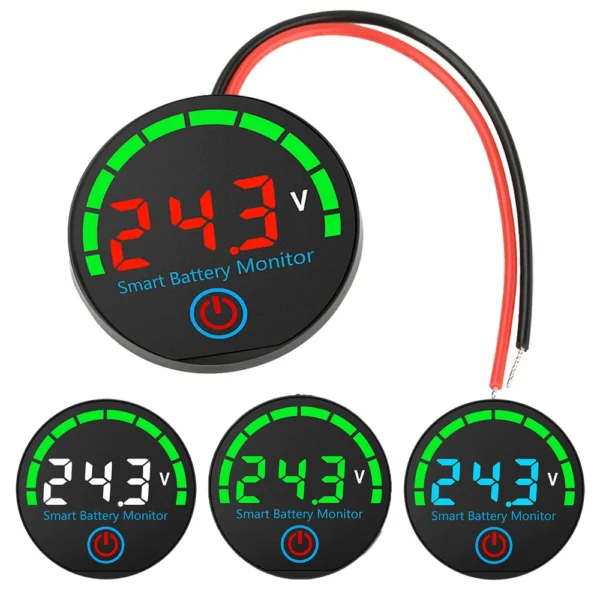 DC 7-55V Circular LED Indicator Voltage/Charge Monitor Level Indicator Voltage Battery Charging Tester Acid Lithium Battery
$2.49
DC 7-55V Circular LED Indicator Voltage/Charge Monitor Level Indicator Voltage Battery Charging Tester Acid Lithium Battery
$2.49
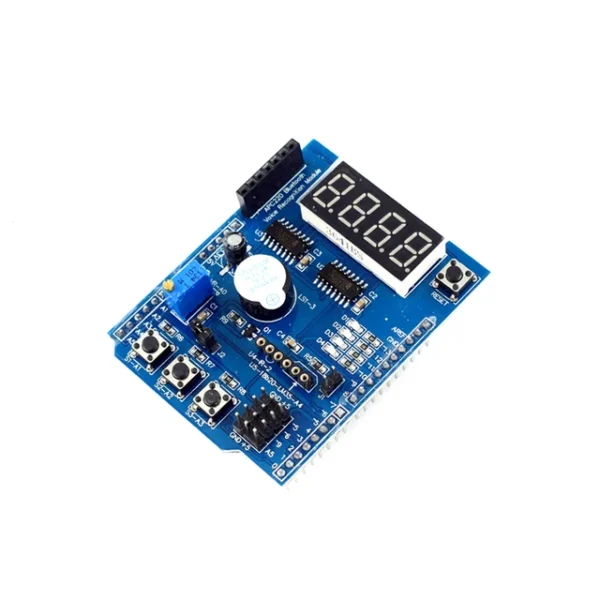 Multifunctional Expansion Board Kit Based Learning UNO R3 LENARDO Mega 2560 Shield Multi-functional for Arduino
$4.90
Multifunctional Expansion Board Kit Based Learning UNO R3 LENARDO Mega 2560 Shield Multi-functional for Arduino
$4.90
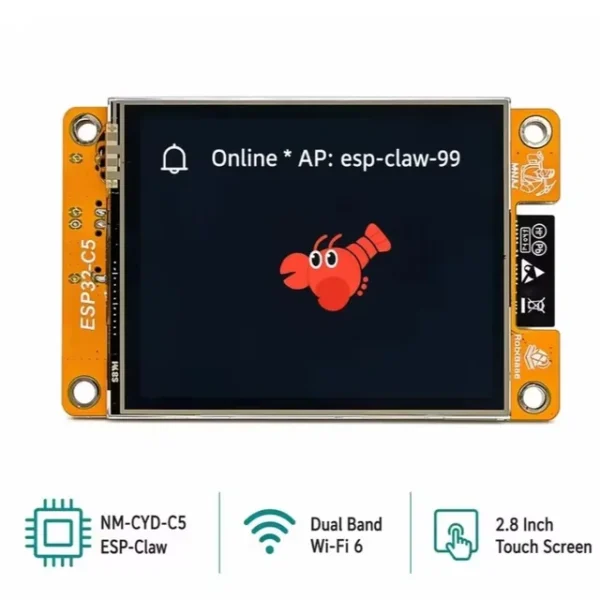 OpenClaw ESP32-C5 with 2.8″ TFT CYD LCD Touchscreen 16MB FIash 8MB PSRAM 5GHz Wi-Fi 6 BLE 5.3 ZigBee3.0 Thread 1.3 support NM-RF-HAT
$21.90
OpenClaw ESP32-C5 with 2.8″ TFT CYD LCD Touchscreen 16MB FIash 8MB PSRAM 5GHz Wi-Fi 6 BLE 5.3 ZigBee3.0 Thread 1.3 support NM-RF-HAT
$21.90
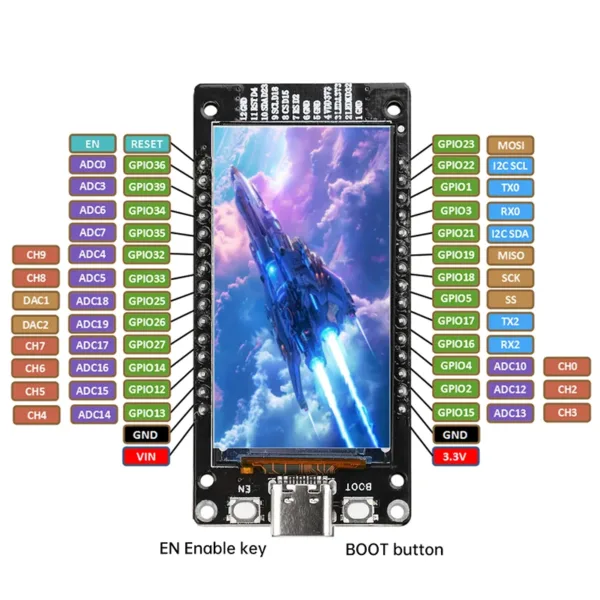 ESP32 -WROOM-32 Development Board 1.9in/1.14in ST7789 170x320 TFT LCD Display,WiFi+BL Module CH340 Type-C Interface for Arduino
 ED060SC4 ED060SC4(LF) 6" e-ink LCD screen for Pocketbook 301/603/611/612/613 PRS-505
$18.90
ED060SC4 ED060SC4(LF) 6" e-ink LCD screen for Pocketbook 301/603/611/612/613 PRS-505
$18.90