ESP32 Schematic Design: From Idea to a Manufacturable File
Everyone talks about PCB layout, but the schematic is where most of the expensive mistakes actually happen. A layout error
Every ESP32 product starts on a dev board. That is the right way to start — you get a working platform in minutes and can focus on firmware and the product idea. Then comes the question that stalls a lot of projects: when should we stop using dev boards and build an esp32 custom pcb?
The honest answer is "when the dev board starts blocking you." But it is worth understanding exactly what a custom board gives you, what it costs, and what changes afterward.
An esp32 development board is a complete, tested ESP32 system with power regulation, a crystal, decoupling, debug access, USB, and often extra flash and sensors you do not need. That convenience is exactly why it cannot be your product:
The dev board is a development tool. The product needs a board designed for it. Even the best esp32 dev board is a general-purpose platform; your product is a specific one.
You are ready for an esp32 custom board when several of these are true:
If none of these are true yet, keep developing on the dev board. There is no prize for building a custom board early.
A custom board is not just smaller; it is designed for a purpose the dev board never had. Once you have a custom esp32 board, the whole product — enclosure, assembly, certification — becomes coherent in a way a dev-board product never can.
A custom ESP32 board has real costs, and they are worth understanding before you commit:
The trade-off is between paying now for a board designed for your product, and paying later in the form of a product that does not fit, does not last, or cannot be made.
You own the board. After the switch, changes cost more and take longer, because they involve redesign rather than rewiring. This is why the design should be done once, carefully.
Debug is your responsibility. The dev board had debug built in; your custom board must bring it out explicitly. Never skip this.
You become the integrator. The dev board hid a dozen details — power, clocking, boot configuration. Your board has to handle them. (If you are coming from the classic ESP32, our guide on moving from a dev board to production covers this in detail.)
Manufacturing enters the picture. Component sourcing, assembly, and test become part of your workload.
| If… | Then… |
|---|---|
| Still iterating on firmware | Stay on the dev board |
| Enclosure defined, dev board does not fit | Switch |
| Battery life is a requirement | Switch |
| Going to production | Switch |
| Volume is tiny and form factor is flexible | Maybe stay on a module-based board |
| Need certification | Switch |
The most common mistake is switching too early — building a custom board before the firmware and product are ready, then redesigning it when requirements change. The second most common is switching too late — trying to ship a product built from dev boards. Both mistakes cost money; the first costs more, because a redesign touches everything.
The dev board and the custom board are usually compared on unit price, which is the least interesting number. A fuller comparison covers the whole life of the product:
| Cost element | Dev board | Custom PCB |
|---|---|---|
| Unit cost at low volume | Low | Higher (NRE spread thin) |
| Unit cost at high volume | High and fixed | Lower and falling |
| Design effort | None | Significant, one-time |
| Enclosure fit | Poor or none | Exact |
| Power optimisation | None | Designed in |
| Certification | Not possible | Designed in |
| Assembly | Manual | Automated |
| Field failure profile | Generic | Controlled |
At ten units, the dev board wins on every line that is measured in dollars. At ten thousand units, the custom board wins on unit cost, enclosure, power, and certification. The crossover is somewhere in the hundreds to low thousands, and where exactly depends on the product.
Moving from a dev board to a custom board is not one step; it is a short project with a recognizable sequence:
Most of the schedule risk lives in step three and step five, which is why the requirements should be frozen before either begins.
Three mistakes account for most of the pain in this transition:
None of these are exotic. They are the ordinary reasons projects slip, and they are all avoidable with a little discipline up front.
The switch decision is often made emotionally — someone is frustrated that the dev board will not fit, or someone is excited about building hardware. It goes better with numbers. Write down:
Those five numbers usually point clearly in one direction, and having them written down makes the decision defensible to whoever is paying for it.
The switch does not have to be all-or-nothing. A staged path reduces the risk of switching too early or too late:
Each stage is a smaller commitment than the last rewrite, and each produces something usable. A team that follows this path rarely finds itself redesigning from scratch, because each board is built on a validated one.
Even after switching to a custom board, the dev board has a role, and it is worth keeping one around:
The dev board is not the enemy of the custom board; it is the baseline. A team that keeps a working dev board nearby diagnoses hardware problems faster, because it always has a comparison that is not in doubt.
The dev board versus custom PCB decision comes down to a single question: is the dev board still the cheapest way to make progress? While the product is being defined and the firmware is being written, it almost certainly is. Once the product is defined and the constraints are real — size, power, enclosure, certification, cost — the custom board becomes the cheaper path, even though it costs more in the moment.
Answering that question honestly, with the numbers written down, is what separates a team that switches at the right time from one that switches too early and rebuilds, or too late and cannot ship.
The dev-board-to-custom transition feels risky because it is the moment the product stops being a prototype. In practice, most of the risk is concentrated in two places: the requirements not being frozen, and the design not being reviewed. A transition with frozen requirements and a reviewed design is ordinary engineering. A transition without them is a gamble dressed up as a plan.
A final thought on timing: the cost of switching a little late is usually small — you ship a slightly larger product for one more cycle. The cost of switching too early is large, because a redesign touches the enclosure, the certification, and the firmware. When in doubt, wait until a requirement is genuinely blocking you, then switch with the requirements frozen and the design reviewed. That is the path that produces the fewest surprises.
It is easy to think of the custom board as "the smaller dev board," but the switch changes what the product can be:
None of these is dramatic on its own. Together they are the difference between a prototype and a product, which is the real content of the switch.
The advice to avoid switching too early is right, but the opposite mistake has a quieter cost. A team that ships a product built from dev boards is paying, on every unit, for a board that was never meant to be sold. It is paying in unit cost, in enclosure compromises, in battery life that disappoints, and in a product that cannot be certified in its own right.
Those costs do not appear on the project plan; they appear on the balance sheet, one unit at a time. A team that waits too long is not being cautious; it is accumulating a tax it did not budget for. The signal to watch is not "can we afford to switch?" but "are we now paying, every month, for not having switched?" When that second question turns positive, the decision has already been made.
The dev board was never the product. It was the fastest way to find out what the product should be, and it did that job well. The custom board is where the product becomes real — where it fits its enclosure, lasts on its battery, passes its tests, and can be made in the thousands. The decision to switch is not a technical milestone; it is the moment the project stops being an experiment and starts being a business.
Make it with the numbers written down, the requirements frozen, and the design reviewed, and it will be the least dramatic — and most valuable — decision in the project.
The dev board remains useful long after the switch, as a reference and a baseline. Keeping one on the bench is a small habit that makes every future hardware problem easier to diagnose, because it gives you a known-good comparison that is never in doubt.
A final framing for the switch: the dev board answers the question "can this work?" The custom board answers the question "can this be sold?" They are different questions, and the switch happens when the second one becomes the one that matters.
And finally: when the switch is made, make it deliberately. Freeze the requirements, review the design, and plan for one revision. Do those three things and the custom board becomes the moment the product gets real — not the moment the schedule gets risky.
We design and lay out custom ESP32 boards for teams making exactly this transition, from a working dev-board prototype to a manufacturable product: pcb-design for the full path from schematic to Gerbers, pcb-layout if you already have the schematic. Manufacturing and assembly run through PCB PCBA order online.
Tell us where your project is, and we will tell you honestly whether it is time to switch.
A dev board is a development tool; a product needs a board designed for it. Switch when the enclosure is defined, battery life matters, you are going to production, you need specific interfaces, cost matters at volume, or you need certification. A custom PCB gives you size, the exact interfaces, optimized power, manufacturability, and a certification path — at the cost of design, prototyping, iteration, and time.
Avoid switching too early (before requirements are stable) and too late (when you are trying to ship dev boards). Never skip debug access on a custom board.
 Radxa ROCK Pi S POE HAT, Designed for Radxa ROCK Pi S, Easy to Install and Remove.
$21.90
Radxa ROCK Pi S POE HAT, Designed for Radxa ROCK Pi S, Easy to Install and Remove.
$21.90
 1.14inch 65K Color LCD RP2350-GEEK Development Board, USB Debugging Downloader, With White Plastic Case
$11.90
1.14inch 65K Color LCD RP2350-GEEK Development Board, USB Debugging Downloader, With White Plastic Case
$11.90
 PH73S Motherboard USB3.019P/20P To Type-E 90 Degree Adapter Chassis Front Type-C Plug-In Port
$2.70
PH73S Motherboard USB3.019P/20P To Type-E 90 Degree Adapter Chassis Front Type-C Plug-In Port
$2.70
 AI Chat Robot Retro Speaker 2.0-Inch Display ESP32-S3 Chatbot AI Voice Chat Robot Doubao Xiaozhi AI Speaker Beige
$36.90
AI Chat Robot Retro Speaker 2.0-Inch Display ESP32-S3 Chatbot AI Voice Chat Robot Doubao Xiaozhi AI Speaker Beige
$36.90
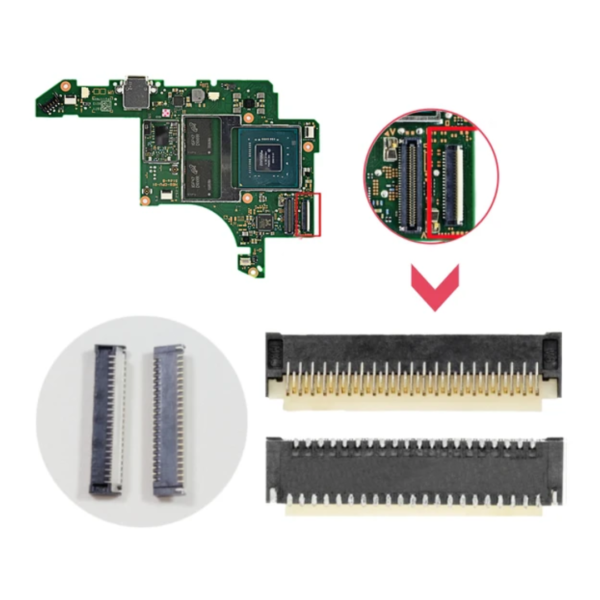 2pcs Nintendo Switch OLED Host Screen Socket LCD FPC Connector Compatible 43Pin Display FPC Connector Socket
$4.90
2pcs Nintendo Switch OLED Host Screen Socket LCD FPC Connector Compatible 43Pin Display FPC Connector Socket
$4.90
Everyone talks about PCB layout, but the schematic is where most of the expensive mistakes actually happen. A layout error
esp32 pcb certification is one of the few parts of hardware development where the cost of getting it wrong is
An ESP32 iot board design is a system problem wearing a PCB costume. It has to sense something, power itself,
The ESP32-WROOM is probably the most common ESP32 module in the world. It is cheap, well-documented, and appears in thousands
The ESP32-S3 is the part people reach for when their product needs more than the classic ESP32 can give: native
Designing an ESP32 board and assembling it are two different disciplines, and the gap between them is where a lot
No account yet?
Create an Account