ESP32-WROOM Layout: Antenna, Keep-Out, and Module Placement
The ESP32-WROOM is probably the most common ESP32 module in the world. It is cheap, well-documented, and appears in thousands
If you want to sell a connected product but do not want to build a hardware team, the words "OEM" and "ODM" will come up in every conversation you have with a manufacturer. They are often used interchangeably, and that is where projects go wrong. They describe very different levels of involvement, very different ownership, and very different costs.
This article explains what each model actually means for an ESP32-based product, so you can choose deliberately instead of discovering the difference halfway through a contract.
The letters matter, because they define who designs what.
OEM (Original Equipment Manufacturer). In the strict sense, OEM means the factory builds *your* design. You own the schematic, the layout, and the firmware. The factory manufactures and assembles to your specification. You are the product owner; they are the hands.
If you have ever bought a product where the seller's logo was on the box but the engineering belonged entirely to them, that was a true OEM arrangement in the classic sense — the seller designed it, a contract manufacturer built it.
Confusingly, in everyday usage "OEM" is often used loosely to mean "we put your brand on an existing product." That is really ODM or private label. Watch for this when you talk to suppliers: a factory that advertises "OEM service" may mean either the strict definition or the loose one, and the difference is tens of thousands of dollars in engineering cost.
ODM (Original Design Manufacturer) and custom ESP32 product development. The factory owns the design. They have an existing ESP32-based board or product platform, and they adapt it to your requirements — branding, enclosure, firmware features, sometimes interfaces — to create a custom esp32 product. You get to market faster and cheaper, but the core design is theirs, and so are the constraints.
This is the model behind most white label iot hardware sold under different brands: the same board inside, a different logo outside.
JDM (Joint Design Manufacturing). A hybrid. You and the factory's engineering team design together. Ownership is negotiated, usually split by contribution. This is common for products that are "almost standard" but need real customization.
The practical question is always: who owns the schematic, the layout files, and the firmware source? Everything else follows from that.
ESP32 products sit in a sweet spot that makes this question especially sharp: the modules are cheap and well-documented, so an ODM platform can get you to market fast. But the moment your product has a specific antenna requirement, a certification target, or a power budget, the limitations of a generic ODM platform show up.
Three ESP32-specific considerations:
Antenna and RF. If the ODM platform uses a module with an integrated antenna and a fixed keep-out, you cannot move the antenna, and you cannot easily change the RF performance. If your product needs a specific range or a specific enclosure material, that constraint may rule out a standard ODM board. A metal enclosure, for instance, can turn a working ODM design into a product with half its advertised range.
Certification. ODM platforms often ship with existing certifications — a real time and money saver. But if you modify the design (change the antenna, move components near the radio), you may invalidate the certification and inherit the testing burden yourself. In the US, that means a fresh FCC Part 15 submission; in the EU, a new esp32 ce certification self-declaration backed by test data. Either can cost more than the platform itself.
Firmware ownership. In many ODM arrangements you get a binary, not source. If you need to integrate with your cloud, add features, or fix bugs, having no source is a serious limitation. Insist on understanding the firmware arrangement before you sign — and decide in advance who owns the over-the-air update infrastructure, because that detail determines whether you can push a security patch without the supplier's help.
| Item | OEM (your design) | ODM (their design) | JDM (shared) |
|---|---|---|---|
| Schematic | You | Them | Shared |
| PCB layout | You | Them | Shared |
| Firmware source | You | Usually them | Negotiated |
| Enclosure tooling | You (or theirs) | Them | Negotiated |
| Certifications | You own the process | Often transferred | Shared |
| Time to market | Slowest | Fastest | Medium |
| Cost to start | Highest | Lowest | Medium |
| Second-source flexibility | Full | None | Limited |
If you plan to raise investment, sell, or scale, ownership of the design files matters more than the launch date. Investors and acquirers ask a simple question: if this supplier disappeared tomorrow, could you keep shipping? With OEM, the answer is yes. With ODM, it is usually no.
ODM is cheaper up front because you are buying into an existing design. You pay for customization, tooling, and per-unit manufacturing, but not for a ground-up design.
OEM is more expensive up front because you are paying for design work — schematic, layout, prototype iterations — before a single unit ships. But your per-unit cost may be lower at volume, because you are not paying a margin to the platform owner.
JDM sits between and is usually the most negotiation-heavy.
The trap is comparing only the up-front numbers. An ODM that is cheap to start can be expensive to change later if you hit a design ceiling. An OEM that is expensive to start can be the cheapest path if you need exactly the product you specified. A useful exercise is to model the total cost of ownership over three years — design, tooling, per-unit, and the cost of one forced redesign — rather than comparing two quotes for the first run.
The redesign line is the one people forget, and it is often the largest.
Choose ODM when: your product is close to an existing platform; time to market matters more than design ownership; your requirements fit within the platform's constraints; and you are comfortable not owning the design.
Choose OEM when: your product has specific technical requirements (RF, power, certification, form factor); you need to own the IP; you plan to scale or raise money; and you are willing to invest up front.
Choose JDM when: you have some in-house capability; your product needs real customization but not a full redesign; and you want to share risk.
Before you sign anything, get clear answers to these:
A supplier who answers these clearly is one you can work with. A supplier who deflects is telling you something.
To make the difference concrete, imagine a Wi-Fi temperature and humidity sensor for commercial buildings. Roughly the same hardware, three very different paths.
The ODM path. A factory already sells a white-label sensor with an ESP32 inside, a plastic enclosure, and a mobile app. You ask them to put your logo on it, change the enclosure colour, and adjust the firmware to report to your cloud. They quote a low per-unit price and a short lead time. You can be selling in six weeks.
What you do not control: the antenna inside the enclosure (which limits range in a metal riser closet), the exact power profile (so battery life is what it is), and the firmware source (so your cloud integration is whatever they built). If your product later needs a different sensor, you start over.
The OEM path. You specify the sensor, the enclosure, the antenna placement, and the firmware you own. A design house captures the schematic and lays out the board; a factory builds it. The per-unit price at volume is often lower than the ODM platform, because you are not paying an IP margin — but you spent a design fee and twelve weeks before the first saleable unit.
In exchange, the board is yours: you can change the sensor, the radio region, or the enclosure without asking permission.
The JDM path. You have some firmware capability and a rough hardware idea. You and the factory split the work: they handle the module integration and certification, you handle the sensor front end and the cloud side. Ownership is written into the contract by contribution. This is the messiest to negotiate and, for a team that already has half the skills, often the best value.
The lesson is not that one model is better. It is that the model determines what you can change later, and "later" always comes.
Because the labels are used loosely, the first job in any supplier conversation is to translate. When a supplier says "we offer OEM," ask one question: "who draws the schematic?" If the answer is "we do," you are talking to an ODM arrangement wearing an OEM label. If the answer is "you do, we build it," it is a true OEM contract. If the answer is "let's split it," you are in JDM territory.
Getting this straight early prevents the most expensive misunderstanding in hardware: assuming you will receive design files that the supplier never intended to hand over.
The payment terms often tell you which model you are really in, before the contract does.
If a supplier insists there is no engineering cost but also will not hand over the schematic, you have found the gap between what they called the model and what it actually is.
The most underrated question in these contracts is the exit. Three years in, you may want to change manufacturers, raise money, or sell the company. In each case, someone will ask whether you can keep making the product without your current supplier.
This is not a reason to avoid ODM. It is a reason to price the lack of ownership into your plans — and to negotiate a licence or a buy-out option while you still have the upper hand, which is before you sign.
Whichever model you choose, at some point engineering hands over to manufacturing, and the quality of that handoff determines how smoothly everything after it goes. A complete package for an ESP32 product includes:
In an OEM arrangement, you receive all of this. In an ODM arrangement, you may receive only the finished product. In JDM, the package is split by the contract. The point of listing it is that "who owns the design" is really a question about which of these files end up on your computer at the end of the project — and that is a concrete thing you can put in writing.
On many platforms, going ODM means accepting a big gap between the reference design and your product. On ESP32, that gap is smaller than it looks, because the platform is unusually well documented. Espressif publishes reference schematics, layout guidelines, and module integration notes for free, and the module ecosystem is deep.
That means an esp32 odm platform based on an ESP32 module is often closer to your target than an ODM platform on a less documented chip. It also means that if you do decide to own your design later, the reference material to do it is already in your hands. For a team weighing OEM against ODM, this is worth counting: the cost of owning an ESP32 design is lower than the cost of owning a design on a chip with poorer documentation.
The model you choose at launch is not necessarily the model you keep. A common and healthy progression looks like this:
Each step trades a little speed for a little control, and each is easier if you negotiated the option to move up front. The worst outcome is launching on ODM with no path to ownership, then discovering that the design ceiling caps the product just as demand arrives. If you think you might want to own the design eventually, say so at the start, and get the transition written into the agreement.
The ownership discussion usually focuses on the files, but the more durable questions are about intellectual property that exists before and after those files:
These questions are answered in a contract, not in a handshake, and they are far cheaper to settle while everyone is still friendly.
If you are unsure which model fits, a low-risk way to start is with a defined piece of work rather than a whole product. Ask a design house to scope one milestone — a schematic review, a module selection study, a layout of one board — and use that engagement to test how they communicate, whether they explain their decisions, and whether the deliverable is what you expected.
A team that handles a small, scoped piece of work well is a team you can trust with a whole product. A team that struggles on a small piece will not improve when the stakes are higher. The cost of finding out early is a fraction of the cost of finding out on the full project.
A final word on timing: the model decision should be made as early as the product definition, not when the first supplier conversation happens. By the time you are comparing quotes, the architecture is usually locked, and the architecture is where the model is really chosen. Decide whether you intend to own the design before you decide what the design contains, and the rest of the project gets simpler.
We work with clients across all three models. If you need your own ESP32 design — schematic, layout, and a clean handoff to manufacturing — that is our PCB design service. If you already have a schematic and need layout plus a manufacturing-ready package, see pcb-layout.
And when it is time to build and assemble, that runs through PCB PCBA order online.
Tell us whether you want to own the design or buy into one, and we will tell you which model fits.
OEM means the factory builds your design; ODM means they own the design and adapt it for you; JDM means you design together. The difference comes down to who owns the schematic, layout, and firmware. For ESP32 products, antenna freedom, certification, and firmware source are the three constraints to check first. ODM is faster and cheaper to start but caps your control; OEM is slower and costlier up front but you own the product.
Ask every supplier the ownership and handoff questions before you sign — and model the total cost over three years, not just the first order.
 WS2812 LED 5050 RGB 8x8 4 16 25 64 Bit LED Matrix Module for DIYArduino
$3.90
WS2812 LED 5050 RGB 8x8 4 16 25 64 Bit LED Matrix Module for DIYArduino
$3.90
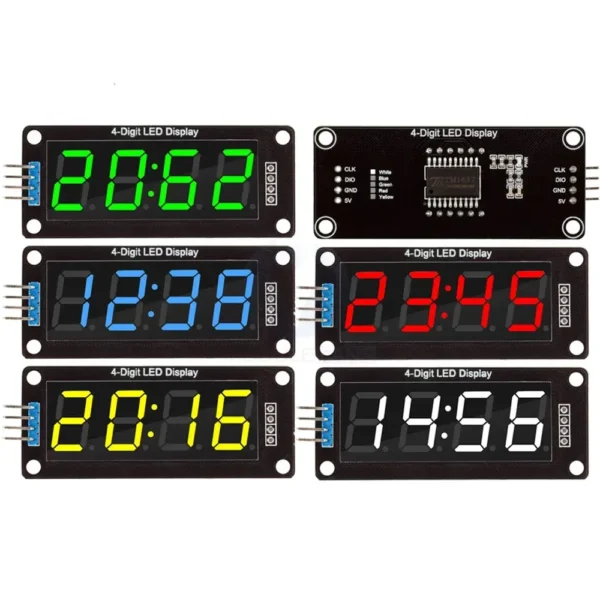 HT16K33 LED Display Module for Arduino 4 Digit 7 Segment 0.56 inch Time Clock Indicator Tube Module Red Blue Green Yellow White
$4.90
HT16K33 LED Display Module for Arduino 4 Digit 7 Segment 0.56 inch Time Clock Indicator Tube Module Red Blue Green Yellow White
$4.90
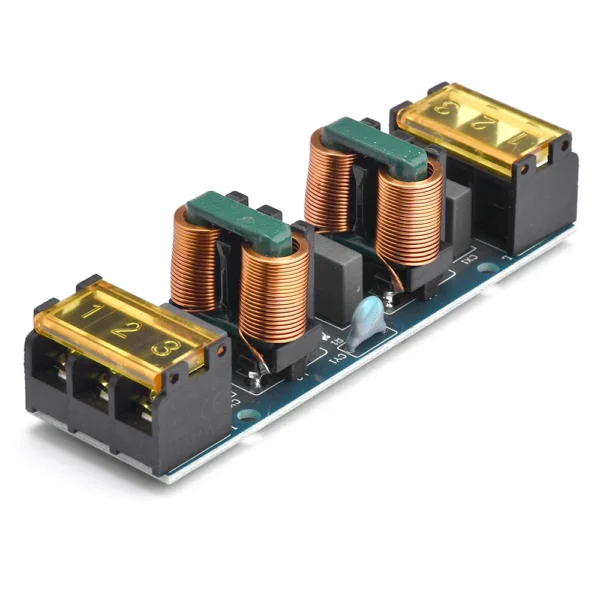 25A Power Filter EMI High-frequency Two-stage Power Low-pass Filter Board For Power Amplifier PCB Copper Electrical Filter
$4.00
25A Power Filter EMI High-frequency Two-stage Power Low-pass Filter Board For Power Amplifier PCB Copper Electrical Filter
$4.00
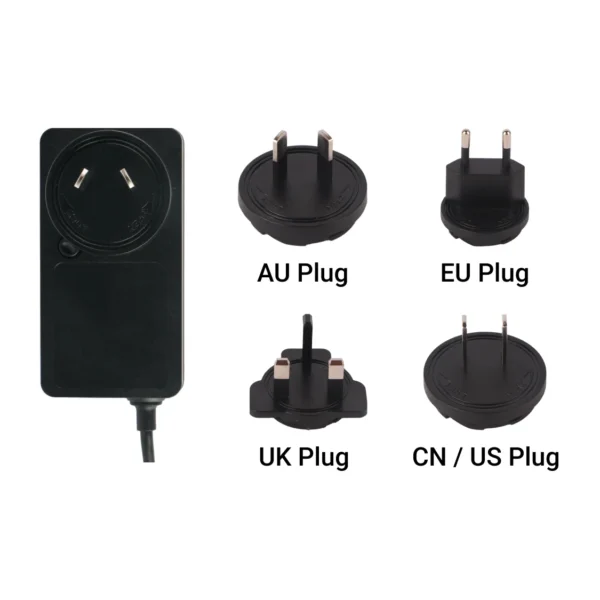 Radxa Power DC12 36W, Power Adapter, Supports Radxa SBCs
$13.90
Radxa Power DC12 36W, Power Adapter, Supports Radxa SBCs
$13.90
 7.3 inch E-Ink Spectra 6 (E6) Full Color E-Paper Display, Low Power Consumption, 800×480 Pixels, SPI Communication
$56.90 – $78.90Price range: $56.90 through $78.90
7.3 inch E-Ink Spectra 6 (E6) Full Color E-Paper Display, Low Power Consumption, 800×480 Pixels, SPI Communication
$56.90 – $78.90Price range: $56.90 through $78.90
The ESP32-WROOM is probably the most common ESP32 module in the world. It is cheap, well-documented, and appears in thousands
The ESP32-S3 is the part people reach for when their product needs more than the classic ESP32 can give: native
Designing an ESP32 board and assembling it are two different disciplines, and the gap between them is where a lot
Once your ESP32 design is done, the next decision is who builds it. This is where a lot of teams
EMC testing is expensive, and failing it is worse than the test fee — it costs you a respin, a
We review a lot of boards — some designed in-house, some by other contractors, some by founders doing their own
No account yet?
Create an Account