ESP32-WROOM Layout: Antenna, Keep-Out, and Module Placement
The ESP32-WROOM is probably the most common ESP32 module in the world. It is cheap, well-documented, and appears in thousands

Once your ESP32 design is done, the next decision is who builds it. This is where a lot of teams lose time and money, because "PCB manufacturer" can mean a bare-board fab, a full turnkey assembler, or something in between — and the quote you get may not tell you which one you are talking to.
This guide covers how to source ESP32 board manufacturing and ESP32 PCBA without the usual surprises, and what to look for in a partner that has to build a board with a radio on it.
Manufacturing a finished board is really three services, and you can buy them together or separately.
Fabrication (fab). Making the bare PCB: drilling, plating, etching, laminating, and finishing. This is where layer count, material, copper weight, and surface finish are decided.
Assembly (PCBA). Placing and soldering components onto the bare board. This includes SMT and through-hole, stencils, reflow, and often inspection. When people say "ESP32 PCBA," or refer to an esp32 pcba manufacturer, they mean this step combined with fabrication into a single order, often under one roof.
Sourcing. Buying the components. If the assembler sources parts for you, that is turnkey; if you supply them, that is consigned. This distinction changes both cost and risk.
A "PCB manufacturer" quote that only covers fabrication leaves you to find assembly and parts. A true turnkey quote covers all three. Know which one you are comparing before you look at a single number.
Price is the last thing to compare, not the first, because a cheap quote often hides a missing service. Compare these first:
A manufacturer that can answer all seven with specifics is worth a longer conversation. One that can only talk about price is not.
A useful quote separates the cost elements, so you can see where the money goes and where you can optimize. Look for:
A single lump-sum price with no breakdown makes it impossible to optimize and hard to compare fairly across suppliers. If two quotes differ by 40 percent, the breakdown tells you why: one may be quoting two layers where you need four, or excluding test, or using a cheaper surface finish you cannot use near the antenna.
Before production, your files should go through a Design for Manufacturability (DFM) review. This is where the manufacturer checks your layout against their process: clearances, footprints, solder mask, panelization, and component orientations.
For ESP32 boards specifically, DFM also touches the RF section — any change to the copper near the antenna during panelization or mask adjustment can affect performance. Make sure the manufacturer understands that the RF area is sensitive, and write it in the fab notes so it does not depend on a conversation someone forgets.
Skipping DFM to save a day is a classic way to lose a week to a production problem.
Turnkey means the assembler buys the components. Simpler for you, one invoice, one point of contact. The trade-off is less visibility into component cost and lead time, and you depend on their sourcing.
Consigned means you buy the components and ship them to the assembler. More control and often cheaper at volume, but you own the sourcing risk and the logistics.
For prototypes and small runs, turnkey is usually easier. For volume production, many teams move to consigned sourcing to control cost — but only once they have a reliable supply chain. A middle path works well for many products: consign the expensive or long-lead parts yourself, and let the assembler source the commodity passives.
Suppose you have a four-layer ESP32 board with a USB-C connector, an ESP32-S3 module, and roughly 120 components. You send the same files to two manufacturers.
Supplier A returns a single number: $6.10 per board at 500 pieces. That is it.
Supplier B returns a breakdown: fabrication $1.90 (four layers, ENIG), assembly $0.85 (top side only, 120 placements), components $2.60 (itemized BOM), test $0.30 (AOI), NRE and stencil $220 one-time, shipping and duty separately quoted.
At first glance A is cheaper. But the breakdown from B reveals what to check: is A using a lead-free finish suitable for RoHS? Does A's $6.10 include the components at today's prices, or is it fab and assembly only? Does A include AOI, or will defects surface in your own testing?
The exercise is not to declare B the winner. It is that only B has given you enough information to compare fairly. A quote you cannot audit is a quote you cannot trust — and when the first run goes wrong, the breakdown is also the only way to find out where.
A manufacturer's process controls are what actually hold your quality, and they are mostly invisible unless you ask. Useful evidence to request:
A supplier that can produce these is running a real process. A supplier that cannot may still be capable, but you are relying on luck rather than control.
Teams often ask "what is your lead time?" and get a single figure. The number that matters is the critical path through the whole chain: bare-board fab, component procurement, assembly, test, and shipping. Each stage has its own lead time, and the longest one sets the total.
For an ESP32 board, the sneaky one is often component procurement — particularly the module or a specialized sensor, where a two-week quote can become a twelve-week reality if the part is on allocation. Ask each supplier for the lead time of the longest-lead part on your BOM, and build your schedule around that, not around the fab's advertised turnaround.
A production run is not finished when the boards pass test; it is finished when they arrive usable. A few practical points:
The cost of getting this right is small; the cost of a shipment of oxidized boards or a customs hold is not.
A useful mental model is that these are two different suppliers wearing one name. Some manufacturers are excellent at bare-board fabrication and subcontract the assembly; some are excellent at assembly and buy bare boards from a fab. A few do both well in-house.
Ask directly which parts they do in-house. The answer tells you where quality is under their control and where it depends on a partner. It also tells you where a problem will be hardest to chase: if the fab blames the assembly and the assembly blames the fab, you are the one holding the bag. When the two are in-house, that argument cannot happen.
Once you can read a quote, the levers for reducing cost become visible, and most of them are design decisions rather than negotiation:
The trap is treating the quote as a lever to be pushed. Most of the cost is in the design, and that is where the real savings are.
The manufacturers worth keeping are the ones who tell you hard things early. Test for that behaviour on the first order:
A manufacturer who volunteers a problem is giving you information worth more than a small price difference. Treat the relationship as an engineering partnership rather than a transaction, and the same manufacturers will keep you out of trouble on the next product too.
The fabrication notes are where you tell the fab what matters and where you record the requirements they must meet. A good set of fab notes for an ESP32 board includes:
Written notes protect you when the person who handled your last order is not the person handling this one. They also make a DFM query concrete, because the fab is responding to a stated requirement rather than an assumption.
Shortages are a fact of life, and the way you handle one determines whether it costs you a week or a redesign. A few practices keep a shortage from becoming a crisis:
A substitute passive is usually harmless; a substitute for a part in the RF path or the clock is not, and knowing which is which ahead of time is what lets you approve a substitution quickly and safely.
Treat the first production order as a test of the relationship as much as of the board. Ask for the DFM report, the impedance data, and the first-article results, and see how the manufacturer responds when something is wrong. A manufacturer who explains a problem clearly and proposes a fix is worth keeping even at a slightly higher price; one who is silent until the deadline is not, no matter how low the quote.
A final checklist item that saves more runs than any other: confirm, in writing, what the quote includes and what it does not. The single most common disappointment in ESP32 manufacturing is a price that turns out to cover fabrication only. Put the exclusions next to the price, and the comparison becomes honest.
One more question worth asking of any manufacturer: how do they handle a change to the design mid-run? A manufacturer who can accommodate a documented revision without scrapping the run is worth keeping; one whose process breaks at the first change is a risk on every product that will ever be improved.
When you are ready to place a production order, ask the manufacturer for a written statement of what the price includes and what it excludes, and keep it with the order. It is a small piece of paperwork that prevents the single most common manufacturing disagreement.
We prepare manufacturing-ready outputs — Gerbers, drill, stackup, and assembly data — as part of our design and layout work, so the handoff to an ESP32 PCB manufacturer is clean: pcb-design for the full path from schematic, pcb-layout for layout only.
And when you are ready to manufacture and assemble, our ESP32 PCBA ordering line handles it: PCB PCBA order online.
Send us your design and target volume, and we will help you scope the manufacturing package.
Buying ESP32 manufacturing means buying three things: fabrication, assembly, and sourcing — know which the quote covers. Compare capability before price, especially impedance control and fine-pitch assembly. Insist on a cost breakdown and a DFM review. Choose turnkey for simplicity and consigned for control at volume. Avoid the classic mistakes: choosing on price alone, ignoring impedance capability, skipping DFM, and single-sourcing critical parts.
Protect your RF area explicitly in the fab notes, and confirm your assembler has placed your module before.
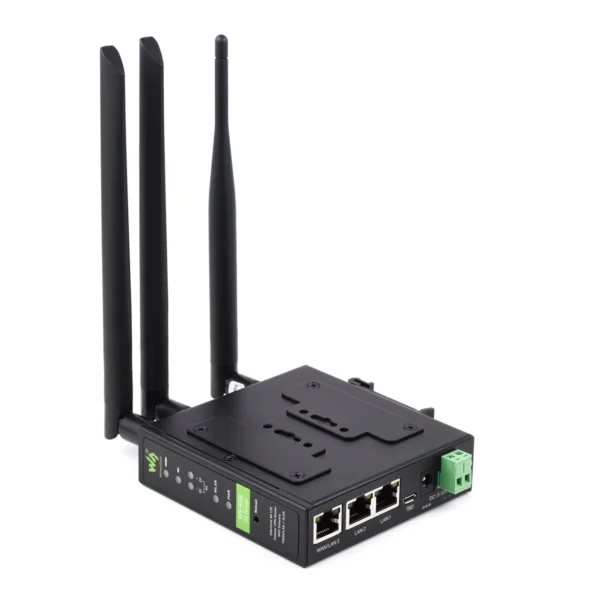 Industrial 4G LTE Router, Multiple VPN Protocols Support, 3-ch Ethernet Ports, WIFI High-Speed Internet, Dual Qualcomm Chips
$189.50
Industrial 4G LTE Router, Multiple VPN Protocols Support, 3-ch Ethernet Ports, WIFI High-Speed Internet, Dual Qualcomm Chips
$189.50
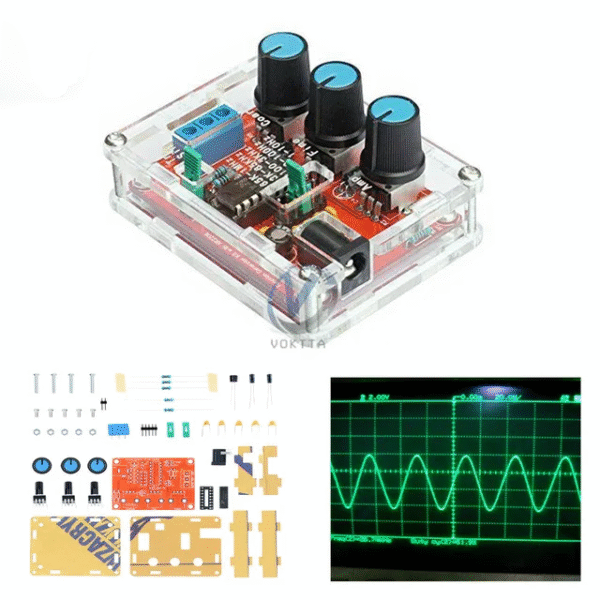 XR2206 High Precision Signal Generator DIY Kit Sine Triangle Square Waves 1Hz 1MHz Frequency Range Adjustable Frequency
$5.90
XR2206 High Precision Signal Generator DIY Kit Sine Triangle Square Waves 1Hz 1MHz Frequency Range Adjustable Frequency
$5.90
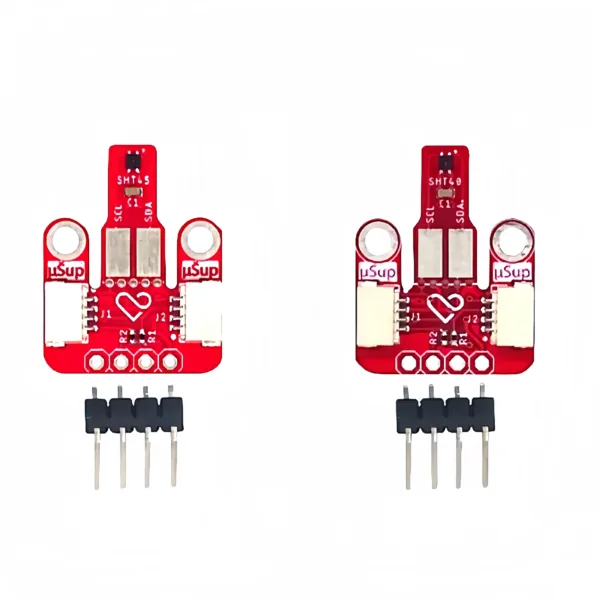 SHT40 SHT45 Temperature and Humidity Sensor For QWIIC Interface Temperature and Humidity Module
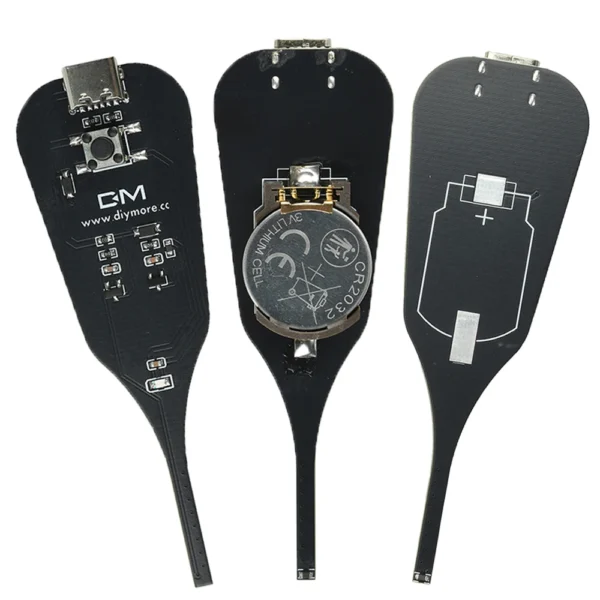 DC5V Type-C Inductance Tester Motherboard Coil Tester for Mobile Phone Component Fault Detection and Diagnosis Repair
$2.90 – $3.50Price range: $2.90 through $3.50
DC5V Type-C Inductance Tester Motherboard Coil Tester for Mobile Phone Component Fault Detection and Diagnosis Repair
$2.90 – $3.50Price range: $2.90 through $3.50
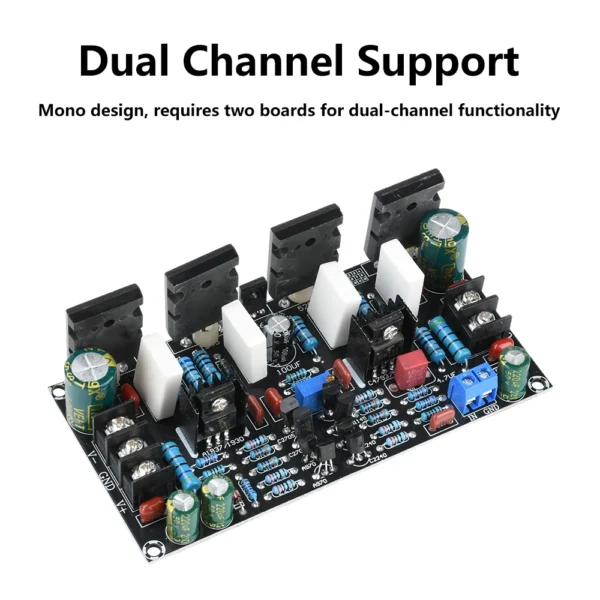 200W 1943 + 5200 High Mono Power Tube Finished Amplifier Board Electronic Component Kit
$11.90
200W 1943 + 5200 High Mono Power Tube Finished Amplifier Board Electronic Component Kit
$11.90
The ESP32-WROOM is probably the most common ESP32 module in the world. It is cheap, well-documented, and appears in thousands
The ESP32-S3 is the part people reach for when their product needs more than the classic ESP32 can give: native
Designing an ESP32 board and assembling it are two different disciplines, and the gap between them is where a lot
If you want to sell a connected product but do not want to build a hardware team, the words "OEM"
EMC testing is expensive, and failing it is worse than the test fee — it costs you a respin, a
We review a lot of boards — some designed in-house, some by other contractors, some by founders doing their own
No account yet?
Create an Account