
EMC/EMI Checklist Before Your Board Goes to Certification
EMC testing is expensive, and failing it is worse than the test fee — it costs you a respin, a
Imagine having a private, local AI assistant that fits in your pocket, costs less than a pizza, and can control lights, read sensors, or manage your smart home—all without relying on a cloud server. It sounds like science fiction, but it's now a reality thanks to the OpenClaw ecosystem running on the ubiquitous ESP32 microcontroller.
In this comprehensive guide, we'll explore how you can deploy OpenClaw-based AI agents on ESP32 devices. Whether you're a hobbyist looking for your next weekend project or a professional prototyping edge AI solutions, you'll learn about the available options, their capabilities, and exactly how to get started.
The ESP32 is the darling of the maker community—a $2-$5 chip with built-in Wi-Fi and Bluetooth found in countless IoT projects. Traditionally, running a sophisticated AI agent required a Raspberry Pi, a Mac Mini, or a cloud server. The OpenClaw project changes everything .
Cost-Effective: Deploy a functional AI assistant on hardware costing as little as $5.
Privacy-First: Keep your conversations and data local, not on corporate servers.
Low Power: ESP32 devices consume milliwatts, allowing for always-on, 24/7 operation.
Hardware Integration: Directly control GPIO pins, read sensors, and manage servos without additional layers.
This isn't just a theoretical concept. Several open-source projects now enable you to run OpenClaw's AI agent framework directly on ESP32-class devices .
The OpenClaw ecosystem has evolved to offer multiple options for ESP32 deployment, each with different trade-offs. Understanding these will help you choose the right path for your project.
| Project | Target Hardware | Core Philosophy | Best For |
|---|---|---|---|
| ESPClaw | ESP32-C3, S3 (minimal RAM) | Extensible IoT Agent Platform | Makers building custom, hardware-integrated projects. |
| MimiClaw | ESP32-S3 (with PSRAM) | Out-of-the-box Personal Assistant | Users wanting a plug-and-play Telegram AI assistant. |
| ZClaw | General ESP32 | Ultra-compact (888KB) OpenClaw Base | Developers needing a minimalist, secure foundation. |
Let's dive into the two most exciting options for DIY enthusiasts: ESPClaw and MimiClaw.
If you're a developer or maker who loves to tinker and wants full control over hardware integration, ESPClaw is your ideal choice . It's designed as an "extensible IoT Agent platform" with a hard constraint: it must run even on the low-memory ESP32-C3 .
Runs Without PSRAM: Through ingenious engineering, ESPClaw can run a full LLM Agent on chips with as little as 400KB of SRAM. It uses streaming JSON parsing with an 8KB ring buffer, processing responses character-by-character without caching the entire payload .
Hardware Abstraction Layer (HAL): Tired of hardware coupling nightmares? ESPClaw abstracts all hardware operations. Tools interact with a clean HAL for PWM, servos, ADC, and OneWire, making code portable across different chips and drivers .
// Example HAL functions from ESPClaw [citation:3]
esp_err_t hal_servo_attach(uint8_t id, int gpio);
esp_err_t hal_servo_write(uint8_t id, float angle);
40+ Extensible Tools: It's not about quantity, but capability. Tools are standard C functions registered with the LLM, allowing for complex combinations like temp_read() → memory_set() → cron_schedule() → telegram_push() to create a complete temperature monitoring system .
9 Notification Channels: Communicate via Telegram, Discord, Slack, MQTT, and more, all abstracted through a virtual table (vtable) interface for zero-overhead when not in use .
Platform-Aware Code: A single platform.h file automatically adapts the code for C3, C5, or S3 targets, adjusting buffer sizes and features based on available PSRAM .
"C3只有 400KB SRAM... 怎么解?流式 JSON 解析。不缓存完整响应,边收边解析,用完即弃。" — ESPClaw Developer
ESPClaw is perfect for projects where you need the ESP32 to act as an intelligent edge node, making decisions and controlling hardware directly.
For those who want a more consumer-like experience—a personal AI that you can message from Telegram without any complex setup—MimiClaw is the breakthrough project . It compresses the OpenClaw experience onto a $5 ESP32-S3 chip.
*"I made OpenClaw can run on a $5 chip. No OS(Linux). No Node.js. No Mac mini. No Raspberry Pi. No VPS. Local-first memory. Shareable. Privacy-first. Meet MimiClaw."* — Eric Wang (@ssslvky), MimiClaw Creator
Pure C Implementation: By stripping away the operating system and running directly on the metal, MimiClaw achieves an incredible level of efficiency .
Full ReAct Agent Loop: It uses a Claude API key to think, decide, call tools, read memory, and reply—just like its bigger siblings .
Persistent Memory: It maintains the same memory structure as OpenClaw: SOUL.md for personality, USER.md for user info, and MEMORY.md for long-term context .
Dual-Core Design: Network I/O and AI processing run on separate cores for smooth performance .
Easy Deployment: You can flash the firmware, connect to Wi-Fi, and start chatting via Telegram in minutes, especially using the "no-proxy" deployment guides available online .
The primary limitation? It currently has a more limited toolset (e.g., web search and time) compared to full-fat OpenClaw, but it excels as a private, always-available Telegram AI companion with hardware control capabilities .
The combination of ESP32 and OpenClaw opens up a world of possibilities. Here are just a few ideas to spark your imagination:
Natural Language Robot Arm Control: Imagine saying, "Pick up the red object and place it to my left," and your ESP32-controlled robot arm executes the command . Projects have already demonstrated semantic control of SO-ARM100 arms using OpenClaw .
Voice-Activated Home Automation: Integrate an ESP32 running ESPClaw with a voice assistant like "小智机器人" to create a fully offline, voice-controlled system for lights, fans, and appliances .
Intelligent Environmental Monitor: Use an ESP32 with sensors (temperature, humidity) and MimiClaw to monitor your home. Ask it via Telegram, "What's the temperature in the living room?" and receive an instant reply .
Automated Claw Machine or Conveyor System: Use ESP-NOW for wireless communication between multiple ESP32 boards to control a complex system, like a conveyor belt and claw arm for a booth demo .
Ready to build your own ESP32 AI agent? Follow these steps:
Choose Your Hardware:
For MimiClaw, you'll need an ESP32-S3 development board with at least 8MB PSRAM . Many affordable options are available for under $10.
For ESPClaw, you can start with a basic ESP32-C3 or S3 board .
If you want a complete robotics kit, consider a Programmable 4 DOF Robot Arm Kit that includes an ESP32 controller board and all necessary servos and mechanical parts .
Gather Your Tools:
A computer with Arduino IDE or ESP-IDF installed .
A USB cable for programming.
(Optional) Sensors, servos, or other hardware you want to control.
Follow a Deployment Guide:
For MimiClaw, use the "no-proxy" tutorial available online, which walks you through flashing the firmware and configuring Feishu (Lark) or Telegram .
For ESPClaw, clone the GitHub repository and run idf.py build flash monitor .
For a full robot arm kit, follow the detailed assembly and programming instructions provided by the manufacturer .
Get Your API Keys:
You'll need an API key from a provider like Anthropic (Claude), OpenAI, or Moonshot AI (Kimi) for the AI to function.
The ability to run a sophisticated AI agent on a $5 chip is a game-changer. It democratizes AI, puts privacy back in the user's control, and enables a new class of intelligent, responsive hardware projects. Whether you choose the extensible power of ESPClaw or the polished simplicity of MimiClaw, you're not just following a tutorial—you're building the future.
Ready to get started? Grab your ESP32 board today and join the OpenClaw revolution!
======================================
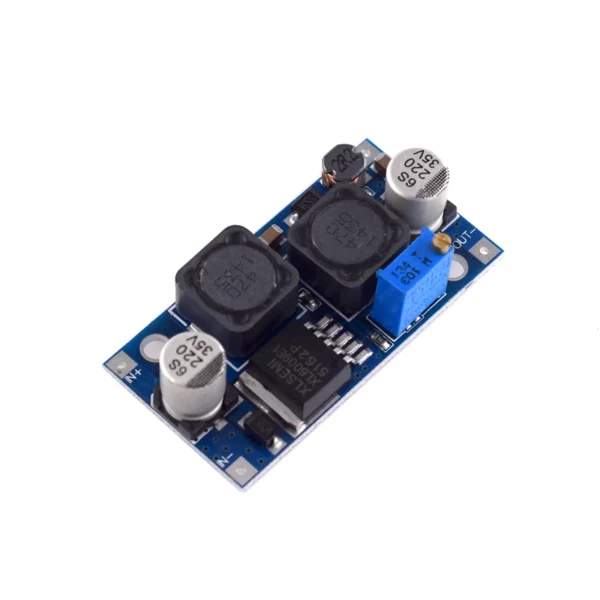 XL6009 Boost Buck DC-DC adjustable step up down Converter Module Solar Voltage Super LM2577 Step-Up
$1.90
XL6009 Boost Buck DC-DC adjustable step up down Converter Module Solar Voltage Super LM2577 Step-Up
$1.90
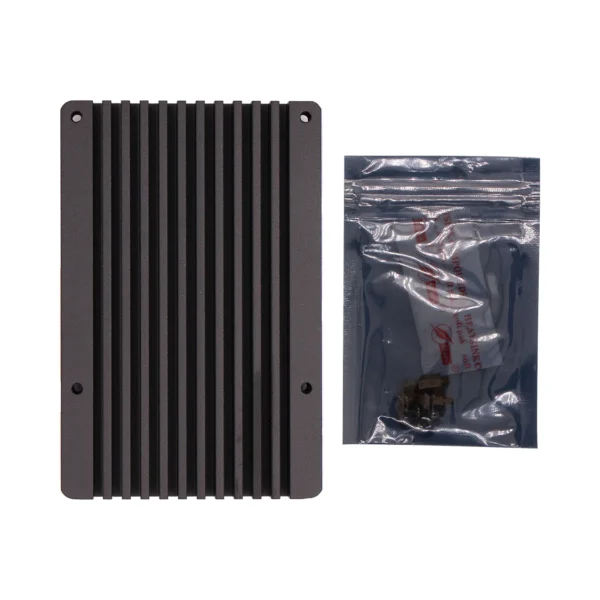 Radxa Heatsink for ROCK 4, Designed for Radxa ROCK 4 Series, Easy to Install and Remove.
$14.50
Radxa Heatsink for ROCK 4, Designed for Radxa ROCK 4 Series, Easy to Install and Remove.
$14.50
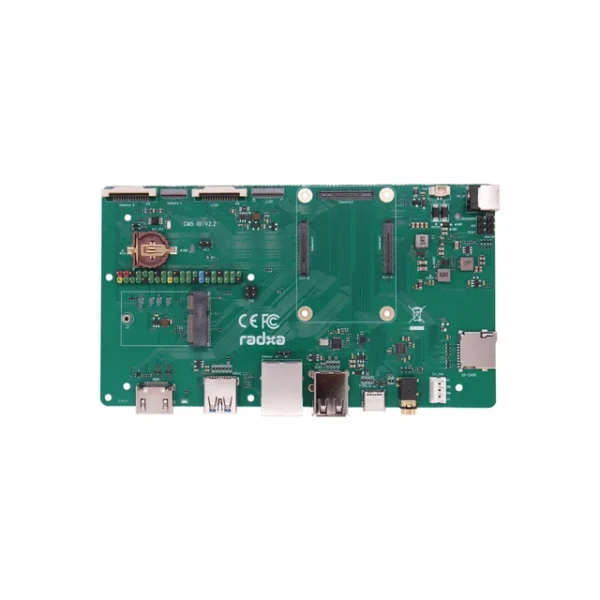 Radxa CM5 IO Board, Verify Radxa CM5 Functions
$43.90
Radxa CM5 IO Board, Verify Radxa CM5 Functions
$43.90
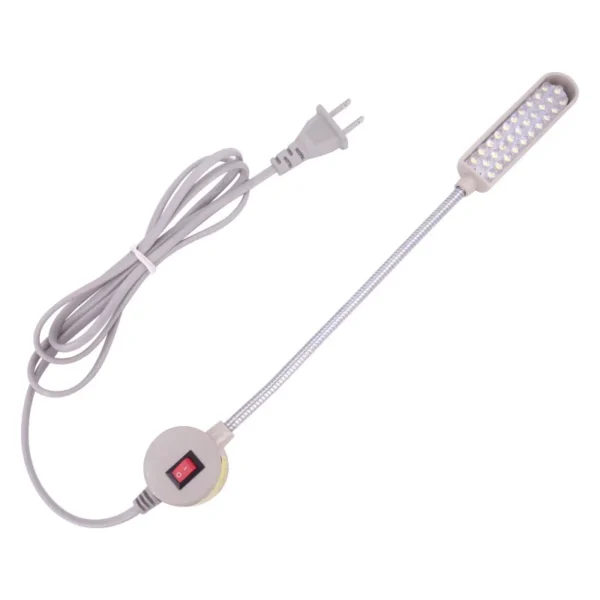 30 LED Industrial Sewing Machine Lighting Lamp Clothing Machine Accessories Work Light 360° Flexible Gooseneck Industrial Lights
$4.20
30 LED Industrial Sewing Machine Lighting Lamp Clothing Machine Accessories Work Light 360° Flexible Gooseneck Industrial Lights
$4.20
 Ideal Diode Module Adopts 12V 24V 36V 48V Voltage Irrigation Battery Charging Anti Backflow Protection
$4.50
Ideal Diode Module Adopts 12V 24V 36V 48V Voltage Irrigation Battery Charging Anti Backflow Protection
$4.50
EMC testing is expensive, and failing it is worse than the test fee — it costs you a respin, a
We review a lot of boards — some designed in-house, some by other contractors, some by founders doing their own
When a battery-powered product dies too soon, the instinct is to blame the firmware. Surely there is a sleep mode
A wearable PCB is not just a small PCB. It is a board where every constraint that normally has some
The STM32 family is the workhorse of embedded hardware, and almost every project that uses one starts the same way:
The nRF52840 is one of the most popular BLE and multiprotocol chips in the world, and for good reason: it
No account yet?
Create an Account