For hardware OEMs, procurement directors, and product managers, the Printed Circuit Board (PCB) Bill of Materials (BOM) is a constant battleground. At the very core of this cost structure lies Copper Clad Laminate (CCL) and its companion, prepreg. Accounting for 30% to 50% of the total bare PCB cost, fluctuations in CCL pricing can instantly wipe out your product’s gross margin or derail a carefully planned New Product Introduction (NPI).
As we look through the lens of 2025 and into 2026, the narrative of "global inflation" is entirely inadequate. The CCL market is not experiencing a uniform price hike; it is undergoing a violent, K-shaped bifurcation. While standard materials remain relatively stable, the exotic, ultra-low-loss laminates required for AI servers, 800G optics, and advanced automotive radar are facing extreme premiums and severe allocation bottlenecks.
If your 2026 hardware roadmap relies on legacy quoting methods and spot-market purchasing, you are exposing your company to massive financial and scheduling risks. This guide decodes the real macroeconomic and manufacturing drivers behind CCL price trends, exposes the hidden margin-killers in PCB fabrication, and provides a strategic playbook to secure your supply chain.
The 2025-2026 CCL Market Reality
- What is driving CCL prices in 2026? A combination of LME copper volatility, energy-intensive fiberglass weaving costs, and the "AI Siphon" effect, where hyperscalers consume 80% of advanced M8/M9 laminate capacity.
- The K-Shaped Market: Standard FR-4 (Tg 150-170) sees mild, single-digit inflation. Ultra-Low Loss (Megtron 8/9, Tachyon) and HVLP4 foils face 20-40% premiums and 16+ week lead times.
- The Margin Killer: Poor PCB panel utilization and expired prepreg shelf-life waste up to 30% of expensive high-speed CCL materials.
- The Strategic Fix: Hardware teams must leverage Turnkey PCBA DFM to optimize stack-ups and utilize ODM/OEM partnerships to secure long-term material allocations.
Part 1: The 3 Macro Drivers of CCL Price Trends (2025-2026)
To forecast your PCB costs accurately, you must understand the upstream forces dictating the price of laminates. CCL is essentially a composite of copper foil, fiberglass cloth, and resin systems.
1. The LME Copper & Energy Volatility
Copper foil represents a massive portion of CCL cost. While the London Metal Exchange (LME) copper prices experience cyclical fluctuations, the processing cost of copper foil is heavily tied to global energy prices. Furthermore, the manufacturing of E-glass and specialized Low-DK/Quartz fiberglass requires immense furnace heat. As carbon taxes and energy grid constraints tighten in major manufacturing hubs across Asia and Europe, the baseline cost of producing the raw glass cloth is structurally higher in 2026 than it was in 2023.
2. The "AI Siphon" and Advanced Material Starvation
This is the most critical factor for enterprise and telecom hardware teams. The explosion of AI training clusters (demanding NVIDIA Blackwell/Rubin architectures) requires massive amounts of Ultra-Low Loss (ELL) CCL (e.g., Panasonic Megtron 8/9, Isola Tachyon) and HVLP4 (Hyper Very Low Profile) copper foils to support 112G/224G PAM4 signaling.
- The Reality: The chemical precursors for these advanced resin systems and the specialized metallurgy for HVLP foils have strict production limits. Hyperscalers are locking up multi-year contracts for these materials. Consequently, mid-tier OEMs are forced onto the spot market, facing exorbitant premiums and "allocation-based" rationing.
3. Geopolitical Supply Chain Restructuring
The push for "China+1" manufacturing strategies has led to the rapid expansion of PCB and CCL facilities in Southeast Asia (Thailand, Vietnam) and Mexico. While this diversifies risk, the initial CapEx, lower local supply-chain density, and logistical friction in these new hubs introduce a "geopolitical premium" to the landed cost of CCL in 2025 and 2026.
Part 2: The K-Shaped Pricing Matrix: Where Does Your Project Sit?
Not all CCL is created equal. When planning your 2026 BOM, you must segment your material requirements based on this K-shaped pricing matrix:
The Takeaway: If your design relies on M8/M9 materials for signal integrity, you cannot budget based on 2023 historical data. You must engineer your financial models for a high-cost, low-availability reality.
Part 3: The Hidden Margin Killers in PCB Fabrication
Even if you successfully navigate the macro CCL market, poor manufacturing partnerships will silently destroy your budget. Here are the three hidden costs that inflate your effective CCL spend:
1. Catastrophic Panel Utilization
CCL is sold and fabricated in standard panel sizes (e.g., 18x24, 21x24, or 24x36 inches). If your PCB design is an awkward shape, or if your fabrication partner lacks advanced nesting software, you might only achieve 65% panel utilization.
- The Pain Point: On a $500/sheet Megtron 8 M9 laminate, throwing away 35% of the panel as scrap means you are paying a massive "ignorance tax." Advanced manufacturers utilize specialized routing and breakaway tab designs to push utilization above 85%, instantly lowering your per-unit CCL cost.
2. The Prepreg Shelf-Life & Cold Chain Trap
High-speed prepregs (the "glue" layers in multilayer CCL stack-ups) have strict shelf lives (often 3 to 6 months) and require continuous cold-chain storage. Budget fabricators or brokers often buy in bulk, store materials improperly, or let them age.
- The Pain Point: Using aged prepreg leads to resin starvation, delamination, and blistering during SMT reflow. You don't just lose the cost of the CCL; you lose the cost of the assembled, populated PCBA.
3. The "Over-Specification" Trap
Hardware engineers, fearing signal integrity failures, often specify M9 (Extreme Low Loss) materials for every layer of a 30-layer board.
- The DFM Reality: Only the layers carrying the 112G/224G differential pairs require M9. The power, ground, and low-speed I/O layers can safely utilize mid-loss or standard high-Tg materials. A fabricator that blindly builds your exact, over-specified stack-up without offering DFM (Design for Manufacturing) alternatives is wasting your money.
Part 4: The Strategic Playbook: How to Hedge and Plan Smartly
To protect your margins and ensure your hardware ships on time in 2026, procurement and engineering teams must adopt a unified, proactive strategy.
Strategy 1: DFM-Driven Stack-Up Optimization
Before you lock in your BOM, your PCB stack-up must be audited for cost-efficiency without sacrificing signal integrity. By partnering with a manufacturer that offers deep engineering integration, you can implement hybrid stack-ups. We help you strategically place expensive HVLP/M9 materials only on critical high-speed signal layers, while utilizing cost-effective mid-loss materials for power and ground planes. This level of optimization is only possible when you leverage comprehensive Turnkey PCB Assembly Manufacturing Services. Our engineering team analyzes your routing, impedance requirements, and thermal profiles before the CAM tooling is cut, ensuring maximum panel utilization and the most cost-effective hybrid CCL stack-up possible.
Strategy 2: Shift from Spot Buying to Contract Manufacturing
Relying on the spot market for M8/M9 laminates in 2026 is a guaranteed path to NPI delays. You must transition to a contract-based model. By initiating a strategic ODM/OEM Bulk Inquiry, enterprise clients can leverage our aggregate purchasing power. We secure long-term allocations with top-tier laminate suppliers (like Panasonic, Isola, and AGC), lock in pricing against volatile commodity indexes, and manage the strict cold-chain logistics for your prepregs. This transforms your CCL supply chain from a daily vulnerability into a predictable, hedged asset.
Strategy 3: Standardize Footprints Across Product Families
If you are building a fleet of edge AI devices or telecom modules, standardize your PCB dimensions and layer counts across product families. This allows your manufacturing partner to buy CCL in massive, optimized sheet sizes and mix different product SKUs on a single fabrication panel, driving utilization rates near 95% and drastically reducing your effective material cost per unit.
CCL Pricing & PCB Supply Chain Strategy
Q: Why are Ultra-Low Loss CCL materials (like Megtron 8/9) so expensive and hard to find in 2026?
A: The "AI Siphon" effect. The exponential demand for AI server clusters and 800G networking has consumed the majority of global production capacity for specialized hydrocarbon resins and HVLP4 copper foils. This has created a severe supply-demand imbalance, leading to extreme price premiums and allocation-based rationing for non-hyperscale OEMs.
Q: How does PCB panel utilization affect my CCL costs?
A: CCL is manufactured in large, standard sheets. If a PCB design is poorly sized or the fabricator lacks advanced nesting software, up to 30-40% of the expensive laminate (especially high-speed M8/M9) is scrapped as waste. Optimizing board dimensions and utilizing advanced manufacturing partners can push utilization above 85%, significantly lowering per-unit BOM costs.
Q: What is a "hybrid stack-up" and how does it save money?
A: A hybrid stack-up uses expensive Ultra-Low Loss CCL materials only on the specific inner layers that route high-speed (112G/224G) differential pairs, while using cheaper, mid-loss or standard FR-4 materials for power, ground, and low-speed layers. This maintains signal integrity while drastically reducing the overall CCL cost of a high-layer-count board.
Q: How can hardware startups secure M9 materials without massive MOQs?
A: Startups and mid-sized OEMs should partner with specialized Turnkey PCBA and ODM/OEM manufacturers. These partners aggregate the demand of multiple clients, allowing them to secure bulk allocations and favorable pricing from top-tier laminate suppliers, bypassing the open-market shortages and high spot-market premiums.
Engineering Certainty in a Volatile Market
The CCL price trends of 2025 and 2026 are not a temporary anomaly; they are the new baseline of a hardware industry defined by AI-driven material consumption and geopolitical restructuring. Hoping for a return to the cheap, abundant laminate markets of the past decade is a flawed business strategy.
Winning in 2026 requires a paradigm shift. Hardware teams must bridge the gap between electrical engineering and supply chain strategy. By optimizing stack-ups for panel utilization, implementing hybrid material designs, and securing long-term ODM/OEM partnerships, you can insulate your product margins from upstream volatility.
Ready to bulletproof your 2026 PCB BOM? Stop leaving your margins to the mercy of the spot market and poor panel utilization. Submit your ODM/OEM bulk inquiry today to lock in priority CCL allocations and hedge against material inflation. Alternatively, explore our Turnkey PCB Assembly and DFM Services to engineer the cost out of your high-speed stack-ups before fabrication even begins.

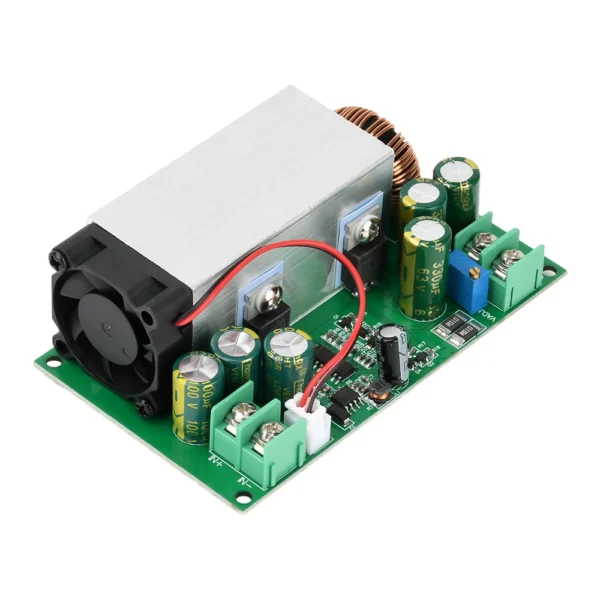 DC12-75V 600W 25A DC-DC Buck Constant Voltage Constant Current Converter Buck Regulator Adjustable Power Module
$6.70
DC12-75V 600W 25A DC-DC Buck Constant Voltage Constant Current Converter Buck Regulator Adjustable Power Module
$6.70
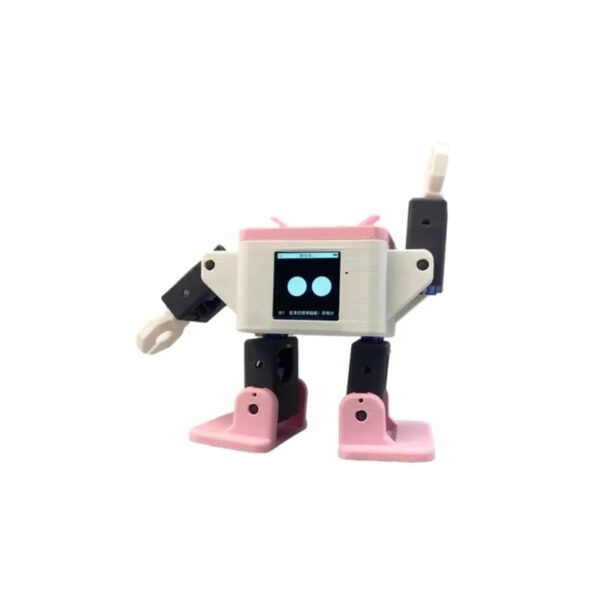 AI OTTO Robot ESP32-S3 Interactive Talking Dancing Robot Voice Recognition Educational Companion Robot Children Holida
$53.90
AI OTTO Robot ESP32-S3 Interactive Talking Dancing Robot Voice Recognition Educational Companion Robot Children Holida
$53.90
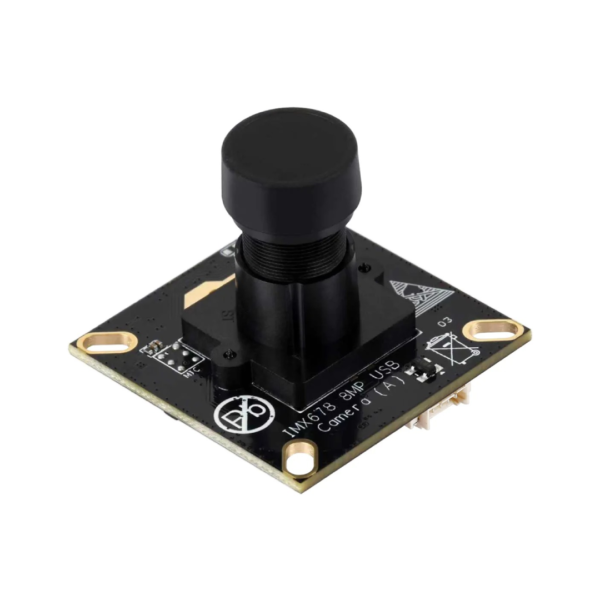 IMX678 8MP M12 USB Camera Module, IMX678 Sensor Chip, USB2.0 Port, Better Sensitivity In Low-Light Condition
$63.90
IMX678 8MP M12 USB Camera Module, IMX678 Sensor Chip, USB2.0 Port, Better Sensitivity In Low-Light Condition
$63.90
 Finger Counter LCD Electric Digital Display With Light Tally Counter Stitch Marker Sewing Knitting Weave Buddha Pray Soccer
$1.40
Finger Counter LCD Electric Digital Display With Light Tally Counter Stitch Marker Sewing Knitting Weave Buddha Pray Soccer
$1.40
 LILYGO T-Deck Plus 433MHz 868MHz 915MHz ESP32-S3 Development Board GPS Long Range Communication Module with External Antenna
$86.90
LILYGO T-Deck Plus 433MHz 868MHz 915MHz ESP32-S3 Development Board GPS Long Range Communication Module with External Antenna
$86.90