As we navigate deeper into 2026, the global Printed Circuit Board (PCB) industry is undergoing a radical bifurcation. Headlines often celebrate massive capital expenditures (CapEx) and new factory expansions across Asia and the Americas. However, for hardware OEMs, procurement directors, and lead engineers, the reality on the ground is far more complex.
Capacity is expanding, but it is not expanding equally. The explosive demand for AI server clusters, 800G/1.6T optical networking, and advanced aerospace avionics has created an "AI Siphon"—a phenomenon where hyperscale demand is consuming the lion's share of advanced manufacturing capacity and exotic raw materials, leaving mid-tier, industrial, and automotive projects fighting for the scraps.
If your 2026 hardware roadmap relies on legacy supply chain strategies or tier-2 fabrication brokers, you are walking into a trap of extended lead times, catastrophic yield losses, and material stockouts. This guide provides an unfiltered, factory-floor perspective on the 2026 PCB capacity landscape, the upstream material bottlenecks that actually dictate your timeline, and the strategic pivots required to secure your production schedule.
The 2026 PCB Supply Chain Reality
- The Capacity Paradox: While total global PCB square-footage capacity is growing, advanced capacity (30+ layers, sequential lamination, mSAP) is severely constrained by the AI boom.
- The Material Bottleneck: The true lead-time killer in 2026 is not factory floor space; it is the upstream shortage of M8.5/M9 Ultra-Low Loss laminates, Quartz (Q-Fabric) glass, and HVLP4 copper foils.
- The Yield Crisis: Budget PCB fabricators lack the CapEx for UV laser drilling and pulse plating, leading to massive yield failures on complex 2026 designs.
- The Strategic Solution: Hardware OEMs must shift from transactional purchasing to strategic ODM/OEM partnerships and unified Turnkey PCBA models to secure material allocations and protect time-to-market.
Part 1: The "AI Siphon" – How Hyperscalers are Hijacking Capacity
To understand the 2026 capacity crunch, we must look at how factory time is allocated. A standard 8-layer commercial PCB might require one lamination cycle and basic mechanical drilling.
Contrast this with a next-generation AI baseboard or orthogonal switch fabric:
- Layer Count: 30 to 50+ layers.
- Lamination: Requires 3 to 4 sequential lamination cycles (press, drill, plate, repeat).
- Drilling: Tens of thousands of high-aspect-ratio (25:1) holes and UV laser-drilled microvias.
- Plating: Slow, meticulous pulse-plating cycles to ensure via barrel reliability.
The Pain Point for Non-AI OEMs: A single 40-layer AI server board consumes 5 to 8 times more factory machine-hours than a standard enterprise board. As major fabricators pivot their lines to capture the lucrative AI and data center contracts, the "fast-turn" prototype and mid-volume capacity for medical, industrial, and telecom hardware is being aggressively squeezed. If you are not categorized as a priority AI or hyperscale client, your 16-layer to 24-layer boards are being pushed to the back of the queue, turning standard 3-week lead times into 8-week ordeals.
Part 2: The Upstream Material Crisis (The Real Bottleneck)
Many hardware teams mistakenly believe that if they find an empty factory line, their boards will be built. In 2026, the factory is irrelevant if you cannot secure the materials. The PCB supply chain is currently choked by upstream monopolies and complex chemical supply constraints.
1. The M9 and Ultra-Low Loss Laminate Shortage
With the industry standardizing on 112Gbps and pushing toward 224Gbps PAM4 signaling, standard FR-4 and mid-loss materials are obsolete for high-speed I/O. The market is desperately seeking Panasonic Megtron 8/9, Isola Tachyon, and equivalent M8.5+ Extreme Low Loss (ELL) laminates.
- The Reality: The specialized resins (hydrocarbon/PTFE blends) required for M9 materials have long curing times and strict chemical precursors. Lead times for these specific prepregs routinely stretch 20 to 26 weeks. Fabricators are enforcing strict allocations, reserving their M9 stock for contracted ODM/OEM partners.
2. The HVLP4 Copper Foil Crunch
To prevent signal degradation via the skin effect, 2026 designs mandate Hyper Very Low Profile (HVLP4) copper foils. Only a handful of specialized metallurgy firms in Japan and Europe produce foil with the requisite sub-1.5µm surface roughness. When a major AI chipmaker locks in a multi-million-dollar foil contract, the open market dries up instantly.
3. Quartz and Low-DK Glass Fabric
To eliminate glass-weave skew in high-speed differential pairs, engineers are specifying Quartz fabric and NE-glass. These materials are inherently low-yield to weave and highly abrasive to drill. Securing a steady supply of Spread Glass or Q-Fabric requires deep, tier-1 relationships with glass weavers—relationships that spot-buyers and tier-3 brokers simply do not possess.
Part 3: The CapEx Divide – Why "Cheaper" Fabs Will Destroy Your Yield
As capacity expands, a dangerous divide is emerging between Tier-1 advanced manufacturers and Tier-3 legacy shops. Driven by margin pressures, some hardware startups attempt to route their complex 2026 designs to lower-cost, older fabrication facilities. This is a fatal error.
The PCBs of 2026 require massive, recent Capital Expenditure (CapEx) that legacy fabs cannot justify:
- UV Laser Drilling: Essential for clean microvias in HDI AI boards without thermally damaging Low-DK glass.
- Automated 3D X-Ray & TDR: Mandatory for verifying back-drilling stub depths (±1 mil tolerance) and high-speed impedance continuity.
- Plasma Desmear Lines: Absolutely critical for ensuring HVLP4 copper foil does not delaminate during 260°C SMT reflow.
The Hidden Cost of Tier-2 Fabs: A budget fabricator might quote your 30-layer AI board 15% cheaper. However, because they lack pulse-plating rectifiers and advanced X-ray validation, your first-pass yield will drop from 95% to 40%. You will lose weeks debugging "ghost" signal integrity issues and open circuits that only manifest under thermal load. In 2026, yield is the ultimate cost-saver.
Part 4: Strategic Sourcing – How to Survive the 2026 Bottlenecks
So, how do procurement managers and hardware architects ensure their projects aren't derailed by the AI Siphon and material shortages? The era of transactional, quote-by-quote purchasing is dead. You must adopt strategic, integrated manufacturing partnerships.
1. Lock in ODM/OEM Bulk Agreements
To bypass the open-market material auctions, enterprise clients must leverage aggregate purchasing power. By initiating a consolidated ODM/OEM Bulk Inquiry, you transition from a "spot buyer" to a "partner." This grants you priority allocation for M9 laminates and HVLP foils, locks in pricing against volatile commodity indexes, and guarantees dedicated machine time on sequential lamination presses and UV laser drills. We manage the cold-chain logistics and shelf-life tracking of your exotic prepregs so your production line never stops.
2. Unify Fab and Assembly via Turnkey PCBA
The greatest risk to a complex, high-layer-count PCB occurs during the SMT assembly phase. If your bare board fabricator and your assembly house are separate entities, the thermal warpage data and CTE (Coefficient of Thermal Expansion) profiles of your exotic M9 stack-up are lost in translation.
By utilizing comprehensive Turnkey PCB Assembly Manufacturing Services, the exact lamination and drilling data of your bare board is fed directly into the SMT engineering team. We design custom reflow pallets and thermal profiles specifically tailored to the unique thermal mass of your high-layer count board, ensuring that massive AI ASICs, 01005 passives, and orthogonal connectors are soldered perfectly on the first pass. Unified accountability eliminates finger-pointing and accelerates time-to-market.
2026 PCB Supply Chain & Capacity
Q: Why are lead times for 16-24 layer PCBs increasing in 2026?
A: The "AI Siphon" effect. AI server baseboards require 30 to 50+ layers and multiple sequential lamination cycles. These complex boards consume 5x to 8x more factory machine-hours than standard boards, crowding out mid-tier capacity and pushing standard enterprise and industrial projects to the back of the production queue.
Q: What is the biggest material bottleneck for high-speed PCBs in 2026?
A: The upstream shortage of Extreme Low Loss (ELL) laminates (like M8.5 and M9 grades) and HVLP4 (Hyper Very Low Profile) copper foils. These materials rely on specialized chemical precursors and limited metallurgy suppliers, resulting in lead times that frequently exceed 20 to 26 weeks.
Q: How can hardware OEMs secure M9 and HVLP materials with such long lead times?
A: OEMs must move away from spot-buying and establish strategic ODM/OEM partnerships. By consolidating volume through a specialized manufacturing partner, OEMs can leverage aggregate purchasing power to secure priority material allocations and bypass open-market shortages.
Q: Why is Turnkey PCBA critical for high-layer count AI boards?
A: High-layer count boards utilizing exotic materials are highly susceptible to thermal warpage during SMT reflow. A turnkey partner unifies bare board fabrication and assembly, using the exact lamination and CTE data from the fab floor to engineer custom SMT reflow profiles, preventing BGA pad cratering and ensuring first-pass yield.
Engineering Certainty in a Volatile Market
The PCB Industry Outlook for 2026 is a story of extreme polarization. The capacity for cutting-edge, high-speed, high-layer-count hardware exists, but it is fiercely contested and heavily gated by upstream material constraints.
Hardware innovators can no longer afford to treat PCB manufacturing as a commoditized, back-end procurement task. The physical realities of 224G signaling, HVLP adhesion, and sequential lamination demand a manufacturing partner with deep material science expertise, advanced CapEx, and robust supply chain leverage. Attempting to navigate the 2026 AI Siphon with legacy brokers and fragmented vendors will result in delayed launches, compromised signal integrity, and destroyed profit margins.
Ready to secure your 2026 hardware roadmap? Stop gambling with open-market lead times and tier-2 yield rates. Submit your ODM/OEM bulk inquiry today to lock in priority access to M9 laminates, HVLP foils, and advanced fabrication capacity. Alternatively, explore our Turnkey PCB Assembly Services to unify your supply chain, eliminate vendor finger-pointing, and guarantee first-pass yield on your most critical AI, telecom, and aerospace programs.

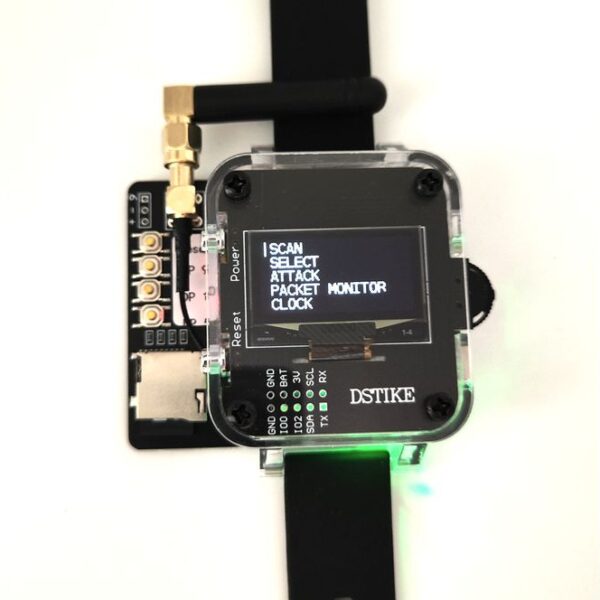 Deauther Watch Z | 2.4G Wi-Fi+HID Attack TESTING
$53.90
Deauther Watch Z | 2.4G Wi-Fi+HID Attack TESTING
$53.90
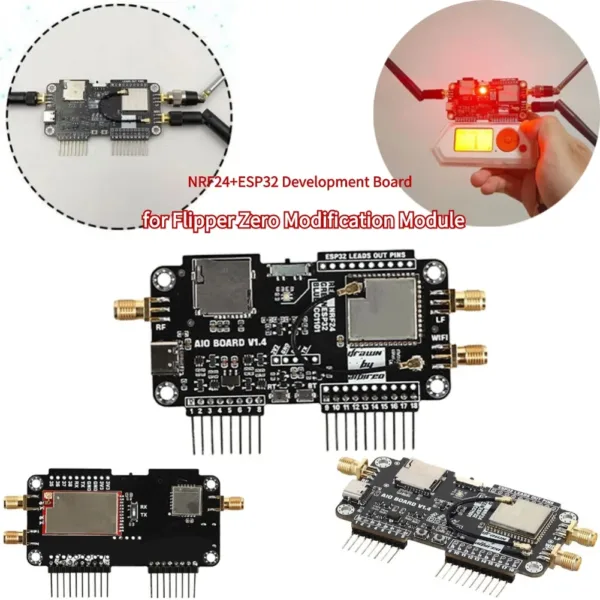 NRF24 ESP32 Development Board 2.4G High Gain CC1101 Support NRF Sniffer Mousejacker for Flipper Zeros
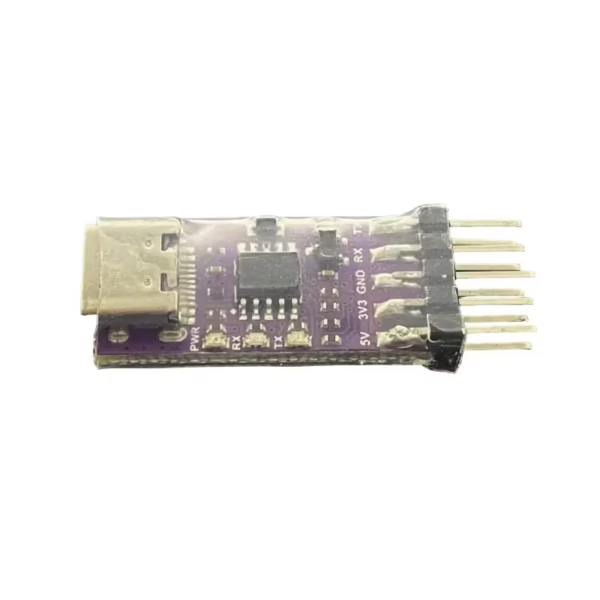 High-Speed USB to TTL UART Adapter CH343P/CH340K Serial Converter for MCU Programming
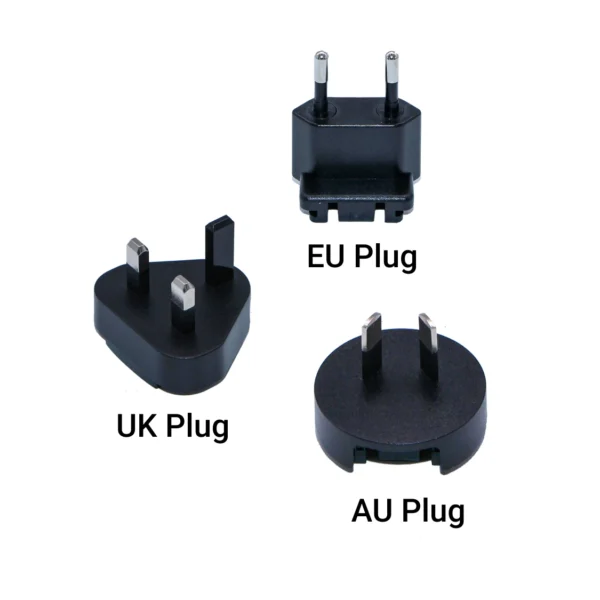 Radxa Power PD 30W and Power Plug Adapter EU/AU/UK and C to C Cable for PD 30W-normal
$2.90 – $13.90Price range: $2.90 through $13.90
Radxa Power PD 30W and Power Plug Adapter EU/AU/UK and C to C Cable for PD 30W-normal
$2.90 – $13.90Price range: $2.90 through $13.90
 Adeept RaspTank Smart Robot Car Kit for Raspberry Pi 4/3B/3B+(Board Not Included)
$158.90
Adeept RaspTank Smart Robot Car Kit for Raspberry Pi 4/3B/3B+(Board Not Included)
$158.90