You have a brilliant hardware concept. Your 3D renders look stunning, your Kickstarter video is compelling, and your early community feedback is overwhelmingly positive. You are ready to set your crowdfunding reward price.
You ask a factory for a quote, they reply with a Bill of Materials (BOM) cost of $15 per unit. You confidently set your Kickstarter early-bird price at $49, assuming a healthy profit margin.
Six months later, after the campaign ends, you are in financial ruin. The product is delayed, your bank account is empty, and you are facing a wave of angry backers.
What went wrong? You fell victim to the most common and deadly trap in hardware development: confusing the raw BOM cost with the true landed cost of your product.
As an experienced hardware ODM (Original Design Manufacturer) that has guided dozens of crowdfunding campaigns from napkin sketches to global delivery, we see this mathematical miscalculation repeatedly. Pricing a hardware product is not a guessing game. It requires a granular, forensic breakdown of every dollar spent from the factory floor to the backer’s doorstep.
This is not a generic guide. This is a deep, technical, and financial breakdown of the 7 hidden layers of hardware costs, and the exact framework you must use to price your crowdfunding product correctly and ensure you actually make a profit.
The Fatal Mistake: Raw BOM vs. Fully Burdened Landed Cost
The Raw BOM (Bill of Materials) is simply the cost of the physical components required to build one unit of your product (e.g., the PCB, the microcontroller, the plastic pellets, the screws).
The Fully Burdened Landed Cost is the actual cost to get a finished, boxed, certified, and tested product into your backer’s hands.
In our experience, the fully burdened landed cost is typically 2.5x to 3.5x the raw BOM cost. If your factory quotes you a $15 raw BOM, your true cost per unit is likely between $37 and $52. If you priced your Kickstarter at $49, you are already operating at a loss before accounting for your own salary, marketing, or post-campaign retail distribution.
To avoid this, you must build your pricing model using the following 7-layer cost breakdown.
The 7 Hidden Layers of Your True Product Cost
Layer 1: Direct Materials (The Visible BOM)
This is the baseline. It includes every electronic component, mechanical part, and raw material. However, a raw BOM is only accurate if it is based on a production-ready design, not a prototype.
If you are still using off-the-shelf development boards (like Arduino or Raspberry Pi) in your prototype, your BOM is artificially inflated and physically too large for mass production. Transitioning to a custom, optimized PCB is the only way to get a true baseline cost. Investing in early-stage, turnkey PCBA (Printed Circuit Board Assembly) prototyping ensures that your firmware, custom hardware, and mechanical enclosure are validated together before you lock in your BOM and commit to expensive steel molds. 👉 Lock in an accurate, production-ready BOM early: Explore our PCB Prototype & Turnkey PCBA Assembly Manufacturing services.
Layer 2: Direct Labor and Assembly Overhead
Factories do not assemble products for free. Direct labor includes the cost of the workers on the assembly line. Overhead includes the electricity to run the SMT (Surface Mount Technology) machines, factory rent, equipment depreciation, and line setup fees. For low-volume crowdfunding runs (e.g., 500–2,000 units), the per-unit labor and overhead cost is significantly higher than it would be for a 50,000-unit run, because the fixed setup costs are amortized over fewer units.
Layer 3: Yield Loss and Scrap Rate (The 3–5% Buffer)
No manufacturing line operates at 100% perfection. There will be defective PCBs, scratched enclosures, and failed battery tests. This is known as the yield loss.
If you manufacture exactly 1,000 units to fulfill 1,000 backers, and your yield rate is 95%, you will only have 950 working units. You will then have to pay exorbitant rush fees to manufacture 50 replacement units. Always budget for a 3% to 5% overbuild to cover DOA (Dead on Arrival) replacements, warranty claims, and assembly line scrap. This cost must be factored into your per-unit price.
Layer 4: Custom Packaging and Documentation
A bare product cannot be shipped. Your packaging cost includes:
- The retail box (custom printing, matte/gloss finishes).
- Internal protective inserts (custom die-cut EVA foam or molded pulp).
- Accessories (USB-C cables, quick-start guides, warranty cards).
- Regulatory labels (FCC, CE, RoHS, serial number barcodes) which must be printed accurately for global customs. For a moderately sized electronic device, high-quality packaging can easily add $2.00 to $6.00+ per unit to your cost.
Layer 5: Certifications and Compliance Testing
You cannot legally ship electronic devices to the US, EU, or most other markets without mandatory safety and emissions certifications. These are fixed, upfront costs that must be amortized into your per-unit pricing model.
- FCC (USA) / CE-RED (Europe): Required for any device with Wi-Fi, Bluetooth, or radio emissions. ($3,000 – $8,000+)
- RoHS / REACH: Material compliance for environmental safety. ($500 – $1,500)
- UL / IEC 62133: Mandatory if your product contains a lithium-ion battery. This is often the most expensive and time-consuming hurdle ($5,000 – $15,000+).
Layer 6: Logistics, Duties, and Last-Mile Delivery
Getting the product out of the factory is only half the battle. Your landed cost must include:
- Freight: Ocean freight (cheap but slow, 30-45 days) vs. Air freight (fast but devastatingly expensive, often $5–$15+ per kg).
- Customs Duties & Tariffs: Varies by country and product category (e.g., Section 301 tariffs for goods imported from China to the US).
- Last-Mile Fulfillment: The cost paid to a fulfillment center (like ShipBob or a specialized crowdfunding fulfillment partner) to pick, pack, and mail the individual box to the backer. This alone can range from $4 to $12 per unit depending on weight and destination.
Layer 7: Platform Fees and Payment Processing
Kickstarter and Indiegogo are not free. Between the platform fee (5%) and the payment processing fee (typically 3% + $0.20 per pledge), you will lose 8% to 10% of your total gross revenue before you even see the money. Your pricing must account for this margin erosion.
The Golden Rule of Hardware Pricing: "The Rule of 4"
To ensure your crowdfunding campaign is financially viable, veteran hardware founders and ODMs rely on a heuristic known as the "Rule of 4" (sometimes the Rule of 3 or 5, depending on margins).
The rule states: Your final retail price should be approximately 4 times your fully burdened, per-unit manufacturing cost.
- 1x covers the raw manufacturing and landed cost.
- 1x covers distributor/retailer margins (if you plan to sell in retail later) or fulfillment/logistics scaling.
- 1x covers your operational overhead (marketing, salaries, R&D amortization, customer support).
- 1x is your net profit margin to reinvest in Version 2.0 of your product.
Example Calculation: If your comprehensive cost breakdown (Layers 1 through 6) reveals your true landed cost is $25 per unit, your Kickstarter price should ideally be around $99 to $100. If you price it at $49, you are subsidizing your backers with your own bankruptcy.
How to Optimize Your BOM Without Sacrificing Quality
Knowing the true cost is only half the battle; the next step is optimizing it. However, "cheap" engineering always costs more in the long run through warranty claims and brand damage. Here is how to optimize intelligently:
- Enforce Rigorous DFM (Design for Manufacturability): A 10-minute design change in CAD can save $2.00 per unit in mold complexity and assembly time. An expert ODM will challenge your design to eliminate unnecessary parts, combine components, and simplify assembly.
- Standardize Your Components: Avoid niche, single-source microcontrollers or sensors. Design around widely available, multi-sourced ecosystems (like the ESP32 series for IoT). This not only lowers the component cost but protects you from supply chain shocks and 50-week lead times.
- Partner with a Transparent ODM: Avoid factories that give you a single, vague "per unit" number. Demand a line-item, open-book BOM breakdown. A trustworthy partner will show you exactly where the money is going and proactively suggest cost-down alternatives without degrading performance.
If you are struggling to reconcile your prototype with a realistic, scalable manufacturing budget, you need an engineering partner who understands the unique financial constraints of crowdfunding.
Frequently Asked Questions (FAQ)
Q: Can I use my prototype's BOM to set my Kickstarter price?
A: Absolutely not. A prototype BOM is based on retail-priced, off-the-shelf components (like development boards) and manual, non-scalable assembly methods. Your production BOM will look entirely different. You must have a custom PCBA and DFM-optimized mechanical design to get an accurate production quote.
Q: How do I handle unexpected cost increases during production?
A: This is why the 3–5% contingency buffer is non-negotiable in your budget. Additionally, lock in your BOM pricing with your ODM before the campaign launches. A professional ODM will help you secure component pricing and identify potential supply chain risks early.
Q: What is the most common hidden cost that destroys crowdfunding budgets?
A: Underestimating the combination of certification costs (especially battery testing) and the subsequent need for emergency air freight. If a product fails an unexpected EMC test, the 4-week delay to redesign and re-test often forces creators to abandon cheap ocean shipping in favor of emergency air freight to avoid backer revolt, wiping out all profit margins.
Q: Does your team help with cost optimization, or just manufacturing?
A: We act as a strategic engineering partner. Our DFM and supply chain review is designed specifically to identify cost-down opportunities (e.g., component substitution, assembly simplification) before tooling begins, ensuring your product is both high-quality and financially viable.
Conclusion: Price for Reality, Not for Hype
The hardware graveyard is filled with brilliantly engineered products that failed because the founders priced them for hype, not for reality.
A successful crowdfunding campaign is not just about raising money; it is about raising the right amount of money to execute flawlessly. By meticulously breaking down your BOM, accounting for all 7 layers of hidden costs, and applying the Rule of 4, you protect your project from the financial pitfalls that derail so many others.
Do not guess your way to mass production. Partner with an ODM that values transparency, engineering rigor, and your long-term success.

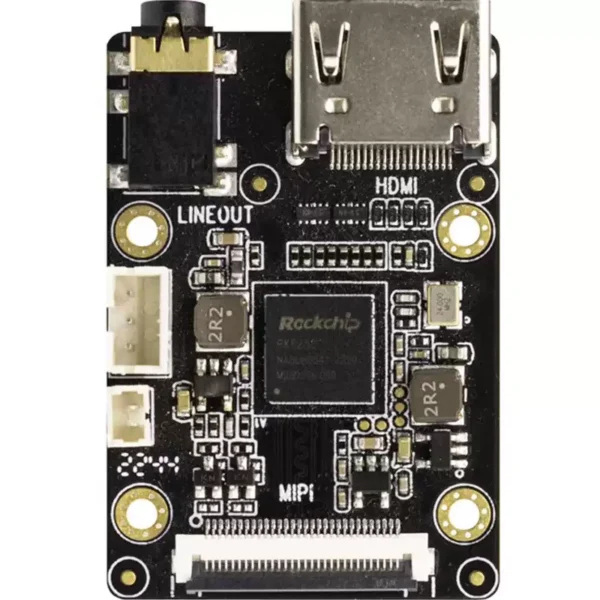 HDMI to MIPI-CSI Driver Board / 4K Video Signal Converter Board for Rockchip RK3588/RK3568
$20.80
HDMI to MIPI-CSI Driver Board / 4K Video Signal Converter Board for Rockchip RK3588/RK3568
$20.80
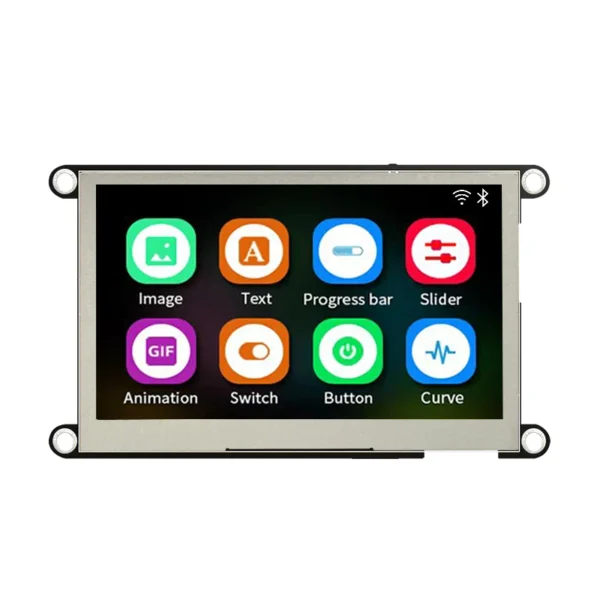 Guition ESP32-S3 8M PSRAM 4M FLASH 4.3-inch IPS 480*272 high-definition LCD display module with WIFI and Bluetooth
$18.90
Guition ESP32-S3 8M PSRAM 4M FLASH 4.3-inch IPS 480*272 high-definition LCD display module with WIFI and Bluetooth
$18.90
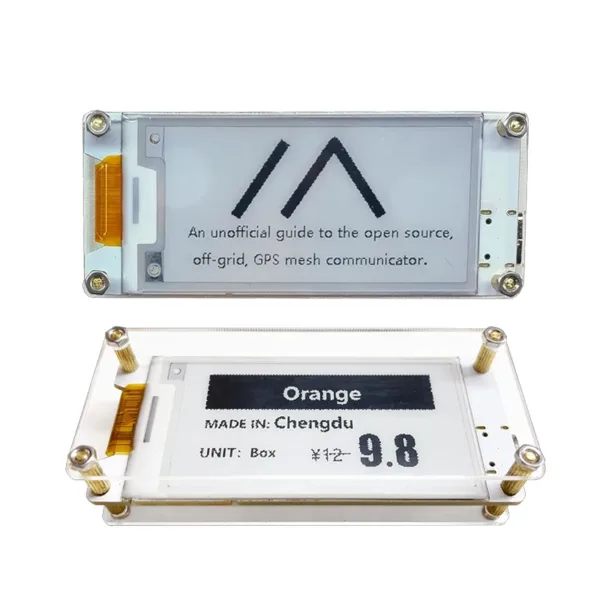 Heltec Meshtastic ESP32 Wireless Paper Eink Display Smart Price Tag via Bluebooth SX1262 LoRa and WiFi-2pcs
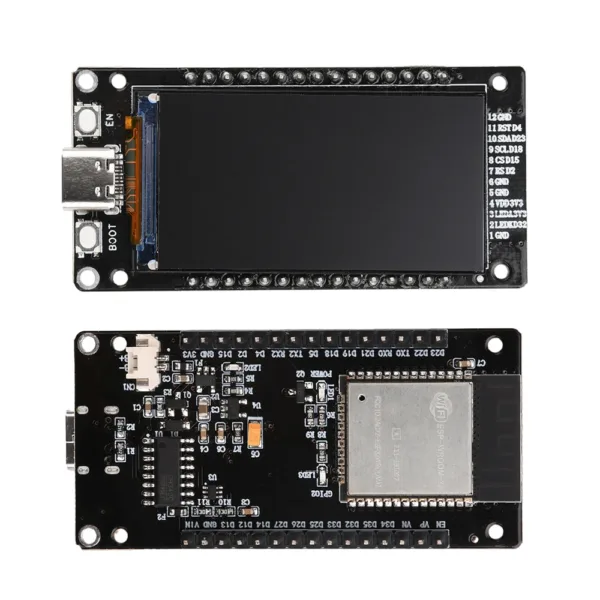 ESP32 1.9-Inch LCD Screen Wifi BT Development Board Onboard ESP-32 Module Type-C
 DIY Electronic Kit Mini Electromagnetic Gun 100V High Voltage DIY Soldering Build Kit Micro Interface DC5V Fast Charging