The "Good Enough" Trap in Commercial Hardware Scaling
Many product managers and CTOs begin their IoT journey with a pragmatic approach: they purchase an off-the-shelf development kit or a generic "smart display module" to build a Minimum Viable Product (MVP). For a limited pilot program or an internal demo, this works perfectly. The screen lights up, the data transmits, and stakeholders are impressed.
However, when it is time to transition from a 100-unit pilot to a 10,000-unit commercial or industrial rollout, the "good enough" approach collapses.
The hidden complexities of mass deployment quickly surface. Generic modules are designed for broad compatibility, not for specific, rigorous use cases. They lack the thermal management for enclosed spaces, the optical brightness for outdoor visibility, and the regulatory compliance for global markets.
At this critical juncture, companies face a choice: abandon the product, or partner with a specialized custom software and hardware development service provider to re-engineer the solution for true enterprise-grade scalability. Here is a deep dive into the four primary failure points of generic modules, and how custom engineering systematically resolves them.
Failure Point 1: The Certification Wall (FCC, CE, UL)
The Problem: Off-the-shelf modules often cut corners on electromagnetic compatibility (EMC). They may pass basic functional tests, but when submitted to an accredited lab for formal FCC (USA), CE (Europe), or UL (Safety) certification, they frequently fail due to excessive radiated emissions or insufficient isolation.
The Custom Engineering Fix: Certification is not a final testing phase; it is a foundational design constraint. When we design a custom carrier board and display interface, we implement enterprise-grade EMC mitigation from the first schematic. This includes:
- Dedicated, multi-layer ground planes to shield high-frequency display data lines.
- Strategic placement of ferrite beads and transient voltage suppression (TVS) diodes on all external I/O ports.
- Custom antenna tuning and keep-out zones to ensure Wi-Fi, Bluetooth, or Cellular radios operate cleanly without interfering with the display’s touch controller. By designing for compliance upfront, we eliminate the catastrophic 8-to-12-week delays and $10,000+ re-spin costs associated with failed certification attempts.
Failure Point 2: Supply Chain Fragility and the EOL Cliff
The Problem: The consumer display market is highly volatile. A generic 5-inch TFT panel you built your MVP around can be quietly marked as End-of-Life (EOL) by the manufacturer, replaced by a slightly different model with a different pinout or driver IC. For a company relying on that specific module, this means an immediate halt in production and a frantic, expensive redesign.
The Custom Engineering Fix: A professional development provider treats supply chain resilience as a core engineering requirement. We do not just select components based on datasheet specs; we evaluate their long-term manufacturing roadmaps. When designing your custom solution, we proactively identify "second-source" display panels and microcontrollers. We design the custom PCB footprint and write the firmware abstraction layers to support multiple, pin-compatible alternatives. If a primary component faces allocation issues, your production line can seamlessly switch to the validated alternative with zero code changes and zero board re-spins.
Failure Point 3: Environmental and UI Limitations
The Problem: Generic modules are typically rated for "commercial indoor" use (0°C to 40°C). Deploy them in a warehouse, an agricultural setting, or an outdoor kiosk, and they will fail. The screen becomes unreadable in direct sunlight, the touch interface becomes erratic when users wear gloves, or the device thermally throttles and crashes in high ambient temperatures.
The Custom Engineering Fix: Customization allows us to tailor the hardware and software to the exact environmental demands of your use case:
- Hardware: We integrate high-nit (1000+ nits) sunlight-readable displays with custom backlight driver circuits that dynamically adjust brightness based on ambient light sensors, preserving battery life. We also specify industrial-grade components and apply conformal coating to the custom PCB to protect against moisture, dust, and chemical exposure.
- Software: We optimize the graphical user interface (GUI) for high-contrast visibility and configure the touch controller firmware to ignore the capacitive noise generated by gloved hands or water droplets, ensuring reliable operation in harsh conditions.
Failure Point 4: The Software Integration Bottleneck
The Problem: Many generic smart display modules come with "black-box" firmware. They might offer a basic, rigid API, but they do not allow deep customization. If your enterprise requires a specific security protocol (like mutual TLS), a custom edge-computing algorithm to preprocess sensor data before cloud transmission, or a highly branded, proprietary user interface, the generic firmware becomes a hard ceiling.
The Custom Engineering Fix: As a comprehensive custom software and hardware development service provider, we deliver complete transparency and control. We develop the embedded firmware from the ground up (or heavily customize open-source frameworks like ESP-IDF) to meet your exact architectural requirements. This includes implementing secure, signed Over-The-Air (OTA) update mechanisms, building custom middleware to seamlessly bridge your hardware with your existing enterprise cloud infrastructure (AWS, Azure, or private servers), and ensuring the codebase is thoroughly documented and handed over to you, free of vendor lock-in.
Bridging the Gap: From Custom Design to Flawless Manufacturing
Re-engineering a product for enterprise scale is only half the equation. The custom design must be translated into a reliable, repeatable manufacturing process.
A common mistake is handing a newly optimized custom schematic to a low-cost, high-volume factory that lacks the engineering support to troubleshoot assembly issues. This leads to poor solder joints on fine-pitch display connectors, inconsistent quality, and high defect rates.
To prevent this, our development methodology is intrinsically linked with professional manufacturing execution. We do not simply deliver Gerber files. We facilitate a seamless transition by leveraging rigorous turnkey PCB prototype and assembly manufacturing services.
This ensures that the engineers who designed your custom display interface are directly involved in validating the SMT assembly process, creating custom testing jigs, and establishing Automated Optical Inspection (AOI) protocols specific to your board. This closed-loop system guarantees that the high reliability designed into the schematic is perfectly replicated in every single unit that leaves the factory floor.
The Strategic ROI of Custom Engineering
Transitioning from a generic module to a fully custom-engineered solution requires an upfront investment in NRE (Non-Recurring Engineering). However, the Return on Investment (ROI) becomes rapidly apparent when you consider the total cost of ownership:
- Elimination of Rework: Avoiding a single failed certification cycle or supply-chain-induced redesign saves tens of thousands of dollars and months of lost revenue.
- Optimized Unit Economics: By removing unnecessary components found on generic dev boards and optimizing power consumption, the per-unit BOM cost at scale is often lower than buying pre-assembled generic modules.
- Brand Differentiation: A custom, rugged, and highly responsive user interface becomes a tangible competitive advantage, justifying premium pricing and increasing customer retention.
Frequently Asked Questions (FAQ)
Q: We already have a working prototype using a generic module. Can you custom-engineer it for mass production without starting from scratch?
A: Absolutely. We specialize in "productization" and scaling. We will audit your current prototype, identify the components and architectural choices that pose risks at scale, and systematically redesign the hardware and firmware to meet enterprise-grade standards while preserving your core functionality and timeline.
Q: How do you handle Intellectual Property (IP) when developing custom firmware and hardware for us?
A: We operate on a strict "work for hire" model. Upon fulfillment of the agreed-upon project milestones, 100% of the Intellectual Property—including all schematic files, PCB layouts, firmware source code, and mechanical CAD files—is transferred entirely to your company. We also execute comprehensive NDAs prior to any technical discussions.
Q: Can you source and integrate specialized displays, such as high-brightness outdoor screens or E-ink displays?
A: Yes. We maintain direct relationships with Tier-1 display manufacturers globally. Whether you require high-nit IPS panels for outdoor kiosks, ultra-low-power E-ink displays for long-life battery applications, or specific ruggedized touch overlays, we can source, integrate, and optimize the firmware for your exact requirements.
Q: What is the typical timeline for re-engineering a generic module into a custom, production-ready solution?
A: While it depends on the complexity of the required changes (e.g., adding custom security, changing display types), a typical productization and custom redesign project takes between 10 to 16 weeks from the initial architecture review to a fully validated, DFM-optimized Engineering Validation Test (EVT) build ready for certification.
Ready to Scale Your IoT Product with Confidence?
Do not let the limitations of generic hardware compromise your product’s reliability, your supply chain, or your brand reputation. Scaling requires precision, foresight, and deep engineering expertise.
At ESP32S.com, we are your dedicated custom software and hardware development service provider. We specialize in transforming fragile prototypes into robust, certified, and highly manufacturable enterprise-grade IoT solutions with exceptional display interfaces.
👉 Let’s engineer your product for true scale. Request a comprehensive ODM/OEM development inquiry today. Our senior architecture team will review your current challenges and provide a clear, actionable roadmap to a production-ready custom solution within 24 hours.

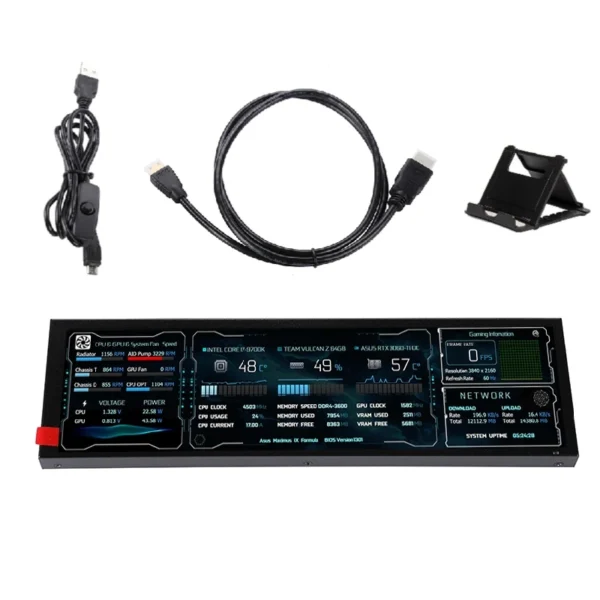 8.8 Inch Long Strip LCD Screen 1920*480 HD-MI Driver Board Secondary Monitor AIDA64 Sub Display CPU GPU SSD Information
$53.90
8.8 Inch Long Strip LCD Screen 1920*480 HD-MI Driver Board Secondary Monitor AIDA64 Sub Display CPU GPU SSD Information
$53.90
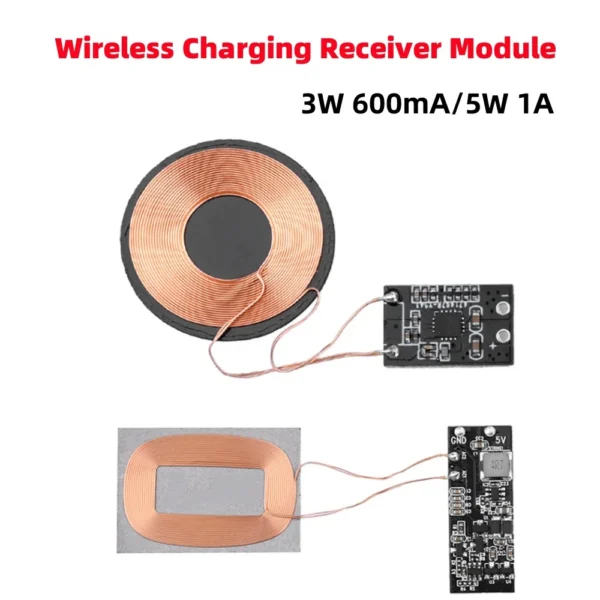 3W 600mA/5W 1A Wireless Charging Receiver Module Small Coil Built-in 5V Charging Wireless Charger PCBA Board
$2.60 – $2.90Price range: $2.60 through $2.90
3W 600mA/5W 1A Wireless Charging Receiver Module Small Coil Built-in 5V Charging Wireless Charger PCBA Board
$2.60 – $2.90Price range: $2.60 through $2.90
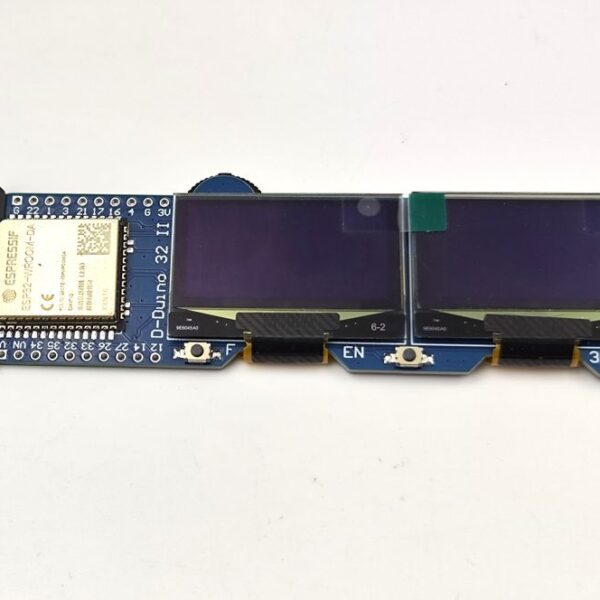 DSTIKE D-duino-32 II Dual Screen ESP32-WROOM-DA
$27.90
DSTIKE D-duino-32 II Dual Screen ESP32-WROOM-DA
$27.90
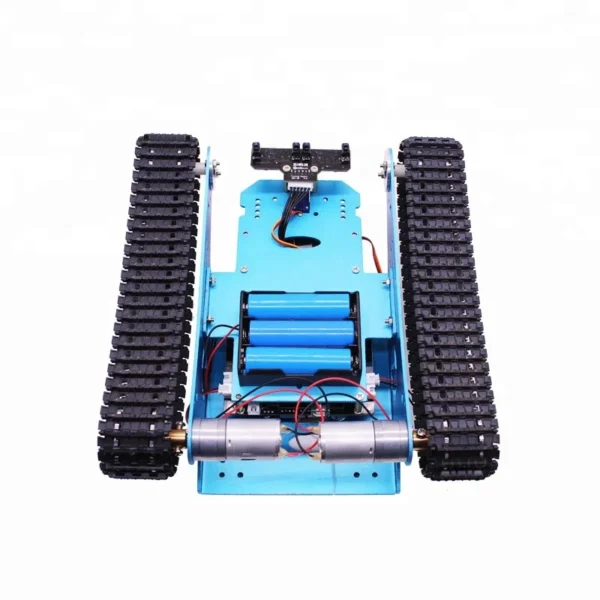 Yahboom DIY G1 Educational Blue Tank Smart Robot Track Car Kit For Smartduino R3 With Link Tracking Module
$125.90
Yahboom DIY G1 Educational Blue Tank Smart Robot Track Car Kit For Smartduino R3 With Link Tracking Module
$125.90
 Bluetooth Gateway Hub Smart Home Bridge Support Fingerbot Tuya Bluetooth Device Smart Life App Remote Control Mesh Bridge