The Founder’s Dilemma: Build vs. Buy in Hardware
Every hardware startup eventually hits the same wall. You have a validated concept, perhaps some seed funding, and a clear vision for your product—maybe it’s a smart home hub with a custom touchscreen, an industrial IoT sensor, or a next-generation wearable.
Now, you need to build it. You are faced with a critical strategic decision: Do we hire an in-house engineering team, or do we partner with a professional custom hardware and software development service provider?
On the surface, building an in-house team feels like the "safe" choice. You retain total control, and the IP stays under your roof. However, the harsh reality of hardware development in 2026 is that the hidden costs, management overhead, and execution risks of an internal team frequently derail promising startups.
Conversely, partnering with a specialized, turnkey development agency is no longer just an "outsourcing" tactic; it is a strategic lever that allows founders to access world-class engineering, established supply chains, and manufacturing expertise at a fraction of the cost and time.
Here is an objective, deep-dive comparison of why smart founders are increasingly choosing custom development providers.
The Hidden Costs of Building an In-House Hardware Team
When founders budget for an in-house team, they typically only calculate base salaries. The reality is far more complex. To build a functional hardware product from scratch, you need a minimum of four distinct roles:
- Hardware/PCB Engineer: To design schematics, select components, and route the board.
- Embedded Firmware Engineer: To write the low-level code, manage power consumption, and drive peripherals (like custom displays).
- Mechanical/Industrial Designer: To design the enclosure, ensure thermal management, and prepare 3D CAD files for tooling.
- Supply Chain / Project Manager: To source components, manage factory relationships, and keep the timeline on track.
The Real Financial Burden
In 2026, the fully loaded cost (salary, benefits, taxes, equipment, software licenses like Altium or SolidWorks, and lab equipment like oscilloscopes) for this minimum viable team easily exceeds $350,000 to $500,000 per year in developed markets, and still represents a massive $150,000+ commitment even in lower-cost regions when factoring in management overhead and recruitment time.
The "Silo" Problem
Even if you afford this team, hardware development is not like software development. You cannot have the firmware developer working in isolation from the PCB designer. If your product features a custom screen, the hardware engineer must route high-speed RGB or SPI lines with precise impedance control, while the firmware engineer must optimize the GUI framework (like LVGL) to match the hardware’s memory constraints. If these two roles are not deeply integrated and experienced in working together, you will face endless debugging cycles, screen flickering, and "ghost touch" issues.
A reputable custom hardware and software development service provider is not just a "vendor"; they act as your technical co-founder. Here is the tangible value they bring to your project from Day 1.
1. Immediate Access to a Cross-Disciplinary "A-Team"
When you sign with a turnkey agency, you instantly activate a synchronized team of hardware, firmware, mechanical, and supply chain experts. They already have established workflows, communication protocols, and a history of solving the exact integration problems your product will face. You pay for output and milestones, not for their idle time or learning curves.
2. Proven Architectures and Reduced Technical Risk
An experienced provider doesn’t reinvent the wheel. For example, if your product requires Wi-Fi, Bluetooth, and a rich display interface, we immediately recommend proven, scalable platforms like the ESP32-S3. We know its peripheral limitations, its power profiles, and how to optimize its PSRAM for smooth UI rendering. This architectural certainty prevents the catastrophic "mid-project pivot" that plagues inexperienced in-house teams.
3. Design for Manufacturing (DFM) from the First Schematic
This is perhaps the most critical differentiator. An in-house team building their first product will often design a prototype that works perfectly on a desk but is a nightmare to manufacture. They might place components too close together for SMT (Surface Mount Technology) machines, or specify an enclosure with undercuts that require expensive, complex injection molds.
A custom development provider designs for the factory floor from the very beginning. We anticipate assembly challenges, standardize components, and ensure your product can be built at scale with high yield rates and predictable costs.
4. Supply Chain Leverage and Component Security
In 2026, component availability is still a strategic concern. A specialized agency has established accounts with Tier-1 distributors and direct relationships with PCBA factories. We can secure better pricing on BOM (Bill of Materials) than a startup can on its own, and more importantly, we proactively design with "second-source" alternatives in case a critical chip faces a shortage.
Spotlight: The Complexity of Custom Display Integration
To illustrate why specialized expertise matters, let’s look at one of the most common requests we handle: custom screen and display hardware/software development.
Adding a display to an IoT device dramatically improves user experience, but it introduces massive complexity:
- Hardware: The PCB must cleanly route high-speed display data lines without causing EMI (Electromagnetic Interference) that could disrupt the device’s Wi-Fi antenna or capacitive touch sensors.
- Power: Displays are power-hungry. The hardware must include efficient power management ICs (PMICs), and the firmware must implement aggressive sleep modes and dynamic backlight control.
- Software: Driving a crisp, responsive UI requires deep knowledge of graphics libraries (e.g., LVGL, SquareLine Studio) and memory management to prevent frame drops or crashes.
A freelance hardware engineer might design a board that technically connects to a screen, but lacks the firmware expertise to make it usable. A software-only agency might write beautiful UI code that crashes the underlying microcontroller due to poor memory allocation.
A comprehensive custom development provider handles the entire stack. We select the optimal display panel, design the carrier board, write the optimized firmware, and test the thermal and EMI performance as a single, unified system. This holistic approach is nearly impossible to replicate with a fragmented, in-house hiring strategy.
Bridging the Gap: From Prototype to Mass Production
The ultimate goal of development is not a prototype; it is a shippable, reliable product. The transition from Engineering Validation (EVT) to mass production is where most startups fail.
When you work with a full-service agency, this transition is seamless. We don’t just hand you a set of Gerber files and wish you luck. We manage the entire NPI (New Product Introduction) process.
By leveraging integrated turnkey PCB prototype and assembly manufacturing services, we ensure that the engineers who designed your board are the same experts overseeing its SMT assembly, testing, and quality control. This closed-loop feedback system catches manufacturing defects early, ensures consistent quality, and dramatically accelerates your path to a successful crowdfunding campaign or retail launch.
When Should You Build an In-House Team?
To maintain complete objectivity (and E-E-A-T credibility), we acknowledge that building an in-house team does make sense eventually.
Typically, this happens at Series A funding or beyond, when your V1 product is already successfully selling in the market, and you need a dedicated team to rapidly iterate on V2, V3, and manage long-term, high-volume lifecycle updates.
However, for the critical V0 to V1 phase—where speed, budget efficiency, and risk mitigation are paramount—partnering with an experienced custom development provider is overwhelmingly the smarter business decision.
Frequently Asked Questions (FAQ)
Q: Will I lose ownership of my product’s Intellectual Property (IP) if I outsource?
A: No. Reputable custom development agencies operate on a "work for hire" basis. Our contracts explicitly state that upon milestone payments, 100% of the IP—including schematics, source code, CAD files, and BOMs—is transferred entirely to you. We also sign strict NDAs before any discussions begin.
Q: How do you communicate and manage the project if we are in different time zones?
A: We treat you as a core partner. We assign a dedicated Project Manager who overlaps with your working hours, provides weekly detailed progress reports, and hosts regular video syncs. You will have full visibility into our task boards and version control systems.
Q: Can you take over a project that an in-house team or another agency started but failed to finish?
A: Yes, we specialize in "rescue" projects. We will conduct a thorough audit of the existing schematics, code, and mechanical designs, identify the technical debt or bottlenecks, and provide a clear, honest assessment of what it will take to get the project across the finish line.
Q: Do you only work with large corporations, or do you help early-stage startups?
A: We actively partner with startups, inventors, and crowdfunding creators. We understand the unique constraints of early-stage ventures and offer phased development plans that align with your funding milestones, ensuring you only spend money when it directly de-risks your product.
Ready to De-Risk Your Hardware Journey?
You don’t need to navigate the complexities of hardware engineering, firmware optimization, and supply chain management alone. Partner with a team that has the proven expertise to turn your vision into a manufacturable, market-ready product.

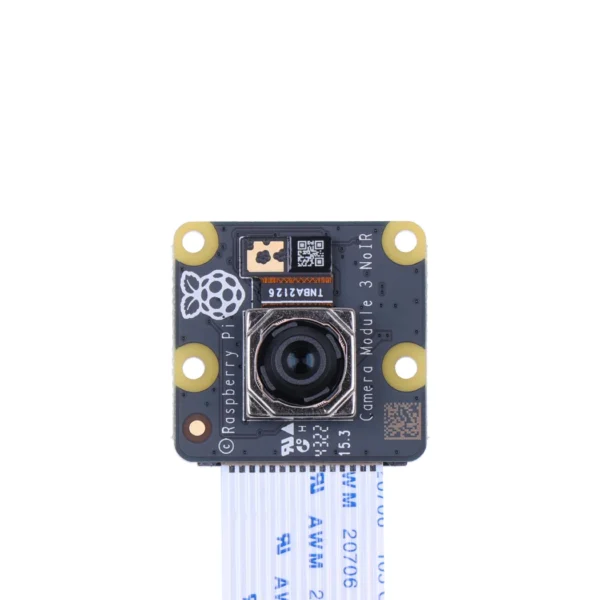 Raspberry Pi Camera 3 NoIR
$35.90
Raspberry Pi Camera 3 NoIR
$35.90
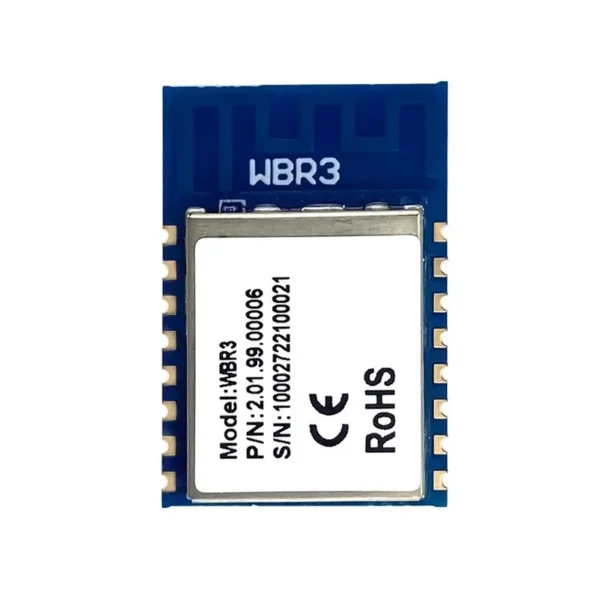 Tuya WBR3 Module Wi-Fi/Bluetooth RTL8720CF Chip Low Power Embedded wbr3 Serial Transmission Module
$3.90
Tuya WBR3 Module Wi-Fi/Bluetooth RTL8720CF Chip Low Power Embedded wbr3 Serial Transmission Module
$3.90
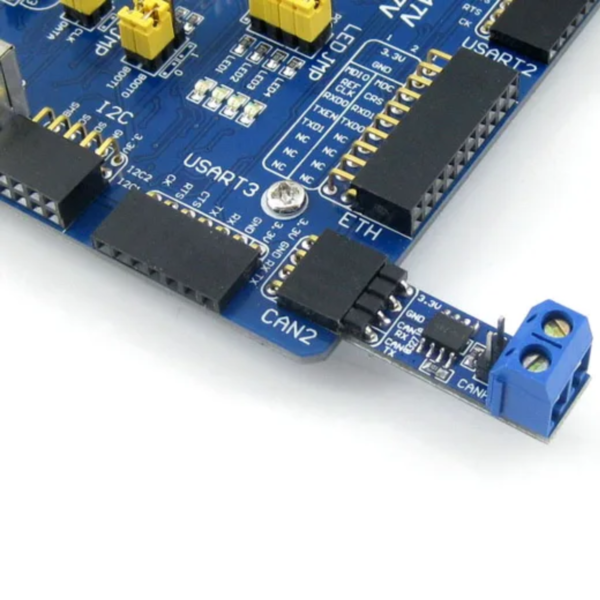 2pcs SN65HVD230 CAN Board, Onboard CAN Transceiver SN65HVD230, 3.3V, ESD Protection
$10.90
2pcs SN65HVD230 CAN Board, Onboard CAN Transceiver SN65HVD230, 3.3V, ESD Protection
$10.90
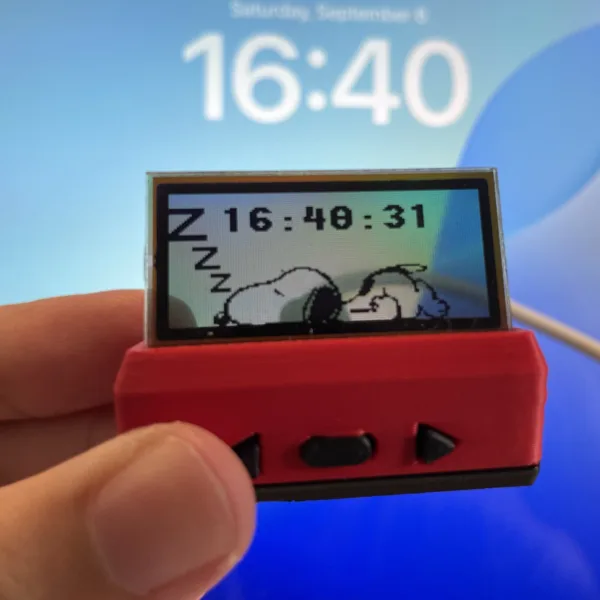 Ultra-Mini Transparent Clock, Calendar & Retro Game Console, 3-in-1 Multi-Function E-Paper Desktop Gadget
$6.90
Ultra-Mini Transparent Clock, Calendar & Retro Game Console, 3-in-1 Multi-Function E-Paper Desktop Gadget
$6.90
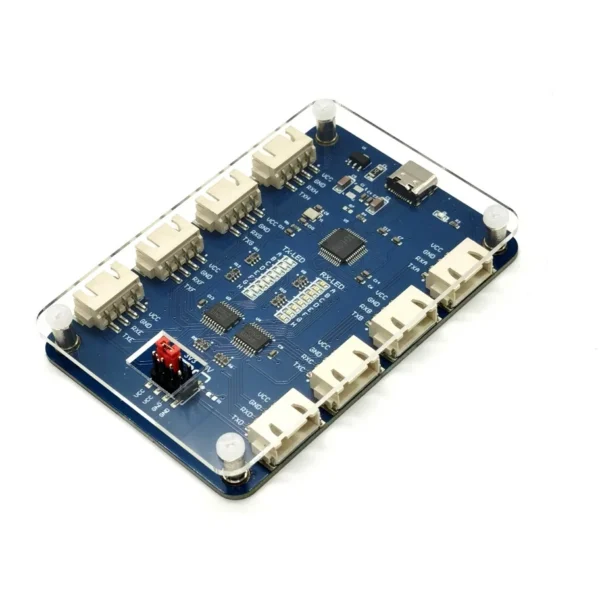 USB to 4CH/8CH TTL Serial Module Independent Serial Port up to 6Mbps CH348 Chip
$28.90 – $39.80Price range: $28.90 through $39.80
USB to 4CH/8CH TTL Serial Module Independent Serial Port up to 6Mbps CH348 Chip
$28.90 – $39.80Price range: $28.90 through $39.80