The High Stakes of Choosing a Hardware Development Partner
You have a validated idea, a target market, and perhaps even a waiting list of customers. But you lack the in-house engineering team to build it. So, you decide to outsource.
This is the most critical decision your hardware startup will make.
The internet is flooded with agencies and freelancers promising "fast, cheap, and perfect" custom hardware development. The reality is that choosing the wrong partner is the number one reason hardware startups fail. It leads to missed Kickstarter deadlines, unmanufacturable designs, runaway NRE (Non-Recurring Engineering) costs, and ultimately, "vaporware."
Use this 7-question framework during your initial consultations to vet any potential development agency.
The 7 Critical Questions to Ask Your Potential Development Partner
1. "Do you handle both hardware AND software development in-house?"
Why it matters: A smart device is only as good as the synergy between its physical components and its code. If an agency only does PCB design and outsources the firmware (or vice versa), you become the project manager bridging the gap between two disconnected teams. When the touch screen lags or the Wi-Fi drops, they will blame each other.
✅ The Green Flag: They have dedicated, co-located (or tightly integrated) teams for hardware engineering, embedded software/firmware, and industrial/mechanical design. They understand how PCB layout affects antenna performance and how firmware optimizes battery life.
🚩 The Red Flag: "We can find a good freelancer for the app/firmware part," or "We only do the hardware, you handle the code."
2. "How do you ensure the design is ready for mass production (DFM)?"
Why it matters: Anyone can wire up a "Frankenstein" prototype that works on a desk. But designing a product that can be assembled by a factory at scale, with a low defect rate and predictable BOM (Bill of Materials) cost, requires a completely different skill set.
✅ The Green Flag: They mention DFM (Design for Manufacturing) and DFA (Design for Assembly) in the first meeting. They proactively discuss component sourcing, SMT (Surface Mount Technology) optimization, and mold flow analysis for enclosures.
🚩 The Red Flag: They focus solely on making a "cool-looking demo" and dismiss manufacturing concerns until the prototype is already finished.
3. "Can you provide a realistic, phased timeline and transparent cost breakdown?"
Why it matters: Hardware development is not a black box. You deserve to know where your money is going and how long each phase will take.
✅ The Green Flag: They provide a phased proposal (e.g., Phase 1: PRD & Architecture, Phase 2: EVT Prototype, Phase 3: DVT & Pre-compliance, Phase 4: PVT & Mass Production). They clearly separate NRE (development) costs from per-unit BOM costs and tooling costs.
🚩 The Red Flag: A single, vague lump-sum quote with no breakdown, or a promise that is suspiciously fast and cheap compared to industry standards.
4. "What is your experience with our specific technology stack (e.g., ESP32, custom displays, IoT protocols)?"
Why it matters: Generalist agencies will learn on your dime. You need a partner who has already solved the problems you are about to face.
✅ The Green Flag: They can immediately discuss the pros and cons of specific architectures (like the ESP32-S3 for smart displays), mention specific GUI frameworks (like LVGL), and share anonymized case studies of similar products they have brought to market.
🚩 The Red Flag: Vague answers, or an insistence on using an obscure, proprietary chip just because it’s what they are familiar with, ignoring your long-term supply chain needs.
5. "How do you handle prototyping and the transition to manufacturing?"
Why it matters: The gap between a hand-soldered prototype and a factory production run is where most startups bleed money. You need a seamless transition.
🚩 The Red Flag: "We will give you the Gerber files, and you can find a factory yourself." (This leaves you completely exposed to manufacturing defects with no technical support).
6. "Who will own the Intellectual Property (IP) and source code?"
Why it matters: Your product is your company’s most valuable asset. You must retain full ownership.
✅ The Green Flag: They explicitly state in their contract that upon final payment, 100% of the schematics, PCB layout files, firmware source code, and CAD files are transferred to you. They are also willing to sign a robust NDA (Non-Disclosure Agreement) before hearing your idea.
🚩 The Red Flag: Hesitation to sign an NDA, or contract language suggesting they retain a license to your custom code or design.
7. "What happens after the product is launched? Do you offer ongoing support?"
Why it matters: Firmware bugs will be found in the field. Component shortages may require last-time buys or redesigns. Your product will need a lifecycle.
✅ The Green Flag: They offer clear, structured post-launch support packages, including firmware OTA (Over-The-Air) update support, component obsolescence management, and V2.0 iteration planning.
🚩 The Red Flag: "Our job is done when we deliver the final files."
The Turnkey Advantage: Why a Unified Service Provider Wins
As a founder, your job is to validate the market, build the brand, and secure funding. Your development partner’s job is to de-risk the technology and execution.
When you choose a fragmented approach (e.g., an Upwork freelancer for firmware, a local shop for PCB, and an overseas factory for assembly), you become the full-time, unpaid systems integrator. You absorb all the communication overhead and technical risk.
A true custom software and hardware development service provider acts as your technical co-founder. We consolidate the entire workflow:
- Industrial & Mechanical Design: Crafting enclosures that are beautiful, ergonomic, and manufacturable.
- Hardware Engineering: Designing robust, DFM-optimized PCBs, with deep expertise in platforms like ESP32 for optimal performance and cost.
- Embedded Software & Cloud: Writing efficient, stable firmware and integrating seamless IoT connectivity.
- Supply Chain & Manufacturing: Managing component procurement, PCBA assembly, testing, and final box-build.
This unified approach reduces time-to-market by up to 30%, prevents costly "finger-pointing" between vendors, and ensures the final product matches the original vision.
Ready to Build with a Partner You Can Trust?
Don’t let your hardware idea stall due to unreliable development partners or unmanufacturable designs. You need a team that understands the entire lifecycle of a product, from a napkin sketch to a successful crowdfunding campaign or retail launch.
👉 Take the first step toward a de-risked product launch. Request a comprehensive ODM/OEM development inquiry today. Our engineering team will review your concept, provide honest feedback on feasibility, and deliver a transparent, phased roadmap and budget estimate within 24 hours.
Frequently Asked Questions (FAQ)
Q: What is the typical cost of custom hardware and software development?
A: It varies based on complexity. A simple IoT device might start at $2,000–$10,000 in NRE (Non-Recurring Engineering) costs, while a complex product with custom displays, enclosures, and cloud infrastructure can range from $15,000 to $50,000+. We provide detailed, itemized quotes after a free initial requirements assessment.
Q: Do you work with startups that only have an idea, or do I need technical specifications?
A: We work with founders at all stages. If you only have an idea, our first phase involves helping you define the Product Requirements Document (PRD), select the right architecture, and create a realistic budget. You do not need to be a technical expert to work with us.
Q: Can you help if my previous developer left me with unfinished, messy code and schematics?
A: Yes. We frequently take over "rescue" projects. We will conduct a comprehensive code and hardware audit, identify the technical debt, and provide a clear plan to stabilize and complete the product.
Q: Do you sign NDAs before discussing my product idea?
A: Absolutely. We respect your intellectual property. We are happy to sign a mutual NDA before our first introductory call to ensure your concept remains completely confidential.

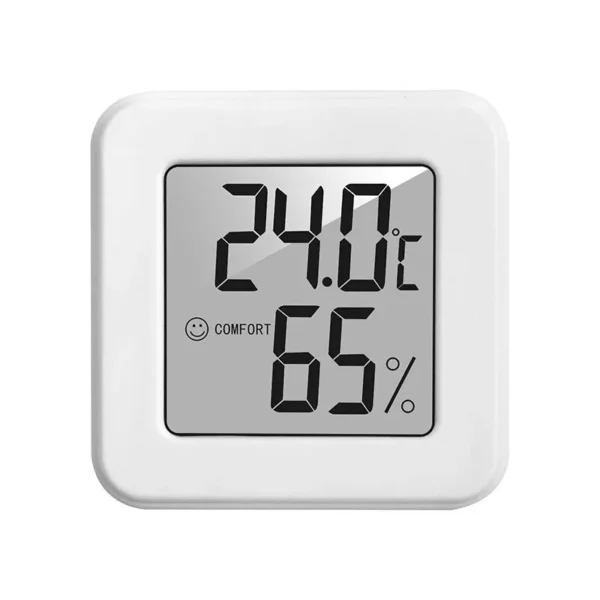 White Mini Electronic Temperature and Humidity Meter Car Thermometer with Smiling Face Display Refrigerator Thermometer
$3.90
White Mini Electronic Temperature and Humidity Meter Car Thermometer with Smiling Face Display Refrigerator Thermometer
$3.90
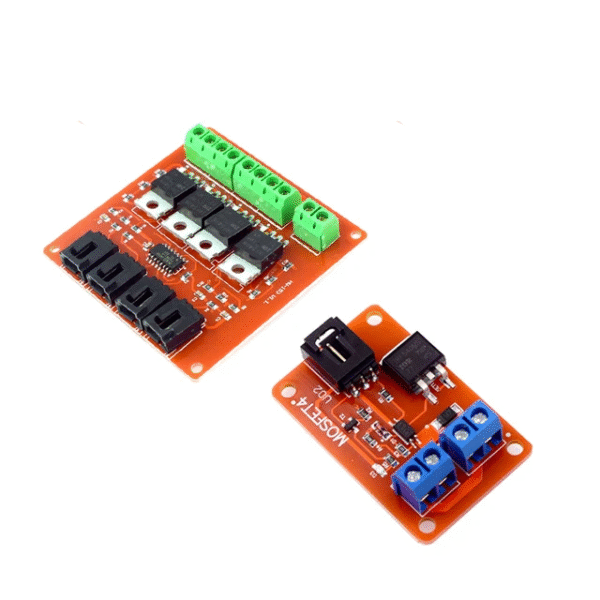 1 / 4 Channel one Four Route MOSFET Button IRF540 V4.0+ MOSFET Switch Module for Arduino Isolated power module
$2.90 – $3.90Price range: $2.90 through $3.90
1 / 4 Channel one Four Route MOSFET Button IRF540 V4.0+ MOSFET Switch Module for Arduino Isolated power module
$2.90 – $3.90Price range: $2.90 through $3.90
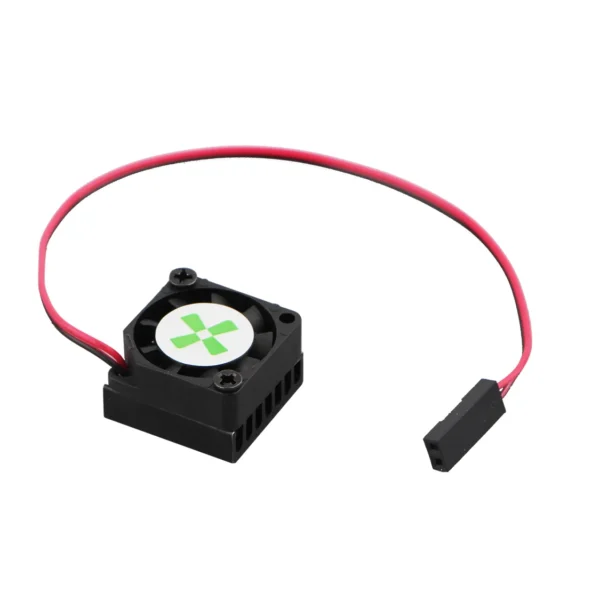 Radxa Heatsink 2012B for Radxa AICore DX-M1M
$7.90
Radxa Heatsink 2012B for Radxa AICore DX-M1M
$7.90
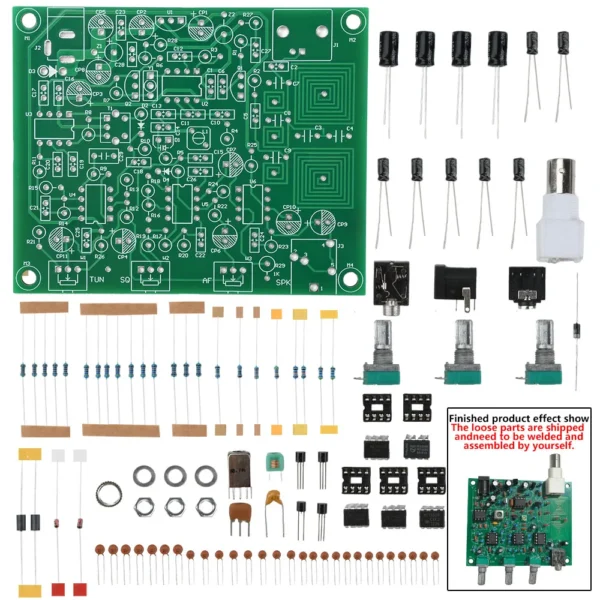 AM Signal Radio Aviation Band Receiver Diy Kits High Sensitivity Air Band Aircraft Tower Calls VHF Antenna Electronic KIT
$15.90
AM Signal Radio Aviation Band Receiver Diy Kits High Sensitivity Air Band Aircraft Tower Calls VHF Antenna Electronic KIT
$15.90
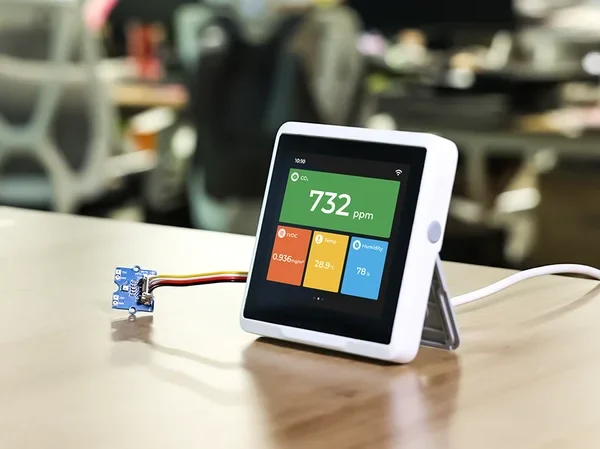 SenseCAP Indicator D1Pro, 4-Inch Touch Screen IoT development platform powered by ESP32S3 & RP2040
$179.80
SenseCAP Indicator D1Pro, 4-Inch Touch Screen IoT development platform powered by ESP32S3 & RP2040
$179.80