
EMC/EMI Checklist Before Your Board Goes to Certification
EMC testing is expensive, and failing it is worse than the test fee — it costs you a respin, a
When designing battery-powered Internet of Things (IoT) devices—such as smart logistics tags, agricultural sensors, or outdoor environmental monitors—choosing the right display technology is often the single most critical decision in your product architecture. A poor choice can lead to frequent battery replacements, unreadable screens in direct sunlight, and skyrocketing operational costs.
At esp32s.com, we frequently consult with product managers and engineering teams who are torn between the three dominant display technologies: E-Paper (E-Ink), OLED, and TFT-LCD. While all three have their place in consumer electronics, their performance diverges drastically in industrial and outdoor IoT scenarios. This guide provides a data-driven, commercial-level comparison to help you make the right decision for your next project.
* The most significant differentiator in IoT design is energy efficiency.
TFT-LCDs rely on a constant backlight to create images. Even when displaying a black screen, the backlight remains on, with liquid crystals merely blocking the light. Industry data shows that 70-85% of an LCD’s total energy is consumed by the backlight alone, regardless of the content displayed. For a typical 15.6-inch high-brightness industrial LCD, power consumption can easily reach 20-35 watts. Even for smaller 6-inch panels, the constant backlight draws between 60-120 mW continuously.
OLEDs offer a slight improvement through their self-emissive nature. Each pixel generates its own light, meaning black pixels consume near-zero energy. In dark-themed applications, OLEDs can reduce consumption by up to 65% compared to LCDs. However, displaying bright or white content (common in data-heavy dashboards) forces all pixels to light up, driving power consumption back up.
E-Paper, by contrast, operates on a bistable electrophoretic mechanism. It consumes power only when the image is being refreshed. Once the particles settle, the display requires zero power to maintain the image. For an IoT device that updates data only once every 30 minutes or hour, the average daily power consumption of an E-Paper display is negligible. This allows devices to run for months or even years on small coin-cell batteries or minimal solar harvesting, a feat impossible for LCDs or OLEDs.
For outdoor applications, visibility is non-negotiable.
Traditional LCDs and OLEDs are emissive or transmissive displays; they fight against ambient light. In direct sunlight, they require massive brightness boosts (often 1000 nits or higher) to remain readable, which further drains the battery and generates significant heat. Even at high brightness, glare and reflections often wash out the content.
E-Paper is a reflective display technology, mimicking the way traditional ink reflects ambient light. The brighter the sunlight, the clearer and sharper the text becomes. With a reflectance rate of over 40% (compared to less than 10% for standard LCDs), E-Paper provides a paper-like, glare-free reading experience that is perfectly suited for outdoor logistics, smart city signage, and agricultural monitoring.
From a commercial perspective, the Total Cost of Ownership (TCO) extends far beyond the initial purchase price of the screen.
So, which technology should you choose?
Navigating the technical and commercial trade-offs of display technology can be complex. At esp32s.com, we specialize in providing high-quality E-Paper modules perfectly optimized for low-power microcontrollers like the ESP32. Whether you need standard 2.13″, 4.2″, or 7.5″ modules for rapid prototyping, or require custom OEM/ODM services for large-scale manufacturing, our engineering team is ready to help you build a reliable, energy-efficient product.
Visit our catalog today or contact us to discuss how E-Paper can transform your IoT deployment.
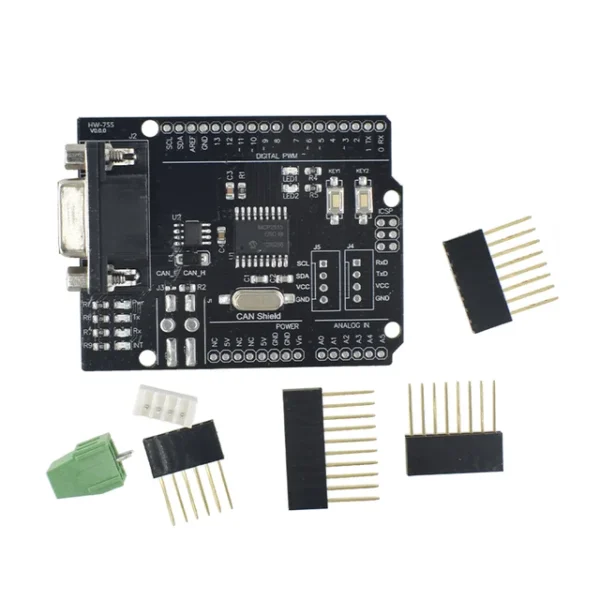 MCP2515 CAN Bus Shield Board Module SUB-D Connector Standard UART IIC SPI LED Indicator Controller CAN DC 2.7-5.5V for Arduino
$9.90
MCP2515 CAN Bus Shield Board Module SUB-D Connector Standard UART IIC SPI LED Indicator Controller CAN DC 2.7-5.5V for Arduino
$9.90
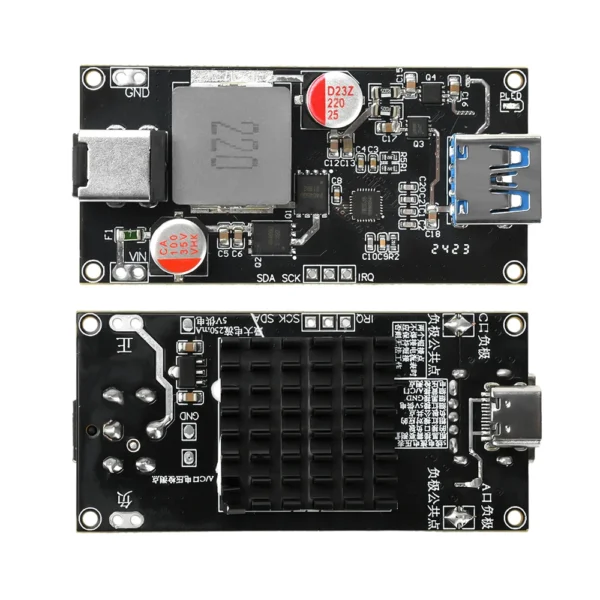 PD3.1 Charger High Power 140w All Protocol Desktop Intelligent Fast Charging Module Support Fast Charging Protection for Arduino
$8.90
PD3.1 Charger High Power 140w All Protocol Desktop Intelligent Fast Charging Module Support Fast Charging Protection for Arduino
$8.90
 WT32-ETH01 Embedded Serial Port Networking Bluetooth-compatible Ethernet WIFI Combo Gateway MCU ESP32 Wireless Module WT32 ETH01
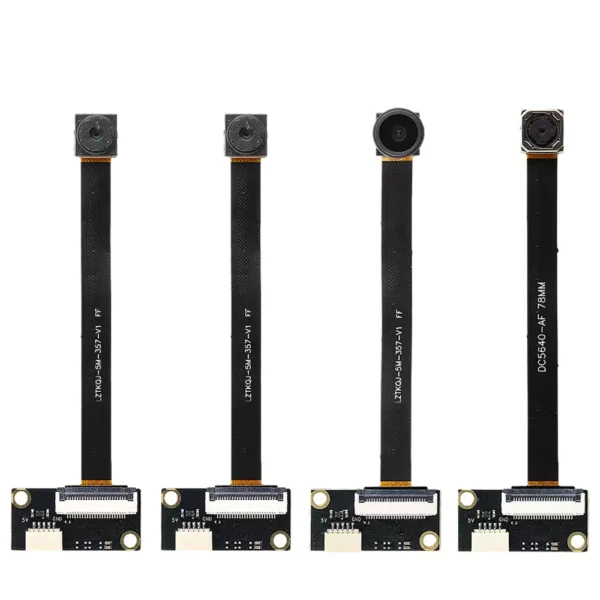 OV5640 USB Camera Module – 5MP HD, Autofocus, 66°/120°/160° FOV
$17.90
OV5640 USB Camera Module – 5MP HD, Autofocus, 66°/120°/160° FOV
$17.90
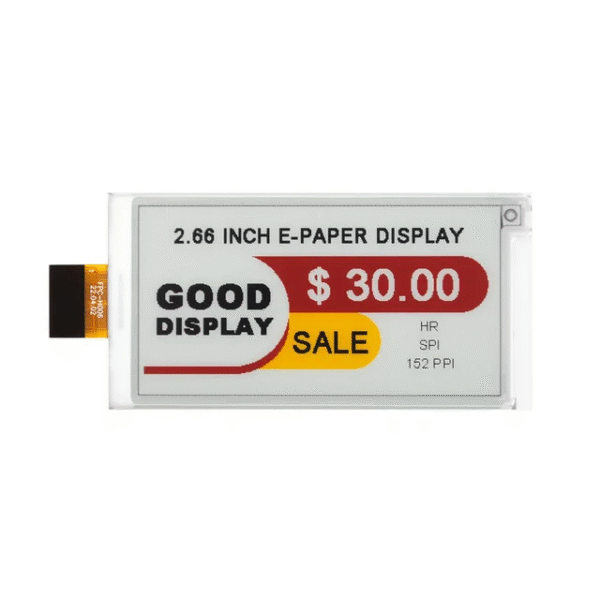 2.66 inch High-Res 4-Color E-Ink Industrial-Grade E-Paper Module 360x184 SPI Ultra-Thin Low Power 12s Refresh
$10.90 – $23.90Price range: $10.90 through $23.90
2.66 inch High-Res 4-Color E-Ink Industrial-Grade E-Paper Module 360x184 SPI Ultra-Thin Low Power 12s Refresh
$10.90 – $23.90Price range: $10.90 through $23.90
EMC testing is expensive, and failing it is worse than the test fee — it costs you a respin, a
We review a lot of boards — some designed in-house, some by other contractors, some by founders doing their own
When a battery-powered product dies too soon, the instinct is to blame the firmware. Surely there is a sleep mode
A wearable PCB is not just a small PCB. It is a board where every constraint that normally has some
The STM32 family is the workhorse of embedded hardware, and almost every project that uses one starts the same way:
The nRF52840 is one of the most popular BLE and multiprotocol chips in the world, and for good reason: it
No account yet?
Create an Account