The "Dev Kit" Trap: Why Generic Boards Fail in Mass Production
Every hardware journey starts with a development kit. You buy an off-the-shelf ESP32 or Raspberry Pi board, plug in some sensors, write some code, and voilà—it works. For a proof-of-concept or a Kickstarter demo, this is perfectly fine.
However, when it’s time to transition to mass production, relying on generic development boards becomes a critical liability. Here is why:
- Bloated BOM Costs: Dev kits include extra components (debuggers, redundant voltage regulators, oversized connectors) that your final product doesn’t need, unnecessarily inflating your per-unit cost.
- Physical Constraints: They are rarely optimized for size. Fitting a rectangular dev kit into a sleek, ergonomic, or space-constrained consumer or industrial enclosure is often impossible without costly compromises.
- Power Inefficiency: Generic boards are designed to be powered via USB, not optimized for battery life or complex power sequencing required in commercial products.
- Reliability Risks: Consumer-grade dev kits are not designed to pass rigorous FCC/CE certifications or survive the thermal and vibrational stresses of real-world environments.
Specialized Board Design: One Size Does Not Fit All
A common mistake startups make is hiring a generic "PCB layout freelancer" who treats every project the same. In reality, different products require fundamentally different board architectures. As a specialized development partner, we tailor our engineering approach to the exact category of your device.
Here are three common types of specialized custom boards we design, and the unique challenges they present:
1. Smart Display & UI Control Boards
- The Application: Smart home panels, wearable dashboards, medical device interfaces, and interactive kiosks.
- The Specialized Challenge: Driving a crisp, responsive graphical user interface (GUI) requires high-speed data transfer and significant memory bandwidth.
- Our Custom Approach: We architect these boards around SoCs with native display interfaces (like the ESP32-S3 with RGB or MIPI support). We implement strict impedance control and length-matching for high-speed display data lines to prevent screen flickering or visual artifacts. Furthermore, we carefully isolate the display’s power tree to prevent switching noise from interfering with the device’s Wi-Fi/Bluetooth antenna or capacitive touch sensors.
2. Industrial IoT (IIoT) Gateway & Controller Boards
- The Application: Factory floor monitoring, agricultural sensors, smart city infrastructure.
- The Specialized Challenge: These boards must survive extreme temperatures, electrical noise, and require robust, long-range connectivity (RS485, CAN bus, LoRa, or Cellular).
- Our Custom Approach: We prioritize ruggedness and isolation. This includes designing robust protection circuits (TVS diodes, opto-isolators), conformal coating compatibility, and heavy-duty connectors. The firmware is equally specialized, focusing on data buffering, edge computing, and fail-safe reconnection protocols.
3. Ultra-Low-Power Sensor Nodes
- The Application: Battery-powered asset trackers, environmental monitors, smart agriculture tags.
- The Specialized Challenge: The device must operate for months or years on a single battery charge. Every microamp (µA) of current matters.
- Our Custom Approach: We meticulously design the power management architecture. This involves selecting ultra-low-quiescent-current PMICs (Power Management ICs), implementing hardware-level power gating to completely shut off unused peripherals, and writing highly optimized firmware that leverages deep-sleep modes and interrupt-driven wake-ups.
The Critical Link: Hardware-Software Co-Design
When hardware and software are developed in silos, disasters happen. For example:
- The hardware engineer places a critical I2C sensor on a pin that the firmware developer later discovers conflicts with the Wi-Fi antenna tuning.
- The mechanical team shrinks the enclosure, forcing the hardware team to move the battery connector, which the firmware team didn’t account for in the battery-level monitoring code.
Our Co-Design Methodology: At ESP32S.com, our firmware engineers are involved in the schematic review before the PCB is routed. If we are building a smart display board, the firmware team is already setting up the LVGL (Light and Versatile Graphics Library) environment and testing display drivers on evaluation modules while the hardware team finalizes the custom carrier board. This parallel, integrated workflow eliminates the dreaded "integration phase" bottlenecks that delay projects by months.
From Custom Schematic to Reliable Manufacturing
Designing a specialized custom board is only half the battle. The ultimate test is whether it can be manufactured reliably at scale.
A custom board designed without manufacturing in mind will result in low yield rates, where the factory has to manually rework solder joints or where components are placed too close to board edges, leading to breakage during depanelization.
This is why our custom design process is inextricably linked with professional manufacturing. We don’t just hand you a set of Gerber files and wish you luck. We ensure a seamless transition by utilizing rigorous turnkey PCB prototype and assembly manufacturing processes.
By managing the prototyping and assembly in-house or through our vetted, specialized partners, we ensure that:
- Component footprints are verified against the actual manufacturer’s datasheets.
- Solder paste stencils are optimized to prevent bridging on fine-pitch components (like QFN packages used in modern SoCs).
- Automated Optical Inspection (AOI) and In-Circuit Testing (ICT) are programmed specifically for your board’s unique architecture.
If you are looking for a partner to design your specialized control board, ask these three critical questions:
- "Can you show me examples of custom boards you’ve designed for my specific application?" (Look for proven experience in display interfaces, low-power design, or industrial ruggedness, depending on your needs).
- "How do you handle firmware development alongside the hardware design?" (The answer should be "concurrently" or "as an integrated team," not "we can recommend a freelancer").
- "What is your DFM review process before releasing the design for fabrication?" (They should have a formal checklist covering SMT optimization, thermal relief, and test point placement).
Frequently Asked Questions (FAQ)
Q: Can you customize a board based on an existing open-source design or reference schematic?
A: Yes. We frequently take open-source reference designs (like those from Espressif) and adapt them for specific commercial applications. We optimize the BOM for cost and availability, adjust the form factor to fit your enclosure, and add proprietary features or sensors as required.
Q: Do you provide the firmware source code for the custom board?
A: Absolutely. As a full-service software and hardware development provider, we deliver complete, well-documented firmware source code alongside the hardware design files. You retain 100% ownership of the Intellectual Property (IP) upon project completion.
Q: How do you ensure the custom board will pass FCC/CE certification?
A: Compliance is designed in, not tested in. Our hardware engineers follow strict RF design guidelines, including proper ground plane stitching, antenna keep-out zones, and filtering on all external cables. We also conduct pre-compliance scanning in our lab before sending the board to the official certification body, drastically reducing the risk of failure.
Q: What information do you need to start a custom board design project?
A: Ideally, a Product Requirements Document (PRD) outlining the desired features, target size, power source (battery vs. wall), connectivity needs, and target BOM cost. If you don’t have a PRD, our team can help you create one during the initial architecture phase.
Ready to Build a Board That Actually Fits Your Product?
Stop trying to force generic development kits into commercial products. Your innovation deserves a custom control board that is perfectly optimized for its specific application, cost-effective to manufacture, and backed by robust, co-designed firmware.
At ESP32S.com, we are your dedicated custom software and hardware development service provider, specializing in turning complex requirements into reliable, specialized hardware.
👉 Let’s engineer your specialized control board the right way. Request a comprehensive ODM/OEM development inquiry today. Our architecture team will review your application needs and provide a tailored technical proposal and budget estimate within 24 hours.

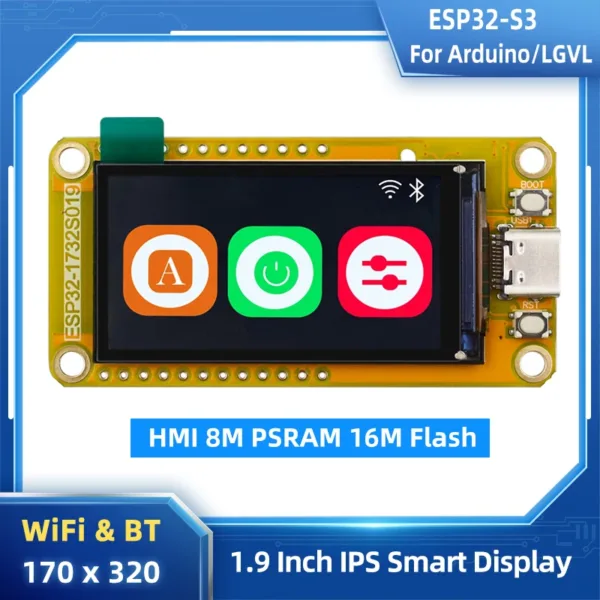 ESP32-S3 HMI 8M PSRAM 16M Flash for Arduino LVGL WIFI&Bluetooth 1.9 Inch 170*320 Smart Display Screen IPS LCD TFT Module
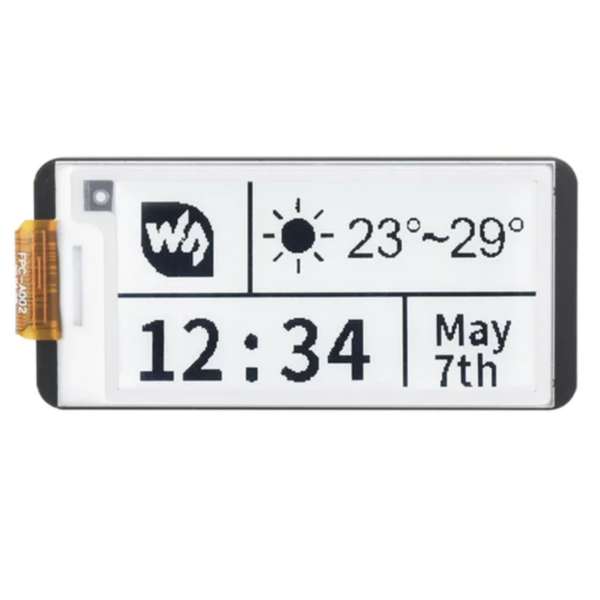 2.13inch E-Paper HAT+, HAT+ Standard, Partial Refresh Support, E-Ink Display for Raspberry Pi
$16.50
2.13inch E-Paper HAT+, HAT+ Standard, Partial Refresh Support, E-Ink Display for Raspberry Pi
$16.50
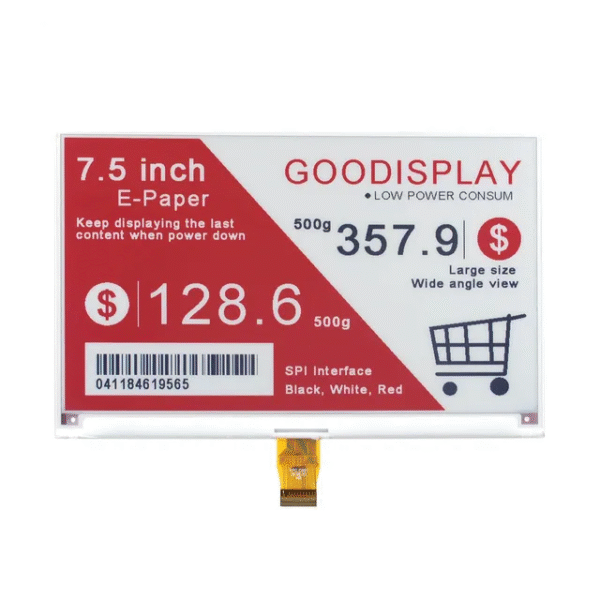 7.5inch E-Paper Red Electronic Paper Display Tri-color E-ink Display 1.3s Partial Update of Black and White Parts
$46.90 – $68.90Price range: $46.90 through $68.90
7.5inch E-Paper Red Electronic Paper Display Tri-color E-ink Display 1.3s Partial Update of Black and White Parts
$46.90 – $68.90Price range: $46.90 through $68.90
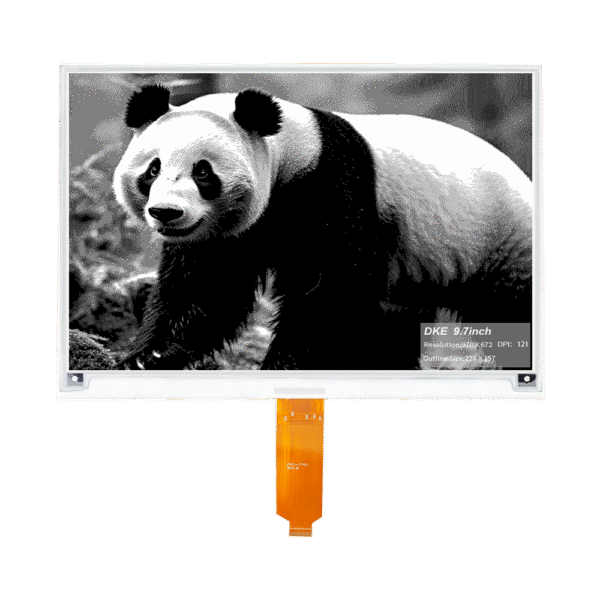 9.7 Inch Black White Epaper Display
$60.00
9.7 Inch Black White Epaper Display
$60.00
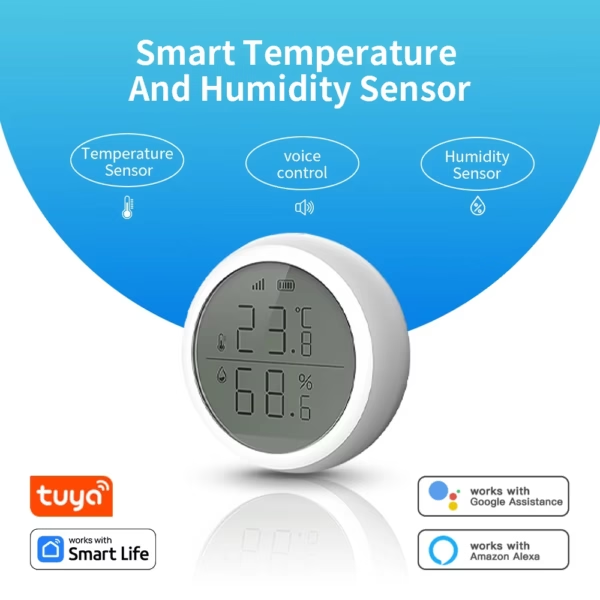 ZigBee Smart Temperature & Humidity Sensor with LCD Display | Alexa & Google Home Compatible | Indoor Room Thermometer Hygrometer