When prototyping or deploying a MiniClaw robotic gripper, relying solely on a laptop, smartphone, or serial monitor for calibration and control is a major bottleneck. Engineers frequently face the frustration of tweaking PID values, testing servo endpoints, or diagnosing network drops without any local visual feedback.
The solution is not a heavier, more expensive industrial PLC, but a highly integrated, next-generation microcontroller node. Enter the ESP32-C5 paired with a 2.8-inch TFT LCD Touchscreen. This combination transforms a basic MiniClaw into a self-contained, visually interactive robotic endpoint, bridging the gap between raw microcontroller performance and user-friendly operation.
WHY THE ESP32-C5 IS A GAME CHANGER FOR ROBOTIC GRIPPERS
While the ESP32-C3 and C6 are excellent, the ESP32-C5 introduces a critical hardware advantage for demanding wireless robotics: dual-band Wi-Fi 6.
Key Specifications for Advanced MiniClaw Deployments:
- Dual-Band Wi-Fi 6 (802.11ax): Supports both 2.4 GHz and 5 GHz bands. In industrial or maker-space environments saturated with 2.4 GHz IoT devices, shifting the MiniClaw control channel to 5 GHz virtually eliminates RF interference and command latency.
- Massive Memory Headroom: 16MB Flash and 8MB PSRAM. This is not just for storage; 8MB of PSRAM is essential for buffering complex graphical user interfaces (GUIs) on the TFT screen and handling larger JSON payloads from modern robotic APIs without crashing.
- Native Mesh Protocols: Built-in support for Zigbee 3.0 and Thread 1.3, allowing the MiniClaw to join low-power, self-healing mesh networks independent of the main Wi-Fi router.
- Integrated Touch Interface: The 2.8-inch TFT LCD provides immediate, tactile feedback for manual servo jogging, calibration, and network status monitoring.
REAL-WORLD WORKFLOW: CALIBRATING A MINICLAW WITHOUT A LAPTOP
Imagine deploying a MiniClaw on a sorting conveyor. With a standard ESP32 setup, changing the "open" and "close" servo angles requires flashing new code or connecting a laptop via USB.
With the OpenClaw ESP32-C5 TFT setup, the workflow is entirely standalone:
- Power on the MiniClaw node. The ESP32-C5 boots directly into a custom local web server or native LVGL-based touch interface.
- Use the on-screen sliders to manually jog the gripper servos to the exact physical limits of the object being grasped.
- Tap "Save Calibration" on the touchscreen. The ESP32-C5 writes these new PWM duty cycle boundaries directly to its 16MB flash memory (using Preferences or LittleFS).
- The MiniClaw is now instantly ready for autonomous operation, with zero downtime for reprogramming.
This level of operational independence is what separates hobbyist prototypes from field-deployable robotic assets.
ARCHITECTURE UPGRADE: THE HYBRID AI CONTROL MODEL
While the ESP32-C5 with a touchscreen is powerful enough to act as a standalone controller, the most robust MiniClaw deployments use a hybrid architecture.
In this model, the ESP32-C5 handles the "real-time" layer: generating glitch-free hardware PWM signals for the servos, reading local limit switches, and maintaining a stable 5GHz Wi-Fi 6 or Thread connection.
However, high-level decision-making is offloaded to a dedicated edge computer. For example, running computer vision models to identify grasp points, or calculating complex inverse kinematics for a multi-axis arm, requires significant computational power.
This is where the OpenClaw Host Ubuntu Mini PC becomes essential. Equipped with a 4G connection and 128G of storage, this all-in-one host runs the Lobster API and local automation scripts. It sends high-level coordinate or state commands over the network to the ESP32-C5. The ESP32-C5 then executes those commands with microsecond precision. This separation of concerns ensures that heavy OS-level tasks on the host never cause servo jitter on the claw.
You can explore the dedicated touchscreen controller here
And discover the ultimate edge-computing host for your robotic API here
DEPLOYMENT TROUBLESHOOTING AND FAQ
Q: Does the 5GHz Wi-Fi 6 on the ESP32-C5 have shorter range than 2.4GHz?
A: Yes, 5GHz signals attenuate faster through solid objects. However, for a MiniClaw deployed in a single room, lab, or on a specific machine, the trade-off is highly favorable. The dramatic reduction in 2.4GHz congestion (from microwaves, Bluetooth, and legacy IoT) results in far more reliable, low-latency command execution, which is critical for robotic control.
Q: Can the 8MB PSRAM be used to run a local camera feed for the MiniClaw?
A: The ESP32-C5’s PSRAM is excellent for buffering GUI assets, network packets, and kinematic data. However, for high-frame-rate computer vision processing, it is architecturally superior to use the ESP32-C5 strictly as a motion controller, and route a separate USB or IP camera feed directly to the OpenClaw Ubuntu Mini PC host, which has the CPU/GPU resources to process the vision data and send simple grip commands back to the ESP32.
Q: How does Thread 1.3 benefit a MiniClaw project?
A: Thread creates a low-power, IPv6-based mesh network. If you are deploying multiple MiniClaws in a facility, they can communicate with each other and a central border router without flooding your primary Wi-Fi access point. This is ideal for synchronized, multi-robot sorting or assembly tasks.
Q: Is the Lobster API compatible with this ESP32-C5 setup?
A: Absolutely. The ESP32-C5 acts as the perfect networked endpoint for the Lobster API. The Ubuntu Mini PC host can send standardized JSON or MQTT commands over Wi-Fi or 4G to the ESP32-C5, which then translates those high-level instructions into precise, hardware-timed servo movements.
CONCLUSION
Upgrading your MiniClaw project from a basic, serial-dependent prototype to a professional, visually interactive node requires the right hardware foundation. The integration of the ESP32-C5’s dual-band Wi-Fi 6, massive PSRAM, and a 2.8-inch TFT touchscreen provides unparalleled debugging and standalone control capabilities.
When paired with a robust edge-computing host like the OpenClaw Ubuntu Mini PC, you achieve the perfect balance of high-level AI intelligence and rock-solid, real-time mechanical execution. Stop wrestling with laptop dependencies and RF interference; build a MiniClaw control system designed for the real world.

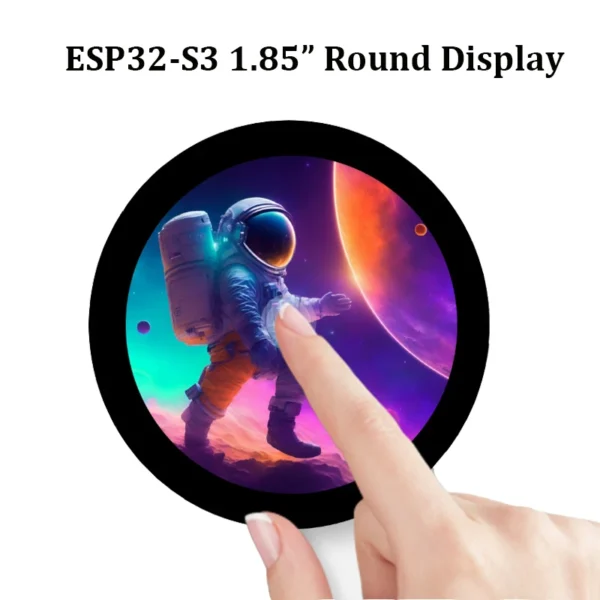 Waveshare ESP32-S3 1.85 inch IPS TFT Round LCD Display Development Board 360x360 Support WiFi Bluetooth for LVGL GUI/HMI/Arduino
$28.90 – $32.80Price range: $28.90 through $32.80
Waveshare ESP32-S3 1.85 inch IPS TFT Round LCD Display Development Board 360x360 Support WiFi Bluetooth for LVGL GUI/HMI/Arduino
$28.90 – $32.80Price range: $28.90 through $32.80
 MaTouch ESP32-S3 1.28" Rotary IPS-Display GC9A01
$32.90
MaTouch ESP32-S3 1.28" Rotary IPS-Display GC9A01
$32.90
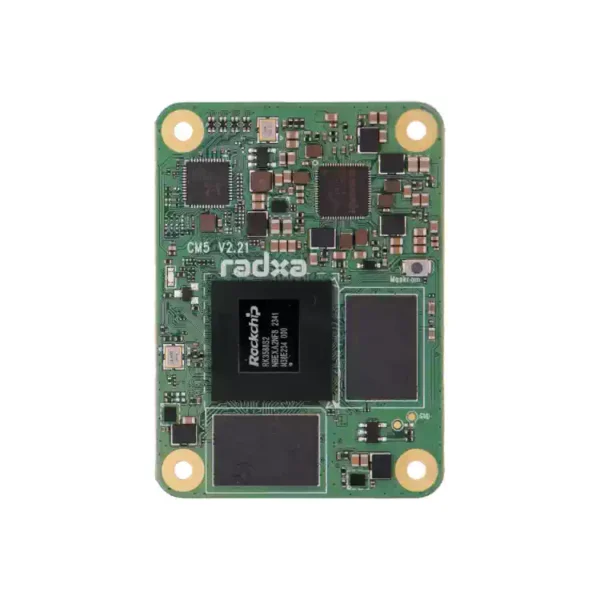 Radxa CM5 RK3588S2 Octa-core CPU Core Board / Compute Module (Raspberry Pi Compatible)
$287.60
Radxa CM5 RK3588S2 Octa-core CPU Core Board / Compute Module (Raspberry Pi Compatible)
$287.60
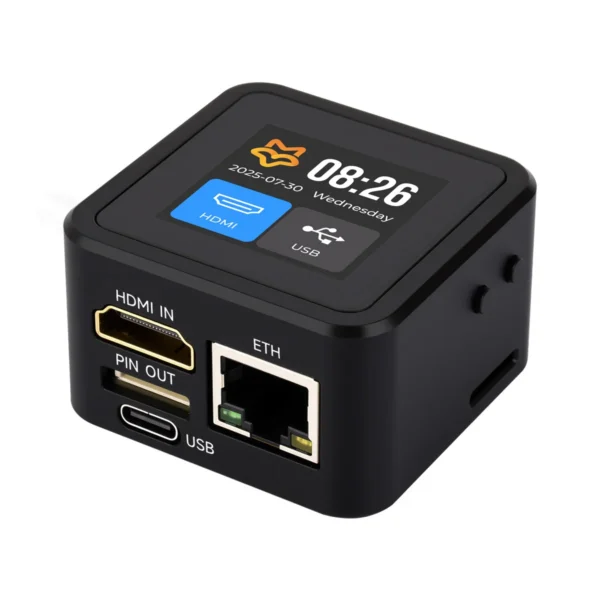 Waveshare Luckfox PicoKVM: Lightweight IP KVM, 1080p60 HDMI Input & HID Remote Management
$45.90 – $68.90Price range: $45.90 through $68.90
Waveshare Luckfox PicoKVM: Lightweight IP KVM, 1080p60 HDMI Input & HID Remote Management
$45.90 – $68.90Price range: $45.90 through $68.90
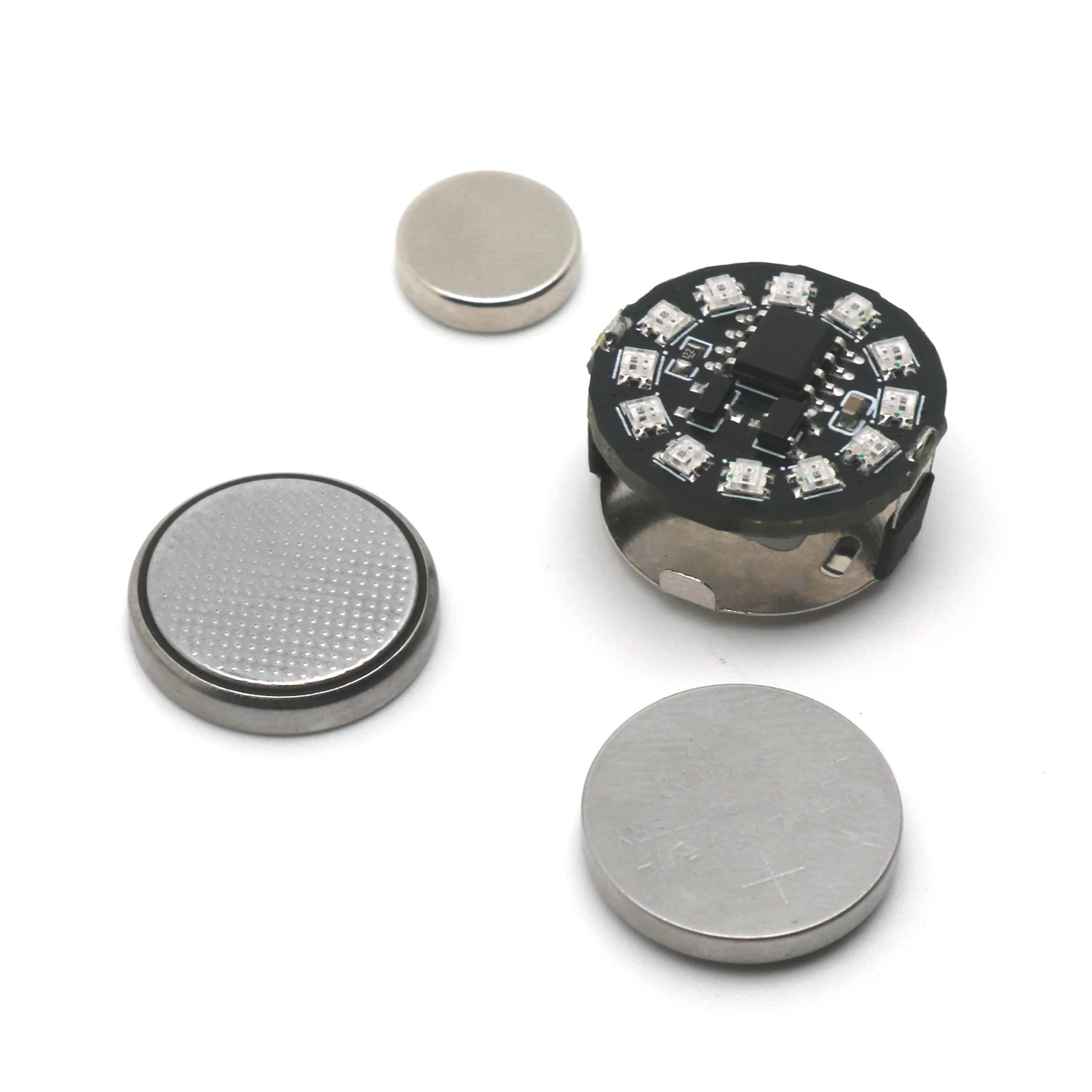 4mode Colorful Magnetic Control Lamp Wireless LED Light magnet induction lamp + button Battery DIY Anime Landscape Diorama Model
$5.90
4mode Colorful Magnetic Control Lamp Wireless LED Light magnet induction lamp + button Battery DIY Anime Landscape Diorama Model
$5.90