Moving a MiniClaw robotic gripper from a benchtop prototype to a production-grade deployment exposes a harsh reality: microcontrollers alone are not enough. While an ESP32-C3, C5, or C6 is brilliant at generating microsecond-precise PWM signals for servos, relying on it to handle computer vision, complex inverse kinematics, database logging, and Wi-Fi reconnections simultaneously is a recipe for system failure.
The industry standard for reliable robotics is not a single, overburdened chip. It is a hybrid edge architecture. This guide details how to separate concerns in your MiniClaw design, pairing the real-time reliability of ESP32 microcontrollers with the computational power of an Ubuntu Mini PC running the Lobster API, ensuring zero jitter, robust connectivity, and scalable deployment.
THE "FRANKENSTEIN" PROTOTYPE PROBLEM
Most early-stage MiniClaw projects suffer from what engineers call the "Frankenstein" architecture: a microcontroller wired to a laptop via USB, running a Python script that occasionally stutters when the operating system performs a background update, causing the servo to twitch or drop an object.
The core pain points of this setup are:
- Compute Starvation: Running a lightweight machine learning model (like YOLO for object detection) on a microcontroller severely starves the CPU cycles needed for stable network communication and PWM generation.
- Network Fragility: If the local Wi-Fi router reboots or experiences congestion, a basic ESP32 script may hang, requiring a physical power cycle of the robot.
- Lack of State Management: Without a centralized API, tracking the claw's position, grip force, and error states across multiple sessions is nearly impossible.
THE SOLUTION: HYBRID EDGE ARCHITECTURE
To build a MiniClaw that operates reliably in industrial, laboratory, or remote environments, you must decouple the "brain" from the "nervous system."
Layer 1: The Nervous System (Real-Time Motion Control) This is the domain of the ESP32-C5 or ESP32-C6. Its sole responsibility is to listen for high-level commands (e.g., "Move to X,Y,Z" or "Close Grip to 50%") and translate them into flawless, hardware-timed PWM signals for the servos. It also reads local sensors, such as limit switches or basic current-sensing for grip detection. Because it is not burdened with heavy OS tasks, its real-time performance is guaranteed.
Layer 2: The Brain (Edge Intelligence and API Routing) This is where the OpenClaw Host Ubuntu Mini PC shines. Running a full Linux environment, this host handles the heavy lifting: processing camera feeds, calculating inverse kinematics, managing local databases, and exposing a clean, standardized API (like the Lobster API) to external applications.
DEEP DIVE: THE LOBSTER API ADVANTAGE FOR MINICLAW
When integrating a robotic claw into a larger automation pipeline, you need a standardized way to communicate. The Lobster API provides exactly this. Instead of writing custom, fragile serial parsers or raw HTTP requests for every new feature, the Lobster API offers a structured, RESTful or WebSocket-based interface for robotic control.
Key benefits for MiniClaw deployments:
- Kinematic Abstraction: You send a target coordinate or grip state, and the API handles the underlying math, sending the optimized joint angles to the ESP32.
- State Polling: External systems can easily query the MiniClaw's current status (e.g., "Is the object grasped?", "Is there a motor stall error?") without interrupting the control loop.
- Seamless Integration: Lobster API is designed to integrate smoothly with higher-level frameworks like ROS 2 (Robot Operating System), Node-RED, or custom enterprise dashboards.
CONNECTIVITY BREAKDOWN: CHOOSING THE RIGHT LINK
In a hybrid architecture, the connection between the ESP32 node and the Ubuntu Host is critical. Your choice depends on the deployment environment:
- 5GHz Wi-Fi 6 (Best for Local, High-Bandwidth Needs): If the MiniClaw and the Ubuntu Host are in the same facility, 5GHz Wi-Fi 6 (available on the ESP32-C5) is ideal. It offers gigabit-level local throughput and near-zero latency, completely bypassing the crowded 2.4GHz spectrum used by legacy IoT devices and microwaves.
- Thread / Zigbee 3.0 (Best for Multi-Robot Swarms): If you are deploying a dozen MiniClaws on a factory floor, having all of them connect to a single Wi-Fi access point will cause channel saturation. Using the ESP32-C6 or C5’s native Thread support, the claws can form a self-healing, low-power mesh network, routing data back to a single border router connected to the Ubuntu Host.
- 4G LTE (Best for Remote or Outdoor Deployments): For agricultural sorting, remote teleoperation, or off-grid deployments, local Wi-Fi is not an option. The OpenClaw Host Ubuntu Mini PC features built-in 4G connectivity. The ESP32 can communicate with the host via a local, isolated Wi-Fi access point generated by the host itself, while the host uses its 4G connection to report telemetry to the cloud or receive remote operator commands.
STEP-BY-STEP INTEGRATION BLUEPRINT
Here is how a professional integration is typically structured:
Step 1: Flash the ESP32 with a lightweight firmware (such as ESPHome, MicroPython, or a custom C++ sketch) configured to listen on a specific MQTT topic or HTTP endpoint for servo commands.
Step 2: Connect the ESP32 to the OpenClaw Host Ubuntu Mini PC via a dedicated local Wi-Fi network or direct Ethernet-to-USB serial bridge for maximum reliability.
Step 3: Install and configure the Lobster API on the Ubuntu Host. Map the API's output commands to the ESP32's listening endpoint.
Step 4: Connect a USB camera or IP camera directly to the Ubuntu Host. Run your vision processing pipeline locally on the host's CPU/GPU.
Step 5: When the vision pipeline detects a target, it requests a grip action via the Lobster API. The API translates this and sends the precise PWM duty cycle instructions to the ESP32, which executes the grip instantly.
REAL-WORLD USE CASES
Laboratory Automation: A MiniClaw equipped with this hybrid architecture can be directed by the Ubuntu Host to pick up specific test tubes identified by a camera, with the Lobster API ensuring precise, repeatable movements without human intervention.
Remote Teleoperation: An operator uses a web dashboard hosted on the 4G-enabled Ubuntu Mini PC. The dashboard sends low-latency commands over the cellular network to the host, which instantly relays them to the ESP32-C5 over a local 5GHz Wi-Fi 6 link, providing a responsive, real-time gripping experience from miles away.
Educational Swarm Robotics: Universities can deploy multiple ESP32-C6-based MiniClaws using Thread networking. The central Ubuntu Host acts as the swarm coordinator, assigning tasks to individual claws without overloading the campus Wi-Fi infrastructure.
FAQ
Q: Can the ESP32 run the Lobster API directly?
A: No, and it should not. The ESP32 lacks the RAM and processing power to run a full API server alongside complex kinematic calculations and Wi-Fi stacks reliably. The ESP32 should act strictly as the real-time execution node, while the Ubuntu Mini PC hosts the API.
Q: How does the 4G connection on the Ubuntu Mini PC improve MiniClaw reliability?
A: It provides true deployment independence. If the local facility's internet or Wi-Fi goes down, the Ubuntu Host can still maintain local control of the ESP32 via a direct local network, while using 4G to send critical error alerts or telemetry to cloud monitoring systems.
Q: Is it difficult to migrate from a basic ESP32-C3 setup to this hybrid Ubuntu host model?
A: The migration is highly straightforward. Because the ESP32-C3, C5, and C6 all support standard communication protocols (MQTT, HTTP, Serial), you simply change the destination IP address of your ESP32 firmware to point to the new Ubuntu Host's Lobster API endpoint. The hardware wiring for the servos remains exactly the same.
Q: Why is 8MB of PSRAM important on the ESP32-C5 for this architecture?
A: In a networked setup, the ESP32 may need to buffer incoming JSON payloads, maintain TLS/SSL encryption overhead for secure MQTT, and drive a local TFT display simultaneously. The 8MB PSRAM on the ESP32-C5 ensures these tasks do not cause memory fragmentation or heap exhaustion, which are common causes of microcontroller crashes.
CONCLUSION
Building a MiniClaw that works reliably outside of a controlled lab environment requires respecting the boundaries of hardware. Do not force a microcontroller to do a computer's job, and do not force a computer to do a microcontroller's job.
By adopting a hybrid edge architecture, you get the best of both worlds: the absolute, jitter-free real-time control of an ESP32-C5 or ESP32-C6, combined with the limitless computational power, 4G connectivity, and structured API management of a dedicated Linux host.
Contact Us for help here

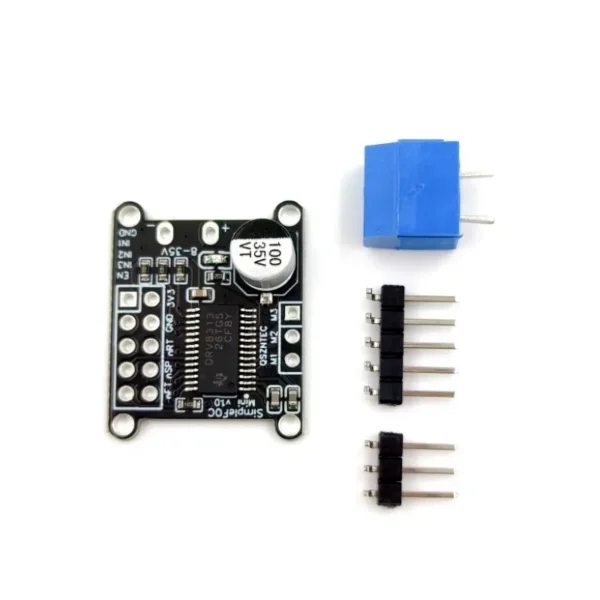 DRV8313 Development Board Simple FOC Mini FOC Control Driver SVPWM Control V1.0 DC Brushless Motor Driver Board DC 8-30V module
$3.50
DRV8313 Development Board Simple FOC Mini FOC Control Driver SVPWM Control V1.0 DC Brushless Motor Driver Board DC 8-30V module
$3.50
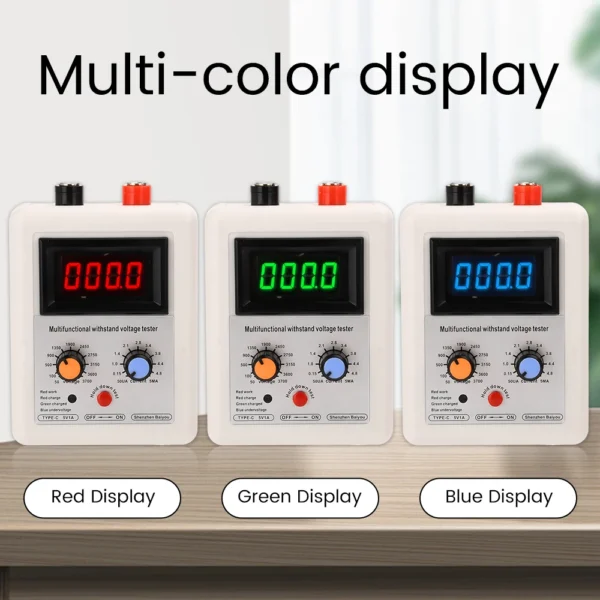 0-3500V IGBT Tester Transistor Withstand Voltage Tester Diode MOS Triode MOV LED Voltage Capability Tester
$11.90 – $20.90Price range: $11.90 through $20.90
0-3500V IGBT Tester Transistor Withstand Voltage Tester Diode MOS Triode MOV LED Voltage Capability Tester
$11.90 – $20.90Price range: $11.90 through $20.90
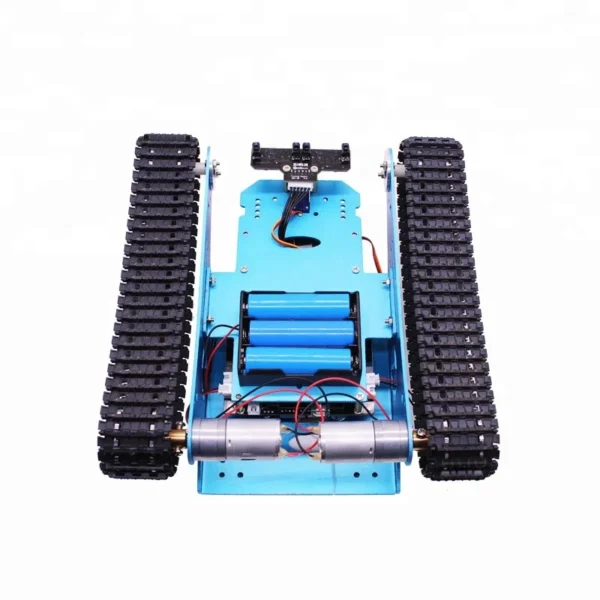 Yahboom DIY G1 Educational Blue Tank Smart Robot Track Car Kit For Smartduino R3 With Link Tracking Module
$125.90
Yahboom DIY G1 Educational Blue Tank Smart Robot Track Car Kit For Smartduino R3 With Link Tracking Module
$125.90
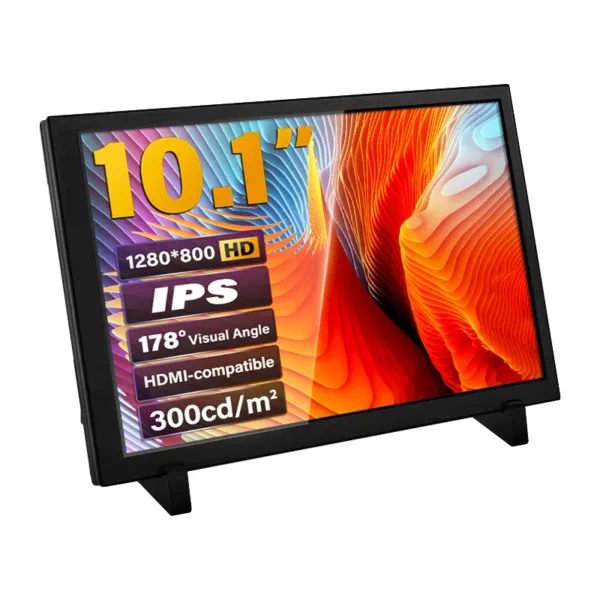 10.1 Inch 1280x800 Touch Screen IPS LCD for Computer Monitor for Switch Xbox 360 HDMI-compatible Display for Raspberry Pi
 VL53L0X Time-of-Flight (ToF) Laser Ranging Sensor Breakout 940nm GY-VL53L0XV2 Laser Distance Module I2C IIC 3.3V/5V for arduino
$2.50
VL53L0X Time-of-Flight (ToF) Laser Ranging Sensor Breakout 940nm GY-VL53L0XV2 Laser Distance Module I2C IIC 3.3V/5V for arduino
$2.50