
nRF52840 PCB Layout for BLE Products: Antenna, Matching, and Certification
The nRF52840 is one of the most popular BLE and multiprotocol chips in the world, and for good reason: it
Most teams frame this as a salary-versus-invoice decision. A layout engineer costs a certain amount per year; a layout shop charges a certain amount per board. Pick the smaller number. If only it were that simple.
The real comparison is between two very different systems, each with its own costs and its own failure modes. An in-house engineer is not just a salary — it is a permanent capacity that you have to keep busy. An outsourced shop is not just an invoice — it is a burst of specialized capacity you can turn on and off. The right choice depends on how steady your layout demand is, how specialized your boards are, and how much risk you can absorb.
Here is an honest comparison, including the costs that never appear on either a salary sheet or a quote.
A layout engineer's salary is the visible cost. The real cost is larger and less obvious.
Salary and overhead. Beyond base pay, there is benefits, payroll tax, equipment, software licenses (ECAD seats are not cheap), and the desk they sit at. The fully loaded cost of a senior layout engineer is substantially higher than the headline number.
Hiring and ramp time. Finding someone who can do your specific boards can take months, and they will spend more months learning your product, your conventions, and your constraints. That ramp is a real cost, and if they leave, you pay it again.
Idle capacity. This is the cost teams forget. A full-time engineer is a fixed capacity. If your layout demand is three boards a year, you are paying for a full year and using a fraction of it. If your demand is twenty boards, you might be the bottleneck instead.
Single point of failure. One engineer means one person's knowledge, one person's vacation schedule, and one person's blind spots. If they are out, layout stops. If they make an error you did not catch, there is no second reviewer.
Coverage limits. A generalist in-house engineer may be excellent at control boards and weak at RF, high-speed, or power. When a specialized board comes along, you either accept the risk or hire a specialist anyway.
An outsourced quote looks simple. The honest cost includes a few more lines.
The quoted price. This is the visible number, and for a defined scope it is often lower than the fully loaded cost of doing it in-house, especially for one-off or occasional boards.
Coordination cost. Someone on your team has to prepare the package, answer questions, review the output, and manage the process. That is real time, and it is easy to underestimate.
Knowledge transfer cost. An outside shop does not know your product. You pay for that in kickoff time and in the occasional design decision you have to correct. A good shop minimizes this by asking the right questions up front.
Variance and change orders. If your scope moves, the invoice moves. Fixed-price work is only fixed if your inputs are frozen.
Dependency. You are relying on someone else's schedule. If they are busy, you wait. A shop that is great also tends to be busy.
Rather than arguing about which is better in general, compare the two against your actual situation.
Choose in-house when: your layout demand is steady and continuous; your boards are similar to each other; you have enough specialized work to keep a specialist busy; and you need tight, daily iteration with your hardware and firmware teams.
Choose outsourced when: your layout demand is bursty or occasional; your boards require specialized skills you do not have in-house; you are a small team without the volume to justify a full-time seat; or you need to scale up quickly for a deadline.
Consider a hybrid when: you have one in-house engineer for the routine work and bring in specialists for the hard boards. This is common in growing hardware teams and often the most cost-effective arrangement.
The salary-versus-invoice comparison misses three things that matter more than either number.
The cost of a bad layout. A board with a return-path problem or a mis-tuned antenna does not fail loudly. It fails at the prototype stage, or worse, at certification. The cost of that failure — a respin, a delay, a missed launch — dwarfs the difference between an in-house salary and an outsource quote. The question is not "who is cheaper" but "who is right more often."
The cost of speed. In hardware, time to a working prototype is often worth more than the design fee. If outsourcing gets you a correct board three weeks earlier than a stretched in-house team, that is usually the better economics even if the invoice is higher.
The cost of flexibility. In-house capacity is fixed; outsourced capacity scales. A team that can turn layout up and down with demand has a structural advantage over one that must hire and fire.
To make this concrete, project your layout demand over the next eighteen months: how many boards, how complex, how specialized. Then compute two numbers.
In-house: fully loaded annual cost divided by the number of boards you expect to produce. That is your effective cost per board. If it is high because demand is low, you are paying for idle capacity.
Outsourced: the sum of quotes for those same boards, plus an honest estimate of the coordination hours your team will spend, priced at their rate. That is your effective cost per board including overhead.
Compare the two effective costs against the same demand forecast. In most small and mid-size hardware teams, the outsourced effective cost wins unless demand is both steady and high. In large teams with continuous layout work, in-house wins on iteration speed and institutional knowledge.
We are the outsourced option for teams that need ESP32, RF, or power-constrained boards laid out correctly without adding a permanent seat. If you want to see what that looks like in practice, our layout service is here, and full design from schematic to Gerbers is here.
When your boards are ready to be made and assembled, that step runs through PCB PCBA order online.
Send us your demand forecast and a sample board, and we will give you a real number to compare against an in-house hire.
The in-house-versus-outsourced decision is not salary versus invoice. In-house brings fixed cost, hiring and ramp time, idle capacity, and single-point-of-failure risk. Outsourced brings coordination cost, knowledge-transfer cost, and schedule dependency. Choose in-house for steady, continuous, specialized demand; choose outsourced for bursty, specialized, or low-volume work; consider a hybrid in between.
The factors that decide it are the cost of a bad layout, the value of speed, and the need for flexibility — none of which appear on either a salary sheet or a quote.
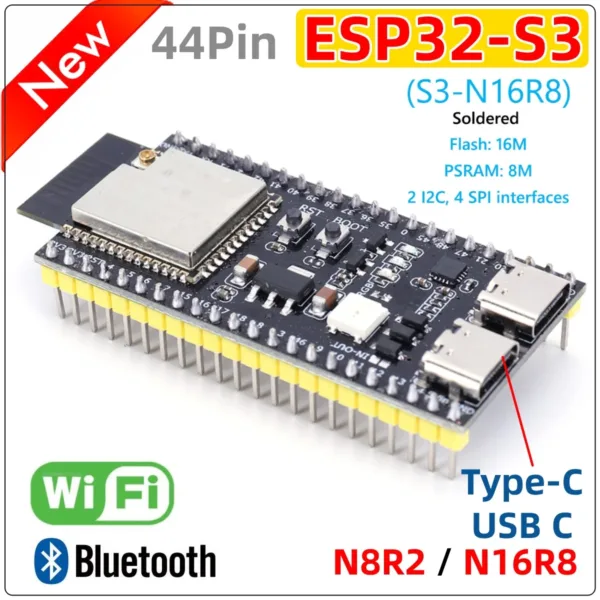 ESP32 S3 Dual Type-C Development Board WiFi Expansion Board 2.4G Wifi BT Module for Arduino 8MB PSRAM 16MB FLASH N16R8 44Pin
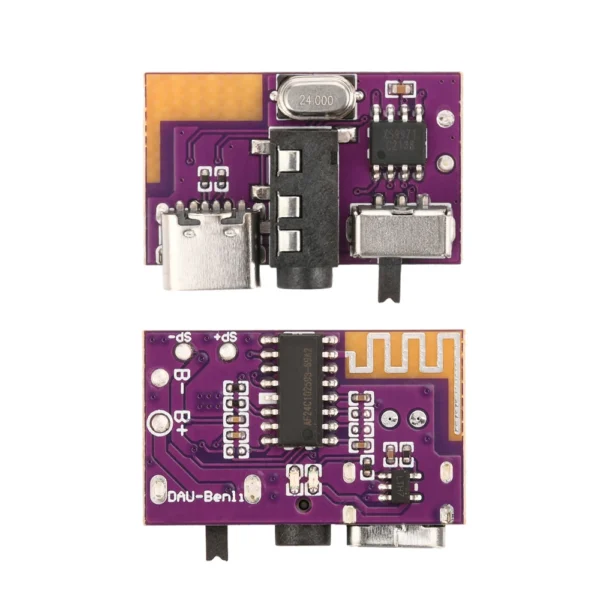 DC3.5V-5V 5W Mono Audio Amplifier Bluetooth Decoder Board Supports TWS Pair TYPE-C Interface Electronic Component Kit
$3.80
DC3.5V-5V 5W Mono Audio Amplifier Bluetooth Decoder Board Supports TWS Pair TYPE-C Interface Electronic Component Kit
$3.80
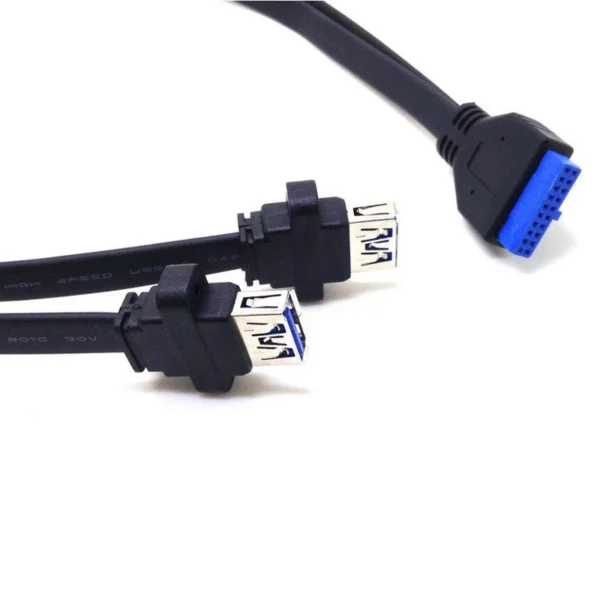 1pc Dual 2 Port USB 3.0 Front Panel Extension Cable A Type Female to 20 Pin Box Header Female Slot Adapter Cable
$6.90 – $7.60Price range: $6.90 through $7.60
1pc Dual 2 Port USB 3.0 Front Panel Extension Cable A Type Female to 20 Pin Box Header Female Slot Adapter Cable
$6.90 – $7.60Price range: $6.90 through $7.60
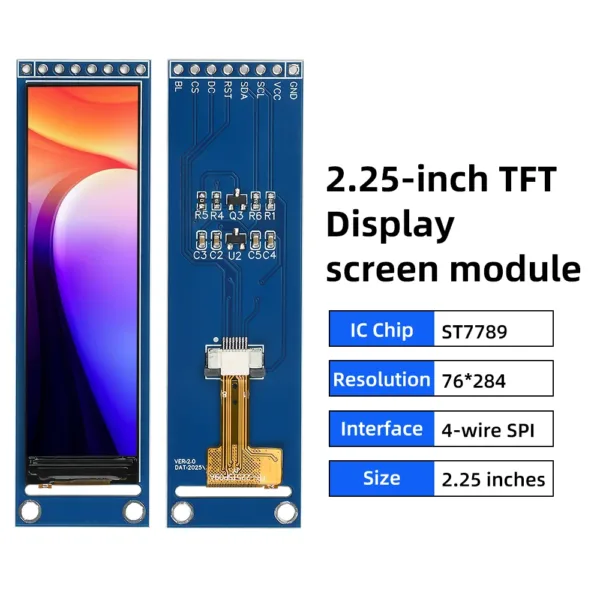 2.25-inch TFT LCD Small Screen Module ST7789 Screen 76*284 Module Full Viewing Angle SPI Color Screen 8-pin Blue Board Module
$6.90 – $7.90Price range: $6.90 through $7.90
2.25-inch TFT LCD Small Screen Module ST7789 Screen 76*284 Module Full Viewing Angle SPI Color Screen 8-pin Blue Board Module
$6.90 – $7.90Price range: $6.90 through $7.90
 Grove - Temperature & Humidity Sensor(DHT11)
$8.90
Grove - Temperature & Humidity Sensor(DHT11)
$8.90
The nRF52840 is one of the most popular BLE and multiprotocol chips in the world, and for good reason: it
The ESP32-C6 looks, at first glance, like a small update to the ESP32 family. It has more radios, a newer
Choosing a PCB design service for an IoT product is harder than choosing one for a simple board, because an
If you have ever asked three layout shops for a quote on the same board and gotten three wildly different
Your firmware works. The serial log prints clean, the sensor reads true, and the board boots every time. Then you
Most people who approach a PCB design firm for the first time are not asking for a datasheet. They are
No account yet?
Create an Account