
nRF52840 PCB Layout for BLE Products: Antenna, Matching, and Certification
The nRF52840 is one of the most popular BLE and multiprotocol chips in the world, and for good reason: it
If you have ever asked three layout shops for a quote on the same board and gotten three wildly different numbers, you already know the frustrating truth: there is no standard price for PCB layout. One shop says $800. Another says $3,500. A third says "$4,000 plus hourly for changes." They are all looking at the same Gerber-less schematic, so why the gap?
The answer is that you are not buying a board. You are buying a set of decisions — and different shops make different assumptions about how many decisions you need them to make for you. Once you understand what actually drives the number, you can compare quotes honestly instead of just picking the cheapest one and hoping.
A layout quote is really an estimate of time, and time is a function of complexity and risk. When a shop quotes low, they are usually assuming one or more of the following:
Every one of those assumptions, if wrong, becomes unpaid work. Shops that have been burned before price the risk in. Shops that are hungry price it out and then bill you later through change orders. Neither is lying to you — they are just estimating different scopes.
Here are the factors that move a layout price the most, roughly in order of impact.
Board complexity. A two-layer board with a handful of components and no high-speed signals is a fundamentally different job from a six-layer board with differential pairs, impedance control, and a dense BGA escape. Complexity drives cost more than any other single factor. A board that fits on two layers with wide, lazy routing can be laid out in a day; a board that needs controlled impedance and careful return paths can take a week.
Signal integrity requirements. The moment a design has high-speed interfaces — USB, Ethernet, DDR, MIPI, or anything differential — the layout has to obey rules that are invisible to the eye. Trace lengths must be matched, reference planes must be continuous, and vias must be managed deliberately. This is the kind of work where a small mistake means a failed prototype and a two-week delay, so it commands a higher rate.
Component count and package types. A board with forty 0402 passives and one microcontroller is easier to route than a board with a 0.4 mm pitch BGA that needs escape routing on both sides. Fine-pitch packages and high pin counts add real hours, not just a little.
Layer count and stackup. More layers means more design work, more cost at fabrication, and more room for impedance decisions. Interestingly, the design effort does not scale linearly — going from two to four layers adds work, but a well-planned four-layer stackup can actually simplify routing and reduce total time compared to a cramped two-layer board.
Power architecture. Switching regulators, tight decoupling, and multiple voltage rails all demand attention in the layout. A board with three switching supplies and a large current draw needs copper planning and thermal thinking that a simple low-power sensor board does not.
RF and antenna work. If your board has a radio, the layout around the antenna is not like the rest of the board. Keep-out zones, feedline impedance, and grounding all have to be right, and the wrong decision there can cost you certification. This is specialist work and it is priced like it.
Connectors and mechanical constraints. Board-to-board connectors, edge connectors, mounting holes, and enclosure fit all constrain routing. Mechanical constraints that show up after layout has started are one of the most common sources of schedule slippage.
Number of revisions. This is the factor clients underestimate most. If your feedback cycle is "here are twelve changes, most of them major," you are effectively paying for a second layout. Shops that quote a fixed price assume a reasonable number of review cycles; unlimited revisions are never actually free.
Just as important is knowing what a fair quote does not include, so you can spot a quote that is hiding something.
You are not paying for fabrication. Layout is the design service; making the physical boards is a separate order. A quote that bundles "layout plus 10 prototypes" is really two quotes in one, and you should be able to separate them.
You are not paying for a stackup that already exists. If you already have a standard stackup from your fabricator and it meets your impedance targets, the layout shop should not be charging you to invent one.
You are not paying for component selection. If your schematic is final, part choice is already done. If it is not, expect the shop to either decline or quote schematic capture separately.
You are not paying for full DRC to be your only safety net. A good shop runs design rule checks and reviews the output, but the designer is responsible for the correctness of their own files — a layout house is not a substitute for a contract manufacturer's DFM review.
There is no universally correct answer, but the choice depends on how frozen your design is.
Fixed price works well when your schematic, mechanical constraints, and design rules are locked. You get cost certainty and the shop absorbs the risk of it taking a bit longer than expected. The trade-off is that any real scope change becomes a change order.
Hourly works well when your design is still moving — for example, you are iterating on a first prototype and expect to revise. You pay for what you use, but you carry the risk of it taking longer than you hoped.
The worst outcome is an ambiguous quote that is neither: a low fixed price that turns into hourly the moment you breathe, with no clear line about what counts as a change. Ask before you sign.
A few things make an enormous difference in both the number you get and how close it lands to reality.
Send a complete package up front. Schematic, netlist, mechanical drawings, stackup preferences, and any design rules you already know you need. The more complete the input, the less risk the shop has to price in.
State your constraints in writing. Board size, layer count preference, controlled impedance requirements, connector locations, keep-out zones. Written constraints become part of the scope instead of a surprise.
Be realistic about revisions. Tell the shop how many review cycles you expect and what kind of feedback you will give. A shop that knows you will do one consolidated review can quote lower than one bracing for six rounds of drip-fed changes.
Ask what is excluded. Specifically ask what would trigger a change order and roughly what that would cost. A shop that answers this clearly is one you can work with.
Value the review, not just the routing. The most expensive layout is a cheap one that ships with a mistake. A shop that spends an extra day checking return paths and impedance saves you a prototype cycle, which costs far more than the day.
We lay out ESP32 and general MCU boards for clients who would rather send one clean package and get back fabrication-ready files than manage the process minute by minute. If your project has RF, USB, or power constraints, that is exactly the kind of work we do every day.
You can see our layout service here, and our full design service — where we take it from schematic to Gerbers here. When you are ready to move from design to physical boards, prototyping and assembly run through our PCB PCBA order online.
Send us your schematic and constraints, and we will tell you honestly which of the factors above apply to your board — before you spend a dollar.
PCB layout cost is driven by complexity, signal integrity requirements, component packages, layer count, power design, RF content, mechanical constraints, and the number of revision cycles you expect. A cheap fixed quote is cheap because it assumes a narrow scope; a higher quote usually prices in review and risk. The best way to get a fair number is to send a complete, frozen package and be explicit about constraints and revisions.
Judge a quote on what it includes, not just what it says at the bottom.
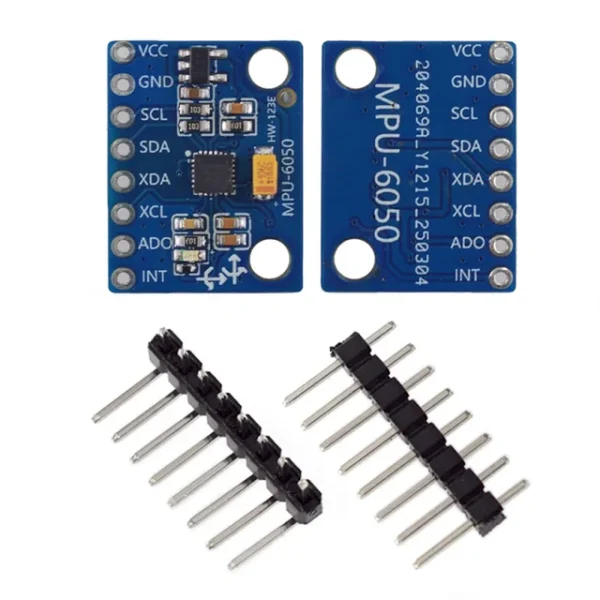 GY-521 MPU6050 3-Axis Accelerometer Gyro Module MPU-6050 6 DOF 6-Axis Accelerometer DIY Kit Compatible with 16-Bit AD Converter
$3.60
GY-521 MPU6050 3-Axis Accelerometer Gyro Module MPU-6050 6 DOF 6-Axis Accelerometer DIY Kit Compatible with 16-Bit AD Converter
$3.60
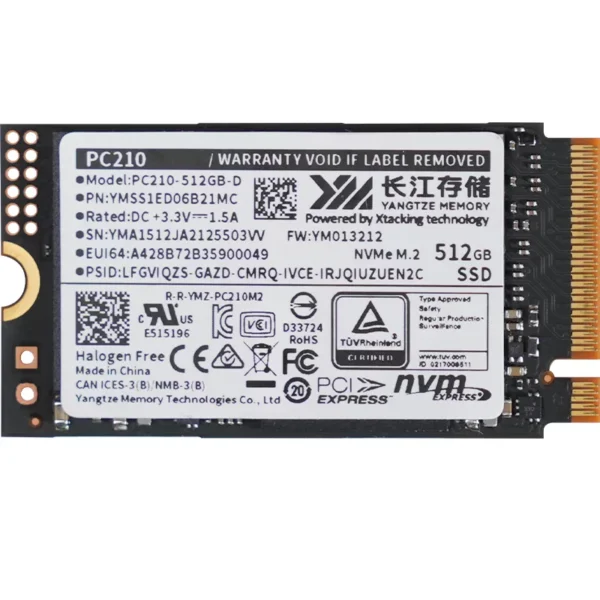 Changjiang 512GB M.2 SATA 2242 SSD
$99.70
Changjiang 512GB M.2 SATA 2242 SSD
$99.70
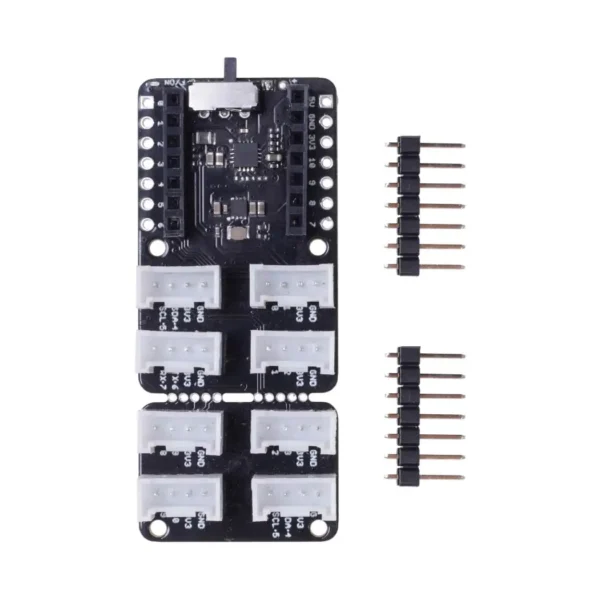 Seeed Studio Grove Base for XIAO - with embedded battery management chip
$8.90
Seeed Studio Grove Base for XIAO - with embedded battery management chip
$8.90
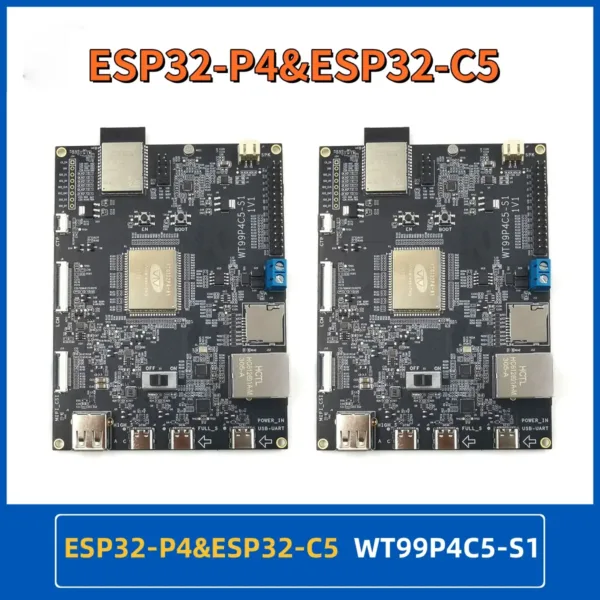 ESP32-P4 development board Includes ESP32-C5 module Supports WiFi 5GHz BT Zigbee WT99P4C5-S1
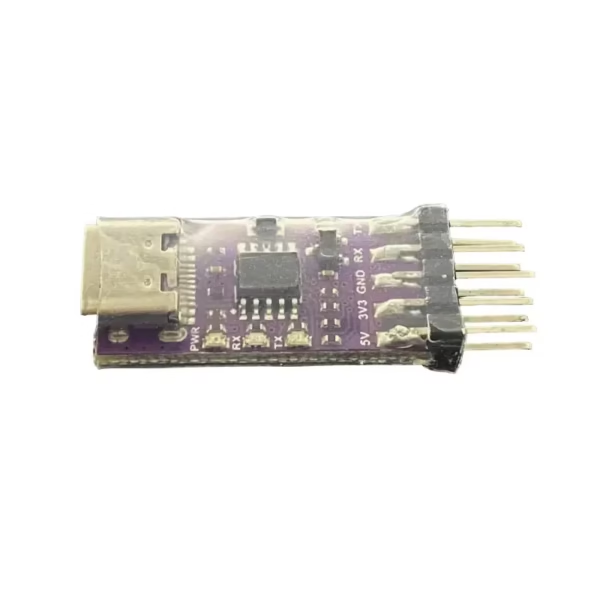 High-Speed USB to TTL UART Adapter CH343P/CH340K Serial Converter for MCU Programming
The nRF52840 is one of the most popular BLE and multiprotocol chips in the world, and for good reason: it
The ESP32-C6 looks, at first glance, like a small update to the ESP32 family. It has more radios, a newer
Most teams frame this as a salary-versus-invoice decision. A layout engineer costs a certain amount per year; a layout shop
Choosing a PCB design service for an IoT product is harder than choosing one for a simple board, because an
Your firmware works. The serial log prints clean, the sensor reads true, and the board boots every time. Then you
Most people who approach a PCB design firm for the first time are not asking for a datasheet. They are
No account yet?
Create an Account