A hardware prototype that works flawlessly on an engineer's bench is a great milestone. But the true test of any electronic product is whether it can survive the transition to a 5,000-unit production run without yield drops, hidden cost overruns, or catastrophic field failures.
For hardware developers, IoT founders, and procurement managers, the biggest bottleneck is rarely the circuit design itself. It is the lack of transparency in the PCBA (Printed Circuit Board Assembly) manufacturing process. Sourcing bare boards, components, and assembly from fragmented vendors often leads to the infamous "blame game" when defects occur, along with unpredictable cost escalations.
This guide cuts through the marketing noise. We will break down the real anatomy of PCBA costs, explain how rigorous SMT/DIP processes dictate your final yield, and provide actionable strategies to secure a reliable, transparent manufacturing partner.
The Real Anatomy of a PCBA: Where Costs and Quality Originate
A PCBA is not just a bare board with parts slapped on. It is a precisely engineered system. Understanding its core components is the first step to controlling your manufacturing costs and ensuring reliability.
1. The PCB Substrate: The Foundation of Reliability
The bare PCB is the structural and electrical backbone. Its cost and performance are dictated by material choices:
- Core & Prepreg: Standard FR-4 (epoxy glass) is cost-effective for most applications. However, for high-thermal or high-frequency designs (like 5G or advanced IoT), specifying High-Tg (≥170°C) materials or specialized resins (like PPE or Polyimide) is non-negotiable to prevent Z-axis expansion and via cracking during reflow.
- Copper Foil Selection:
- Electrodeposited (ED) Copper: The industry standard for rigid PCBs. It offers excellent adhesion and is highly cost-effective.
- Rolled Annealed (RA) Copper: Smoother and more flexible, essential for rigid-flex designs or high-frequency signal transmission, though it carries a premium cost.
2. Electronic Components: The Cost Drivers
Components typically account for 60-80% of the total PCBA cost. They are categorized as:
- Passive Components: Resistors, capacitors, and inductors. While individually cheap, their sheer volume in modern designs makes supply chain consistency critical.
- Active Components: ICs, microcontrollers (like ESP32 modules), and sensors. These are the "brains" of the board and the most vulnerable to market allocation shortages and counterfeit risks.
- Connectors: The mechanical and electrical bridges. Choosing the right footprint and plating (e.g., gold flash vs. tin) directly impacts both cost and mating cycle reliability.
3. Solder Paste & Consumables: The Invisible Yield Killers
- Solder Paste: The choice between lead-free (e.g., SAC305: Sn96.5/Ag3.0/Cu0.5 for RoHS compliance) and leaded (e.g., Sn63/Pb37 for extreme military/aerospace reliability) dictates your reflow profile and process window.
- Stencils & Fixtures: A high-quality, laser-cut stainless steel stencil (0.10–0.15mm thickness) with optimized aperture design is the single most important factor in preventing solder bridging and tombstoning on fine-pitch components.
The SMT & DIP Process: Where Quality is Built (Not Just Inspected)
Many buyers focus only on the final price, ignoring the process controls that guarantee that price is worth paying. A top-tier turnkey PCB assembly manufacturing facility relies on strict, data-driven process control, not just manual labor.
Phase 1: Surface Mount Technology (SMT) Precision
- Solder Paste Printing & SPI: The process begins with precise stencil printing. Crucially, a Solder Paste Inspection (SPI) machine uses 3D laser optics to measure paste volume, height, and alignment before components are placed. This catches up to 70% of potential defects early, saving massive rework costs later.
- High-Speed & Precision Placement: Modern lines use dual-vision systems to align fine-pitch ICs (like QFNs and BGAs) with micron-level accuracy, maintaining a component throw rate of less than 0.03%.
- 12-Zone Reflow Soldering: Boards pass through a meticulously profiled thermal curve (Preheat, Soak, Reflow, Cooling). This ensures proper metallurgical bonding without thermal shock to sensitive components.
- AOI & X-Ray Inspection: Post-reflow, Automated Optical Inspection (AOI) checks for visible defects (missing parts, skewing, bridging). For hidden joints, X-Ray inspection is mandatory. Per IPC-7095 standards, a reputable manufacturer will ensure BGA solder voiding remains strictly below 15% to guarantee thermal and electrical integrity.
Phase 2: DIP (Through-Hole) & Wave Soldering
For robust mechanical connections, through-hole components are inserted (often aided by custom pallets to protect SMT parts) and passed through a dual-wave soldering system. This ensures complete barrel fill and reliable fillets, followed by rigorous manual visual inspection.
Phase 3: Rigorous Testing Protocols
A board is not "done" until it is proven. Reliable manufacturers mandate:
- ICT (In-Circuit Test): Checks for opens, shorts, and basic component values.
- FCT (Functional Test): Simulates real-world operating conditions to verify the board performs its intended function.
- Burn-in Testing (Optional): Subjecting the PCBA to elevated temperatures for 24–48 hours to weed out infant mortality failures in mission-critical applications.
The Hidden Cost Traps in PCBA Sourcing (And How to Avoid Them)
When evaluating a PCBA cost breakdown, beware of artificially low base quotes. Experienced procurement professionals know that hidden costs often emerge later. Here is how to protect your budget:
- The NRE (Non-Recurring Engineering) Surprise: Some vendors hide stencil, programming, and test fixture costs in the final invoice.
Solution: Demand a fully itemized, transparent quote upfront that separates material, labor, and NRE costs.
- The Component Substitution Trap: To protect margins, unscrupulous assemblers might substitute specified components with cheaper, unverified alternatives without your approval.
Solution: Partner with a turnkey provider that sources exclusively from tier-1, franchised distributors (like Digi-Key, Mouser, or Arrow) and provides full lot traceability.
- The Scalability Gap: A prototype built with manual workarounds may not translate to mass production.
Solution: Bridge this gap early. Utilizing a dedicated turnkey PCB prototype and assembly manufacturing service ensures that the DFM (Design for Manufacturability) feedback you receive on your first 5 boards is directly informed by the same mass-production capabilities that will build your final 50,000 units.
The Startup Advantage: Rapid Iteration Without Financial Risk
We understand that for startups, independent hardware developers, and research teams, the cost of multiple prototype iterations can drain a budget before the product even reaches the market.
This is not a gimmick; it is a strategic engineering tool. It allows you to:
- Validate Schematics: Test your layout with real, production-grade physical boards.
- Iterate Fearlessly: Test different component footprints, antenna tuning (crucial for ESP32 and IoT devices), or minor layout tweaks without financial penalty.
- Accelerate R&D: Order multiple design variants simultaneously to compare real-world performance.
Scaling Up: From Prototype to OEM/ODM Mass Production
Once your design is validated, the focus shifts to supply chain resilience, cost optimization, and consistent quality at volume. Transitioning to high-volume manufacturing requires a partner capable of securing long-lead component allocation, optimizing panel layouts to reduce material waste, and implementing rigorous Statistical Process Control (SPC).
If you are preparing to scale your product line, initiating an OEM/ODM bulk manufacturing inquiry early in your design cycle allows our engineering team to align your design with the most cost-effective and scalable production methodologies from day one.
Frequently Asked Questions (FAQ)
Q: What file formats are required to get an accurate PCBA manufacturing quote?
A: To provide a precise, transparent quote, we require: Gerber files (RS-274X), NC Drill files, a detailed PCB stack-up (for impedance control), a Pick and Place (Centroid) file, and a complete BOM (Bill of Materials) in CSV or Excel format.
Q: How do you guarantee component authenticity in turnkey assembly?
A: We source all active and passive components directly from authorized, tier-1 global distributors. We maintain full lot traceability and can provide certificates of conformity (CoC) upon request, completely eliminating the risk of counterfeit parts.
Q: Can your facility handle complex requirements like heavy copper or high-frequency RF boards?
A: Yes. We regularly manufacture heavy copper PCBs (up to 20oz) for power applications and high-frequency boards using specialized laminates like Rogers or Taconic. Our CAM engineers will validate your stack-up to ensure your impedance targets are met before production begins.
Q: What is the typical lead time for a turnkey PCBA project?
A: For standard prototypes, turnkey assembly can be completed in as little as 5–7 working days. For mass production, lead times depend on component availability and order volume, which our team will clearly outline and actively manage during the OEM/ODM bulk manufacturing inquiry phase.
Stop Gambling with Your Hardware's Reliability
Searching for a reliable PCBA manufacturing partner should not feel like a gamble. Your hardware deserves a team that understands the physics of your design, respects your budget, and takes absolute ownership of the final product's quality.
Whether you are a startup founder taking advantage of our $2 for 5 pieces (under 50x50mm) rapid prototyping offer to validate your design, or an enterprise procurement manager seeking a scalable, turnkey assembly partner for high-volume production, our engineering team is ready to provide the actionable DFM feedback and precision manufacturing your project demands.
Ready to build with confidence?
Reach out to our engineering team today for a comprehensive, no-obligation DFM review and a precise manufacturing quote. Let's get your hardware to market, faster and more reliably.

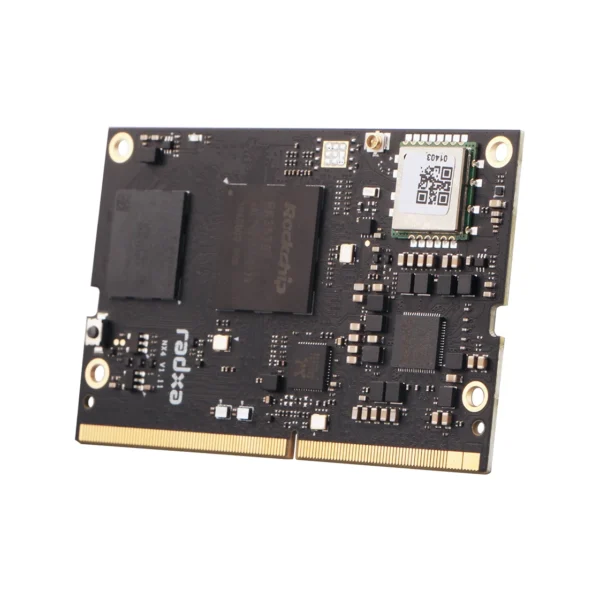 Radxa NX4,Octa-core CPU,6 TOPS NPU,LPDDR5,Wi-Fi 6,BT 5.4,AI SoM
$83.90 – $227.90Price range: $83.90 through $227.90
Radxa NX4,Octa-core CPU,6 TOPS NPU,LPDDR5,Wi-Fi 6,BT 5.4,AI SoM
$83.90 – $227.90Price range: $83.90 through $227.90
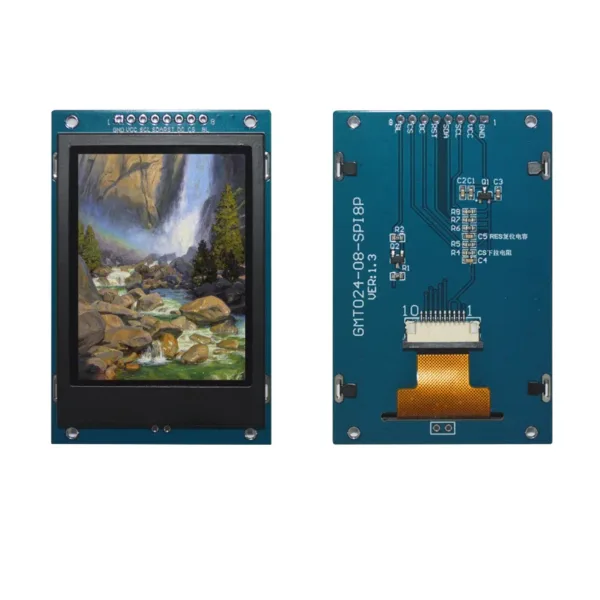 2.4-inch TFT LCD Display Screen LCD Module 240x320 Full-color IPS Screen ST7789 Small Screen SPI High-definition Stable
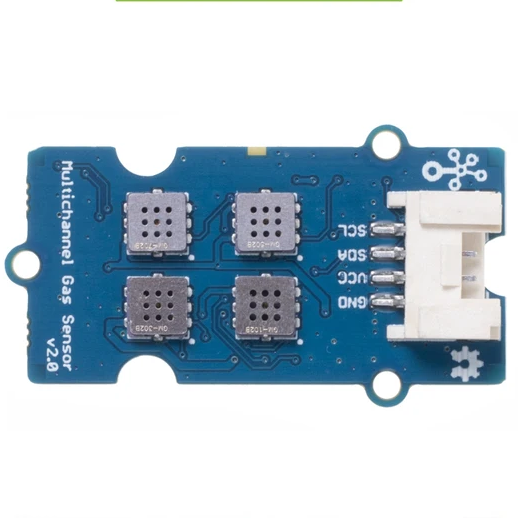 Grove - Multichannel Gas Sensor v2
$50.90
Grove - Multichannel Gas Sensor v2
$50.90
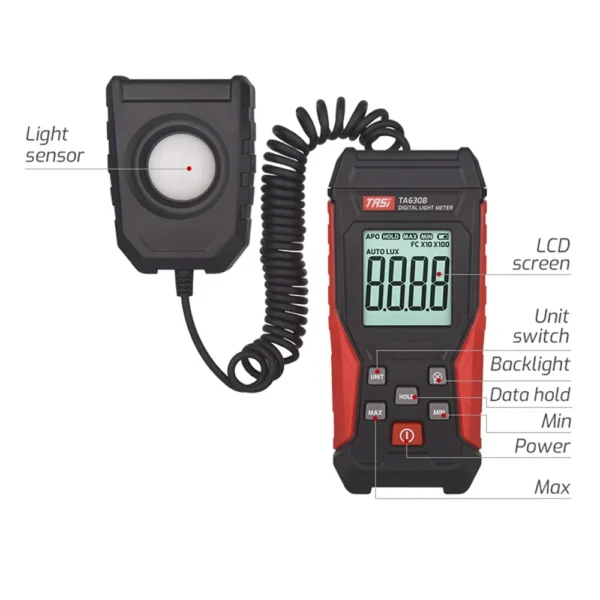 TASI TA630 Luxometer Professional Lux Meter Handheld Light Meter High Accuracy Luxmeter 0.1-200000LUX Illuminometer Photomete
$10.90 – $13.90Price range: $10.90 through $13.90
TASI TA630 Luxometer Professional Lux Meter Handheld Light Meter High Accuracy Luxmeter 0.1-200000LUX Illuminometer Photomete
$10.90 – $13.90Price range: $10.90 through $13.90
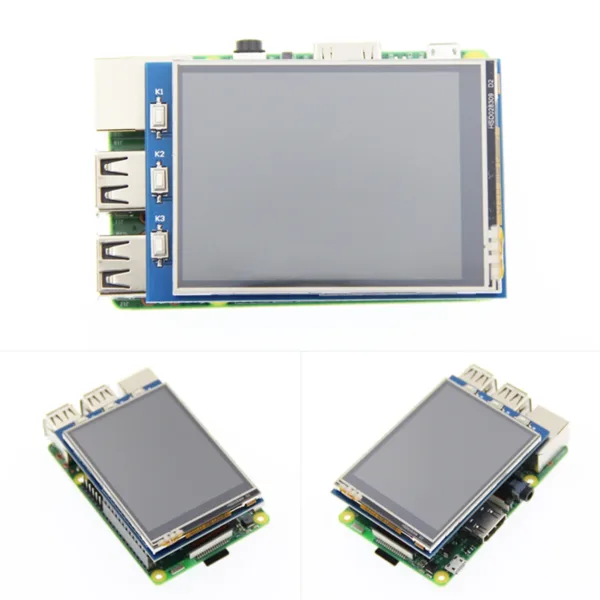 2.4 / 2.8 Inch 320*240 Touch Panel TFT LCD Module Screen Display For Raspberry Pi GPIO Input