If you are searching for recommended PCB manufacturers or trying to identify the best PCB manufacturers for your next hardware project, you have likely been overwhelmed by generic "Top 10" lists. These lists rarely tell you what you actually need to know: how a factory will handle your specific impedance requirements, whether their CAM engineers will catch a DFM violation before it costs you thousands, or how they manage component shortages during mass production.
Finding the right partner is not about finding the absolute cheapest quote. It is about finding a manufacturing ecosystem that guarantees scalability, accountability, and technical precision.
This guide bypasses the marketing fluff. We will break down the hidden pitfalls of PCB sourcing, provide a strict vetting checklist, and explain how to leverage strategic manufacturing partnerships to accelerate your time-to-market.
Redefining the "Best" PCB Manufacturer: What Actually Matters
In the B2B electronics space, the "best" manufacturer is defined by three core pillars, not just price:
- Proactive Engineering Support: They don’t just blindly follow your Gerber files. Their CAM (Computer-Aided Manufacturing) team actively reviews your design for manufacturability (DFM) and flags potential yield-killers before production begins.
- Supply Chain Consolidation: They offer true turnkey solutions, managing everything from bare board fabrication and component procurement to SMT assembly and final testing, eliminating the "blame game" between multiple vendors.
- Transparent Process Control: They adhere strictly to IPC standards (IPC-A-600, IPC-6012) and provide verifiable quality control data, such as AOI (Automated Optical Inspection) and X-Ray reports.
3 Hidden Pitfalls in PCB Sourcing (And How to Avoid Them)
Based on years of resolving hardware bottlenecks, these are the most common reasons projects fail during the transition from prototype to mass production, and how the right manufacturing partner solves them.
Pitfall 1: The Prototype-to-Production Scalability Gap
A common nightmare for hardware teams is a prototype that works perfectly on the bench but fails during a 5,000-unit production run. This often happens because prototype houses use manual processes, different material batches, or ignore minor DFM violations that become catastrophic at scale.
Our Solution: Bridge the gap early. Instead of using a disconnected prototype shop, partner with a facility that handles the entire lifecycle. Utilizing a turnkey rigid PCB prototype and assembly manufacturing service ensures that the DFM feedback you receive on your first 5 boards is directly informed by the same mass-production capabilities that will build your final 50,000 units.
Pitfall 2: The "Hidden Cost" Trap in Low-Ball Quotes
Some manufacturers lure customers with artificially low base prices, only to hit them with hidden fees later: expedited shipping charges, mandatory tooling fees for impedance testing, or upcharges for panelization.
Our Solution: Demand a fully transparent, itemized quote upfront. A reputable manufacturer will clearly outline costs for NRE (Non-Recurring Engineering), stencil fabrication, specific surface finishes (like ENIG vs. HASL), and electrical testing (Flying Probe or Fixture).
Pitfall 3: Fragmented Supply Chain Accountability
Sourcing bare boards from Vendor A, components from a global distributor, and assembly from Vendor C is a logistical nightmare. When a board fails in the field, Vendor A blames the assembly, and Vendor C blames the components.
Our Solution: Consolidate accountability. If you are preparing to scale your product line, initiating an OEM/ODM bulk manufacturing inquiry with a single, capable partner ensures one entity takes full ownership of the supply chain, quality, and delivery timeline.
The Startup Advantage: Rapid Iteration Without the Financial Risk
We understand that for startups and independent hardware developers, the cost of multiple prototype iterations can drain a budget before the product even reaches the market.
To actively support hardware innovation and remove the financial barrier to entry, we maintain a long-term strategic promotion: $2 for 5 pieces for any custom PCB under 50mm x 50mm.
This is not a gimmick; it is a strategic tool. It allows you to:
- Validate your schematic and layout with real, physical boards.
- Test different component footprints or minor layout tweaks without financial penalty.
- Accelerate your R&D cycle by ordering multiple design variants simultaneously.
The Non-Negotiable Vetting Checklist for PCB Manufacturers
Before you send your Gerber files to any facility, run them through this vetting checklist. If a manufacturer cannot answer "yes" to these, walk away.
- IPC Compliance: Do they explicitly build to IPC-A-600 (Acceptability of Printed Boards) and IPC-6012 (Performance Specification for Rigid Printed Boards)? Can they support IPC Class 2 or Class 3 if required?
- Material Traceability: Can they provide UL certification and lot traceability for the specific laminate (e.g., Shengyi, Isola, KB) and copper foil used in your batch?
- Advanced Testing Capabilities: Do they perform 100% Electrical Testing (Flying Probe for prototypes, Fixture testing for volume), AOI for solder joint verification, and X-Ray inspection for hidden vias or complex BGA assemblies?
- Dedicated CAM Review: Will a human engineer review your files for annular ring violations, solder mask dam spacing (minimum 4 mil), and impedance stack-up alignment before hitting "print"?
- Component Sourcing Network: For turnkey assembly, do they have established relationships with tier-1 distributors (Digi-Key, Mouser, Arrow) to guarantee authentic components and avoid counterfeit risks?
Frequently Asked Questions (FAQ)
Q: What file formats do you require to start a custom PCB manufacturing quote?
A: We require standard Gerber files (RS-274X), an NC Drill file, a detailed PCB stack-up (especially for impedance control), a Pick and Place (Centroid) file, and a BOM (Bill of Materials) in CSV or Excel format for assembly projects.
Q: How do you ensure quality control during mass production?
A: Beyond standard AOI and electrical testing, we implement Statistical Process Control (SPC) on the production line. For bulk orders, we can provide First Article Inspection (FAI) reports and allow for third-party quality audits before shipment.
Q: Can you handle complex requirements like heavy copper or high-frequency materials?
A: Yes. We regularly manufacture heavy copper PCBs (up to 20oz) for power applications and high-frequency boards using specialized laminates like Rogers or Taconic for RF and microwave designs. Our engineering team will validate the stack-up to ensure your impedance targets are met.
Q: What is the typical lead time for a turnkey PCB assembly project?
A: For standard prototypes, turnkey assembly can be completed in as little as 5-7 working days. For mass production, lead times depend on component availability and order volume, which our team will clearly outline during the OEM/ODM bulk manufacturing inquiry phase.
Stop Gambling with Your Hardware's Reliability
Searching for the best PCB manufacturers should not feel like a gamble. Your hardware deserves a partner who understands the physics of your design, respects your budget, and takes absolute ownership of the final product’s quality.
Whether you are a startup founder taking advantage of our $2 for 5 pieces (under 50x50mm) rapid prototyping offer, or an enterprise procurement manager seeking a scalable, turnkey assembly partner, our engineering team is ready to provide the actionable DFM feedback and precision manufacturing your project demands.
Ready to build with confidence?
Reach out to our engineering team today for a comprehensive, no-obligation DFM review and a precise manufacturing quote. Let's get your hardware to market, faster and more reliably.

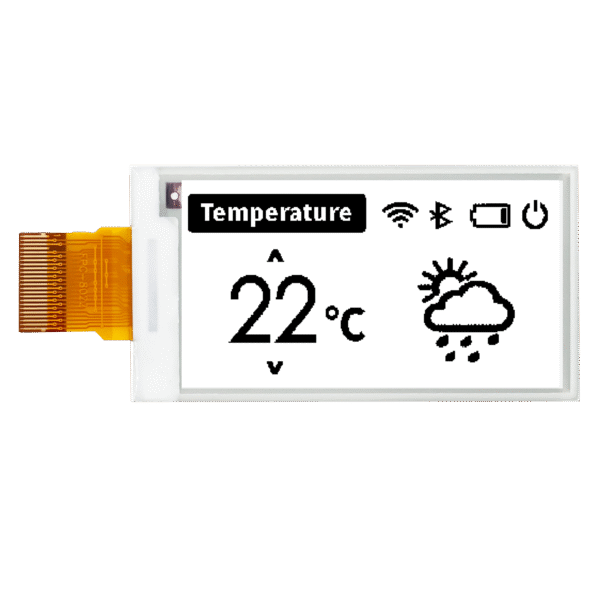 2.66 Inch Black White ePaper Display
$4.30
2.66 Inch Black White ePaper Display
$4.30
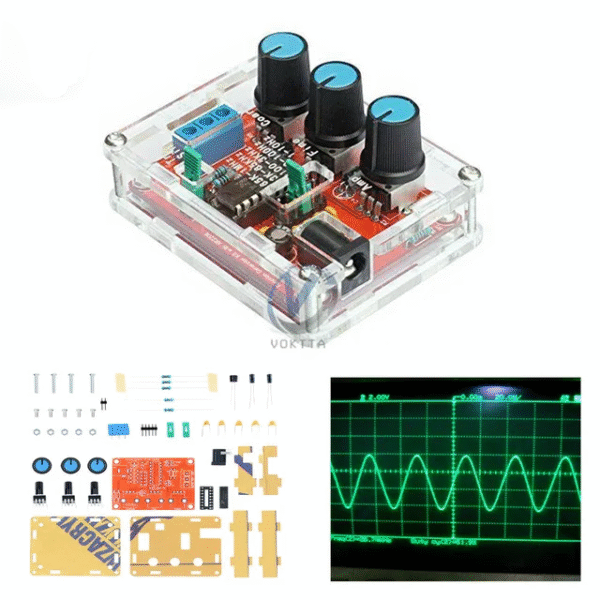 XR2206 High Precision Signal Generator DIY Kit Sine Triangle Square Waves 1Hz 1MHz Frequency Range Adjustable Frequency
$5.90
XR2206 High Precision Signal Generator DIY Kit Sine Triangle Square Waves 1Hz 1MHz Frequency Range Adjustable Frequency
$5.90
 High Accuracy 50mm Dial Type Temperature Gauge Mini Car / Refrigerator Thermometer Self-adhesive Indicator Temp Thermometer
$3.90
High Accuracy 50mm Dial Type Temperature Gauge Mini Car / Refrigerator Thermometer Self-adhesive Indicator Temp Thermometer
$3.90
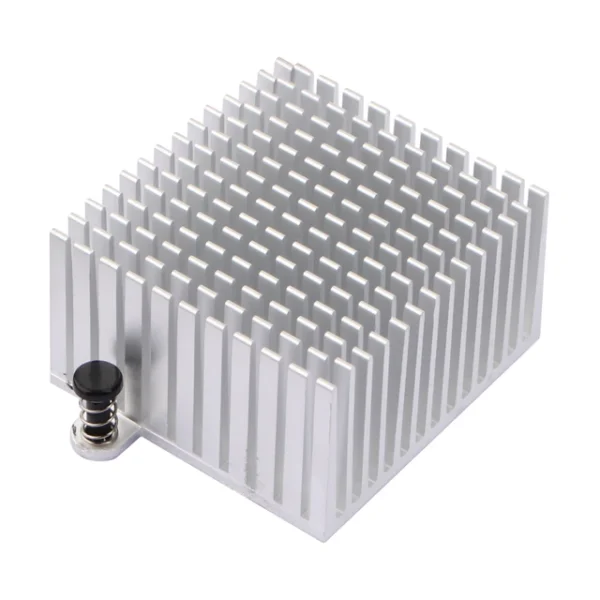 Radxa Heatsink 4025A for ROCK 5B/5B+/5T
$9.20
Radxa Heatsink 4025A for ROCK 5B/5B+/5T
$9.20
 ESP32-S3 2inch Capacitive Touch Display Development Board IPS 240x320 With OV5640 Camera 32-bit LX7 Dual-core WiFi Bluetooth