Launching a hardware product is one of the most capital-intensive and risky endeavors an entrepreneur can undertake. You have the vision, the market research, and perhaps even a working prototype. But the make-or-break phase isn’t the Kickstarter campaign; it’s manufacturing.
Choosing the wrong Original Design Manufacturer (ODM) doesn’t just mean delayed shipments. It means blown budgets, compromised quality, intellectual property theft, and ultimately, a destroyed brand reputation.
As a seasoned hardware ODM that has guided countless products from initial concept through EVT, DVT, PVT, and into global mass production, we have seen founders make the same fatal mistakes during the vendor selection process. They get dazzled by a low initial quote or a slick sales pitch, only to discover the factory lacks the engineering depth to execute.
To protect your investment, you must interview your potential ODM partners as rigorously as they interview you. Here are the 5 critical questions every hardware founder must ask before signing a contract, along with the exact "red flag" and "green flag" answers to look out for.
Question 1: "Can you walk me through your DFM process and provide a preliminary risk assessment before we commit to tooling?"
Why You Must Ask: Many founders hand over a 3D model or a breadboard prototype and assume the factory will magically figure out how to build it at scale. Design for Manufacturability (DFM) is the process of optimizing your product’s design so it can be built efficiently, reliably, and cost-effectively. An ODM that skips this step is setting you up for catastrophic mold revisions and assembly line failures.
- 🚩 The Red Flag Answer: "No problem, we can build exactly what you sent us. Just give us the deposit and we will start the molds." (This indicates they are just an order-taker, not an engineering partner. They will charge you exorbitant fees later when the design inevitably fails in production).
- ✅ The Green Flag Answer: "We will conduct a comprehensive DFM review of your mechanical and electronic designs. We will provide a report highlighting potential issues like undercuts, wall thickness inconsistencies, or thermal management risks, along with cost-saving recommendations before any steel is cut."
Pro Tip: The transition from a fragile prototype to a robust product requires rigorous validation. Investing in early-stage, turnkey PCBA (Printed Circuit Board Assembly) prototyping ensures that your firmware, custom PCB, and mechanical enclosure are validated together before you commit to expensive mass-production tooling. 👉 Validate your architecture for scale: Explore our PCB Prototype & Turnkey PCBA Assembly Manufacturing services.
Question 2: "Who exactly will be my day-to-day point of contact, and what is their technical background?"
Why You Must Ask: Communication breakdowns are the #1 cause of hardware project delays. If your primary contact is a non-technical sales representative whose only goal is to close the deal, critical engineering nuances will be lost in translation. You need someone who can read a Gerber file, understand firmware constraints, and explain why a specific design change will save you $0.50 per unit at scale.
- 🚩 The Red Flag Answer: "You will be assigned a dedicated account manager who will relay all your messages to our engineering team." (This creates a "telephone game" effect, leading to slow responses and misunderstood technical requirements).
- ✅ The Green Flag Answer: "You will be assigned a bilingual Technical Project Manager (PM) or a Lead Hardware Engineer. They have direct access to the production floor and the R&D team, and they will provide weekly video updates and detailed progress reports."
Question 3: "How do you handle component sourcing, and can I see a line-item breakdown of the BOM with alternative part suggestions?"
Why You Must Ask: The Bill of Materials (BOM) is where hidden costs and supply chain fragility hide. Some unethical factories will quote a low assembly fee but inflate the prices of individual components, or they will use cheap, uncertified substitutes without your knowledge. Furthermore, if your design relies on a single-source microcontroller that goes End-of-Life (EOL), your entire production line halts.
- 🚩 The Red Flag Answer: "We have our own supply chain, just trust our final unit price. We don't share the detailed BOM." (This is a massive red flag for hidden markups and potential quality substitution).
- ✅ The Green Flag Answer: "We provide a fully transparent, line-item BOM with Manufacturer Part Numbers (MPNs), current lead times, and pricing. If a component is risky or expensive, our engineers will proactively suggest pin-compatible, multi-sourced alternatives to ensure supply chain resilience."
Question 4: "What specific QA/QC protocols do you enforce at the EVT, DVT, and PVT stages, and can I see a sample QC report?"
Why You Must Ask: "High quality" is a subjective marketing term. In hardware manufacturing, quality must be objectively defined, measured, and enforced. The New Product Introduction (NPI) process is divided into strict phases: Engineering Validation Test (EVT), Design Validation Test (DVT), and Production Validation Test (PVT). If an ODM cannot articulate their testing protocols, they are flying blind.
- 🚩 The Red Flag Answer: "We check every product before it ships. Our quality is very good." (Vague, unmeasurable, and unprofessional).
- ✅ The Green Flag Answer: "We follow a strict NPI protocol. During DVT, we conduct drop tests, thermal cycling, and RF pre-compliance testing. For PVT, we implement an AQL (Acceptable Quality Limit) standard, typically AQL 2.5 for major defects. We will share our standardized QC checklist and test reports with you at every gate before proceeding to the next phase."
Question 5: "What legal frameworks do you use to protect my IP, and how do your payment milestones align with project deliverables?"
Why You Must Ask: Hardware founders are rightfully paranoid about their ideas being copied. A standard Western-style NDA (Non-Disclosure Agreement) is often insufficient in cross-border manufacturing. You need robust legal protection. Additionally, your payment structure should protect your cash flow, especially if you are funding this through a crowdfunding campaign.
- 🚩 The Red Flag Answer: "We can sign a simple NDA. We require 50% deposit upfront and 50% before shipment, regardless of project delays." (This offers weak IP protection and puts all the financial risk on you).
- ✅ The Green Flag Answer: "We gladly sign a comprehensive NNN (Non-Disclosure, Non-Use, Non-Circumvention) agreement, which is legally enforceable in China and prevents us from using your design or bypassing you. Our payment terms are milestone-based: a small fee for initial prototyping, followed by NRE/tooling payments, with the final balance due only after you approve the PVT samples and QC reports."
The Ultimate ODM Vetting Checklist
Before you wire any money, run your potential partner through this quick checklist. If they fail more than one of these, keep looking.
- Transparency: They willingly share detailed BOMs, DFM reports, and sample QC checklists.
- Technical Depth: Your main contact is a technical PM or engineer, not just a salesperson.
- Process-Driven: They clearly articulate the EVT → DVT → PVT progression and what deliverables are expected at each stage.
- IP Security: They proactively offer or readily accept a robust NNN agreement.
- Flexible Commercials: Their payment terms are tied to verifiable milestones, not arbitrary dates.
Frequently Asked Questions (FAQ)
Q: What is the difference between an OEM and an ODM, and which one do I need?
A: An OEM (Original Equipment Manufacturer) builds a product exactly to your provided designs and specifications. An ODM (Original Design Manufacturer) provides both the design/engineering services and the manufacturing. If you only have a concept or a rough prototype, you need an ODM to help you engineer the product for mass production. If you already have complete, factory-ready Gerber files, 3D CAD, and a verified BOM, an OEM may suffice.
Q: How can I verify an ODM's claims about their past work?
A: Ask for case studies or a portfolio of products they have taken from concept to mass production. While they may not be able to disclose confidential client names, they should be able to show you anonymized photos of their facility, their testing equipment, and examples of complex assemblies they have successfully delivered.
Q: My budget is tight. Can an ODM help me reduce costs without sacrificing quality?
A: Absolutely. A true ODM partner acts as a cost-optimization consultant. Through DFM analysis, they can suggest design simplifications (e.g., reducing the number of screws, combining plastic parts). Through supply chain expertise, they can recommend equally reliable but more cost-effective component alternatives.
Your ODM is Your Strategic Partner, Not Just a Vendor
The hardware graveyard is filled with brilliant products that failed because of poor manufacturing execution. Do not leave your company’s future to chance or to a factory that views you merely as a transactional order.
The right ODM partner will challenge your assumptions, optimize your design, protect your intellectual property, and guide you transparently through every perilous stage of the NPI process. They don’t just build your product; they help you build a viable, scalable business.
If you are a hardware founder looking for a transparent, engineering-driven ODM partner to bring your vision to life, we are ready to have a serious conversation about your project’s technical and commercial feasibility.

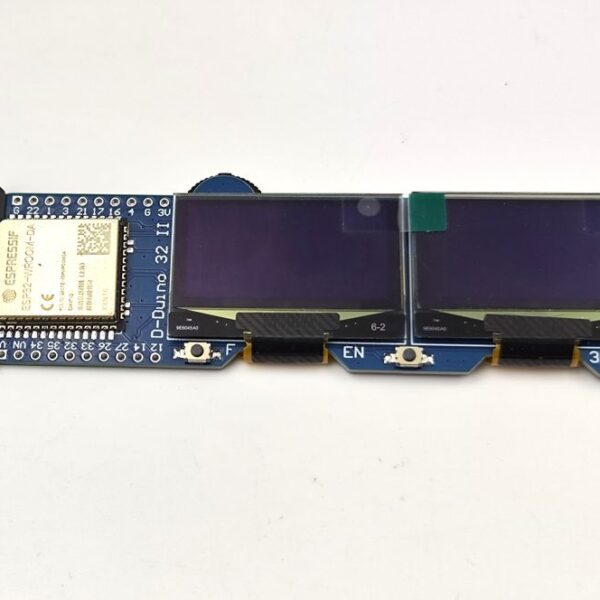 DSTIKE D-duino-32 II Dual Screen ESP32-WROOM-DA
$27.90
DSTIKE D-duino-32 II Dual Screen ESP32-WROOM-DA
$27.90
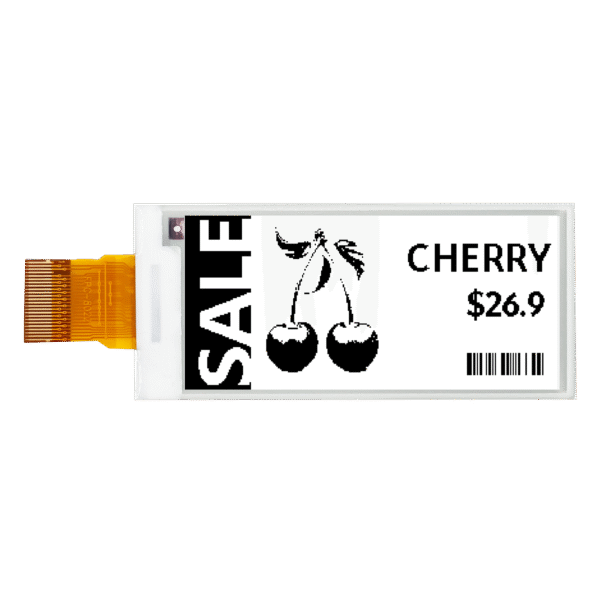 2.9 Inch Black White ePaper Display
$6.20
2.9 Inch Black White ePaper Display
$6.20
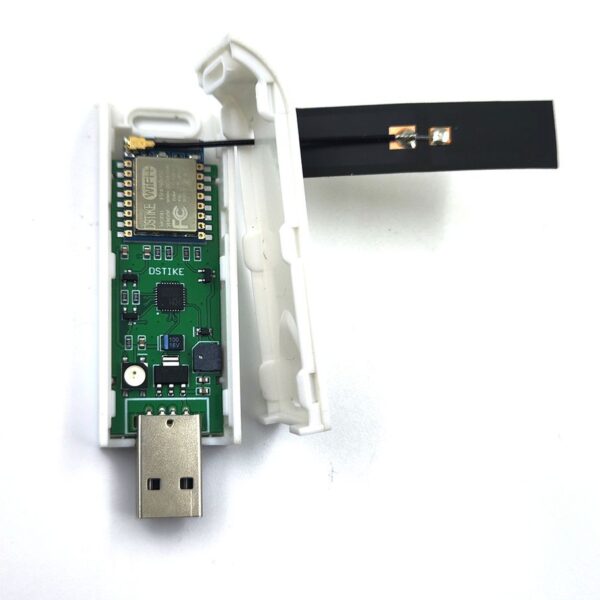 Deauth Detector V3 2.4G Wi-Fi Attack Detection
$11.80
Deauth Detector V3 2.4G Wi-Fi Attack Detection
$11.80
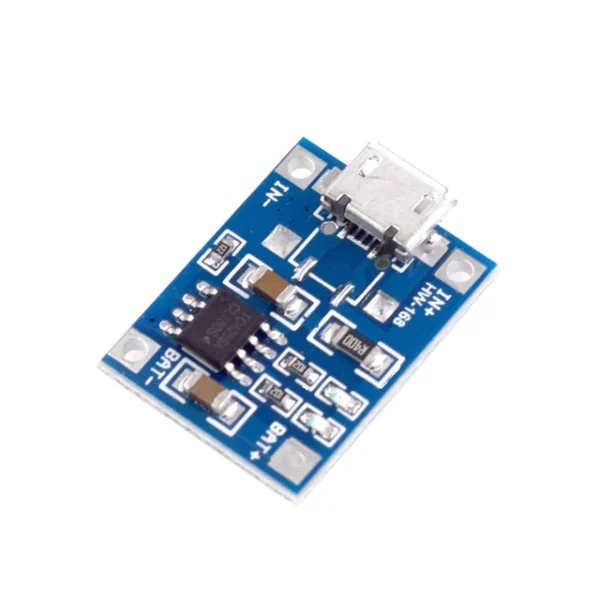 Micro Type-c USB 5V 1A TP4056 Lithium Battery Charger Module Charging Board With Protection Dual Functions Current Protection
$2.90
Micro Type-c USB 5V 1A TP4056 Lithium Battery Charger Module Charging Board With Protection Dual Functions Current Protection
$2.90
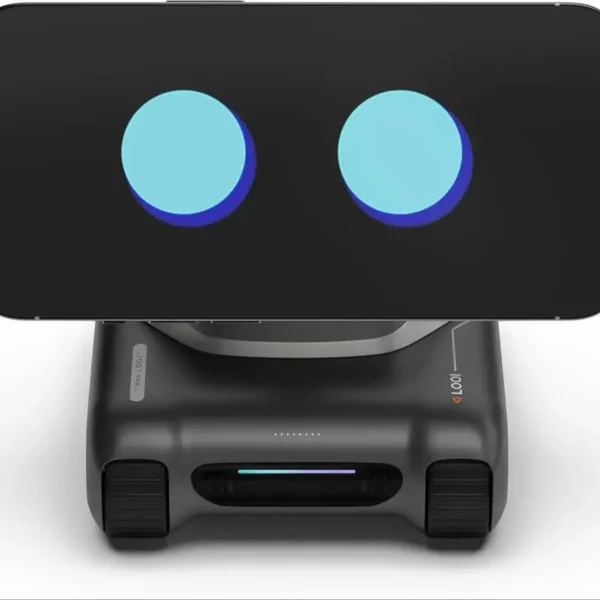 LOOI Smart Desktop Robot | AI Desktop Companion,ChatGPT Voice Interaction,Memory,Gesture& Face Recognition,Emotional Support
$219.80
LOOI Smart Desktop Robot | AI Desktop Companion,ChatGPT Voice Interaction,Memory,Gesture& Face Recognition,Emotional Support
$219.80