You’ve spent months, maybe even years, perfecting your hardware idea. You’ve built a working prototype. It might be a sleek 3D-printed enclosure housing a Raspberry Pi or an Arduino, with wires neatly tucked inside. It works flawlessly on your desk. You feel ready.
You compile a list of manufacturers from Alibaba, Global Sources, or ThomasNet, and send out your Request for Quote (RFQ).
Then, silence.
Or worse, you get a reply: "We cannot do this," or a unit price so absurdly high that it makes your business model collapse.
As an experienced hardware ODM (Original Design Manufacturer) that has guided hundreds of products from napkin sketches to global mass production, we hear this story every single week. Founders feel frustrated, believing factories are being difficult or greedy.
The truth is more nuanced: Your first factory isn’t rejecting you; they are rejecting the risk your product currently represents.
The gap between a "works-like" prototype and a mass-producible product is known in the industry as the "Valley of Death." This article will pull back the curtain on the exact technical and operational reasons factories say no, and more importantly, how you can bridge that gap to get a resounding "yes."
Reason 1: The "Frankenstein" Prototype Lacks DFM (Design for Manufacturability)
The Factory’s Perspective: "This looks like a science fair project, not a product we can build 10,000 times a month."
A prototype proves your concept is viable. It does not prove it is manufacturable. When a factory engineer looks at your prototype, they don’t see a finished product; they see a nightmare of assembly line bottlenecks.
Common DFM red flags that trigger an immediate rejection include:
- Impossible Tolerances: Specifying a ±0.01mm tolerance on a plastic snap-fit that only needs to be ±0.1mm, which requires expensive, slow machining instead of standard injection molding.
- Undercuts and Complex Geometry: Designing an enclosure that requires complex, multi-action slider molds (driving tooling costs from $5,000 to $30,000+) when a simple two-plate mold with a slight draft angle would work.
- Unserviceable Assembly: Designing a product that requires 15 steps and specialized tools to assemble, rather than designing for sequential, mistake-proof (Poka-yoke) assembly.
How to Fix It: Before approaching a mass-production factory, you must transition your prototype into a Design for Manufacturability (DFM) optimized design. This often means completely redesigning the internal architecture. For example, moving from a breadboard setup to a custom, compact, multi-layer PCB that fits perfectly within a mold-friendly enclosure.
Investing in professional, turnkey PCBA (Printed Circuit Board Assembly) prototyping ensures that your firmware, hardware, and mechanical design are validated together before you commit to expensive steel molds. 👉 Bridge the gap between concept and production: Explore our PCB Prototype & Turnkey PCBA Assembly Manufacturing services to validate your architecture for scale.
Reason 2: Misaligned Economics and MOQ Realities
The Factory’s Perspective: "Setting up our SMT (Surface Mount Technology) line and injection molding machines for 500 units costs us the same in labor and downtime as setting up for 50,000 units. The math doesn’t work."
Factories operate on razor-thin margins optimized for high volume. Their overhead—calibrating pick-and-place machines, creating custom assembly jigs, and training workers—is largely fixed, regardless of your order size.
If you approach a factory that primarily serves enterprise clients with a request for 500 units, you are asking them to disrupt their profitable workflow for a low-margin, high-maintenance job. They will either ignore you or quote you a "nuisance fee" price to make you go away.
How to Fix It: You need to target the right tier of manufacturing partner. Early-stage hardware requires an agile ODM or contract manufacturer that specializes in low-to-medium volume (NPI - New Product Introduction) runs. These partners have flexible SMT lines, understand the crowdfunding/startup cash flow model, and are willing to grow with you. Furthermore, you can improve your economics by standardizing components (e.g., using widely available screws and off-the-shelf connectors) to reduce the factory's sourcing overhead.
Reason 3: Incomplete or Unprofessional NPI Documentation
The Factory’s Perspective: "They sent me a video of the prototype and a hand-drawn sketch. I have no idea what components are on the board, where to source them, or how to test the final unit."
A physical prototype is not a manufacturing package. To quote accurately and build reliably, a factory requires a complete NPI (New Product Introduction) Data Package. If your RFQ lacks this, professional factories will walk away to avoid scope creep and liability.
A factory-ready data package must include:
- Mechanical: 3D STEP files of the enclosure and internal brackets, plus 2D PDF drawings with critical dimensions and tolerance callouts.
- Electrical: Complete Gerber files, centroid (pick-and-place) files, and a fully detailed, manufacturer-part-number-specific BOM (Bill of Materials).
- Firmware: The compiled binary file and a clear flashing/programming procedure.
- Quality Assurance: A draft QC (Quality Control) checklist defining what constitutes a "pass" or "fail" (e.g., "No visible scratches >1mm," "Bluetooth must pair within 3 seconds").
How to Fix It: If you lack the in-house engineering resources to generate these files, you must partner with an ODM that provides full-stack engineering services. They will take your prototype, reverse-engineer the intent, and generate the professional documentation that factories demand.
Reason 4: Supply Chain Fragility and Component Obsolescence
The Factory’s Perspective: "This design uses a niche microcontroller that is currently on a 25-week lead time and is flagged as NRND (Not Recommended for New Designs). If we build this, we will be stuck with incomplete units."
Indie creators often choose components based on what is easy to use in a prototype (or what is available at a local hobby shop), without considering long-term supply chain viability.
If your BOM contains a single-source component, a part nearing EOL (End of Life), or a highly volatile commodity, a smart factory will reject the build. They know that if that one $0.50 chip is unavailable, the entire $50 product cannot be assembled, leading to missed deadlines, angry clients, and financial penalties.
How to Fix It: Conduct a Supply Chain Risk Assessment during the design phase. A seasoned ODM will proactively substitute risky components with pin-compatible, multi-sourced alternatives. For instance, designing around highly available, robust ecosystems (like the ESP32 series for IoT) ensures long-term component availability, better pricing leverage, and faster factory approval.
Reason 5: Undefined Testing and Certification Pathways
The Factory’s Perspective: "They want this to be 'waterproof' and 'safe', but they haven't specified an IP rating or provided any certification targets. If it catches fire or fails, they will blame us."
Factories are deeply risk-averse regarding liability. If you ask for a "high-quality" product without defining the exact testing protocols, the factory assumes the worst. They do not want to be held responsible for a product that fails FCC emissions testing or leaks water, because the rework costs will destroy their margin.
How to Fix It: Define your compliance and testing requirements upfront. Specify the exact IP rating (e.g., IP67), the drop-test standard (e.g., 1.2 meters onto concrete), and the target certifications (FCC, CE, RoHS, UL). Better yet, partner with an ODM that has an in-house testing lab and can run pre-compliance tests before the product ever goes to mass production, guaranteeing the factory that the design is sound.
The Solution: How to Make Factories Say "Yes"
Getting a factory to enthusiastically accept your project requires shifting your approach from "inventor with an idea" to "professional product manager with a plan."
If you are not a seasoned hardware engineer, trying to bridge this gap alone is the fastest way to burn through your seed funding. This is exactly why the most successful Kickstarter creators and hardware startups do not go straight to a mass-production factory.
They partner with a specialized ODM (Original Design Manufacturer) that acts as a translator and a bridge.
A true ODM partner will:
- Take your rough prototype and professionalize it (DFM optimization).
- Generate the complete, factory-ready NPI documentation package.
- Validate the BOM for supply chain resilience and cost-efficiency.
- Manage the EVT (Engineering Validation), DVT (Design Validation), and PVT (Production Validation) phases on your behalf.
- Leverage their existing, trusted relationships with mass-production factories to get you priority treatment and fair pricing.
You don't just need a factory; you need a strategic manufacturing partner who understands the unique constraints of early-stage hardware.
The "Factory-Ready" Checklist
Before you send your next RFQ, ensure you can check every box below. If you can’t, you are not ready for mass production, and factories will know it.
- DFM Review Completed: A professional engineer has reviewed the 3D models and PCB layout for manufacturing constraints.
- Complete NPI Package: You have Gerber files, centroid files, a detailed BOM with MPNs (Manufacturer Part Numbers), and 2D/3D mechanical drawings.
- Supply Chain Verified: No components in the BOM are EOL, NRND, or have lead times exceeding 12 weeks without a validated alternative.
- QC Protocol Defined: You have a written, objective document detailing visual, functional, and reliability testing standards.
- Realistic Volumes: You are approaching factories or ODMs that explicitly cater to your target MOQ (e.g., 500–5,000 units for initial runs).
Frequently Asked Questions (FAQ)
Q: I only need 500 units for my Kickstarter. Will any factory work with me?
A: Traditional high-volume factories will likely reject you or quote prohibitively high prices. Your best path is to partner with an agile ODM or a contract manufacturer specializing in NPI (New Product Introduction) and low-to-medium volume runs. They have the flexible tooling and SMT lines designed for this exact scale.
Q: Can a factory help me improve my prototype if it’s not ready for manufacturing?
A: Some larger factories have engineering departments, but they often charge premium consulting rates and may prioritize their own high-volume clients. It is usually more cost-effective and secure to work with a dedicated ODM partner whose core business is taking early-stage prototypes and making them factory-ready.
Q: What is the single biggest mistake creators make when contacting factories?
A: Sending a vague email with only a marketing video or a photo of a breadboard prototype, asking "How much to make this?" Factories cannot quote what they cannot define. Always provide a structured RFQ with a preliminary BOM and clear volume expectations.
Stop Knocking on the Wrong Doors
Hearing "no" from a factory is not a reflection of your product’s potential; it is a signal that your product is not yet speaking the language of mass production.
The transition from prototype to mass production is a highly technical, process-driven phase. It requires DFM optimization, rigorous documentation, and supply chain foresight. Trying to force a factory to accept an unprepared design will only lead to inflated costs, severe delays, and compromised quality.
Don’t let manufacturing roadblocks kill your hardware dream. Partner with a team that has successfully navigated the "Valley of Death" dozens of times before. We understand both the visionary mindset of the creator and the rigid requirements of the factory floor.

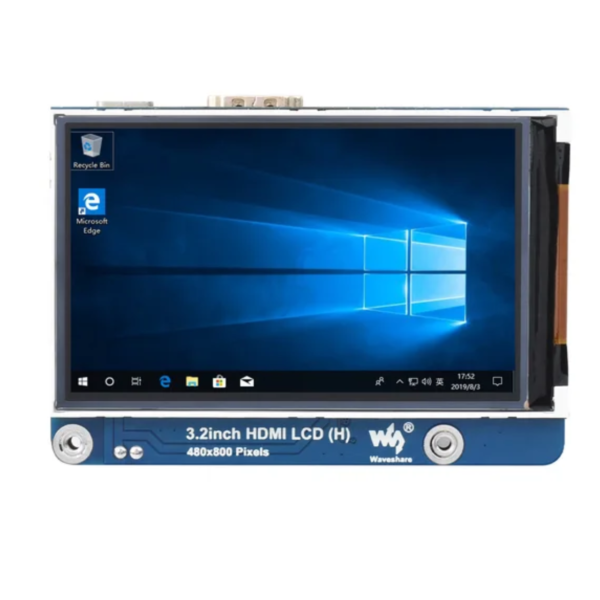 3.2inch HDMI IPS LCD Display (H), 480×800 Adjustable Brightness, HDMI, No Touch for Raspberry Pi/Jetson Nano/PC
$30.90
3.2inch HDMI IPS LCD Display (H), 480×800 Adjustable Brightness, HDMI, No Touch for Raspberry Pi/Jetson Nano/PC
$30.90
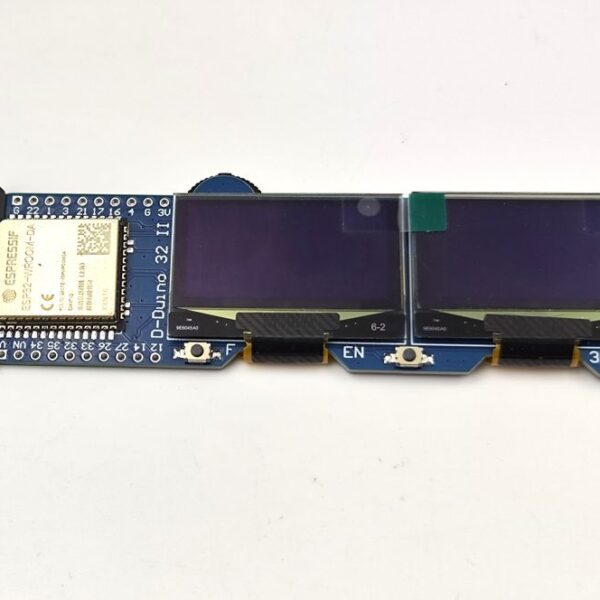 DSTIKE D-duino-32 II Dual Screen ESP32-WROOM-DA
$27.90
DSTIKE D-duino-32 II Dual Screen ESP32-WROOM-DA
$27.90
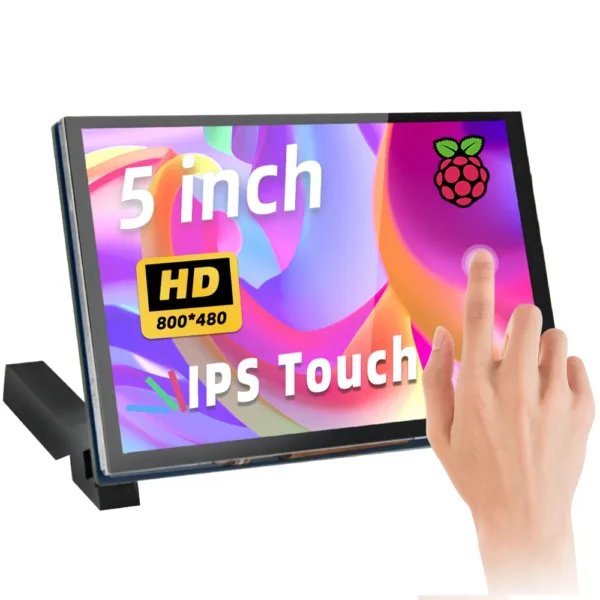 Raspberry Pi 5/4B/3B+/3B/3A+/2B/B+ 5-Point DSI Touch Screen Driver-Free 4.3/5/7 Inch 800x480 LCD Display Screen for Raspberry Pi
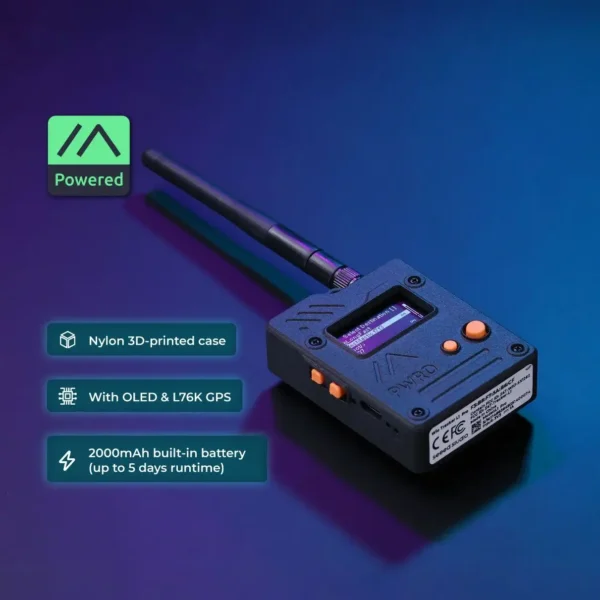 Meshtastic Node Wio Tracker L1 LoRa Wio-SX1262 862-930MHz 868MHz 915MHz NRF52840 L76K GPS,Wireless, Low-power, Development Board
$35.90 – $54.90Price range: $35.90 through $54.90
Meshtastic Node Wio Tracker L1 LoRa Wio-SX1262 862-930MHz 868MHz 915MHz NRF52840 L76K GPS,Wireless, Low-power, Development Board
$35.90 – $54.90Price range: $35.90 through $54.90
 VL53L0X Time-of-Flight (ToF) Laser Ranging Sensor Breakout 940nm GY-VL53L0XV2 Laser Distance Module I2C IIC 3.3V/5V for arduino
$2.50
VL53L0X Time-of-Flight (ToF) Laser Ranging Sensor Breakout 940nm GY-VL53L0XV2 Laser Distance Module I2C IIC 3.3V/5V for arduino
$2.50