The Reality of Scaling ESP32 Projects in 2026
If you search for "ESP32 projects" online, you will find thousands of tutorials for smart home devices, agricultural sensors, and industrial gateways. The Espressif ESP32 family (including the ESP32-S3, ESP32-C6, and ESP32-C3) is undeniably the most popular choice for IoT development due to its powerful dual-core processing, integrated Wi-Fi/Bluetooth, and rich peripheral sets.
However, there is a massive gap between a working prototype built with jumper wires and a commercially viable product ready for mass production.
Many hardware startups and product teams hit a wall when scaling. Their "ESP32 projects" fail in the field due to Wi-Fi dropouts inside metal enclosures, terrible battery life, or catastrophic supply chain shortages. The root cause is treating a commercial product like a hobbyist project.
This guide is written for product managers, CTOs, and hardware engineers. It outlines exactly how to bridge the gap between concept and commercial reality, and how to choose the right ESP32 OEM/ODM services or ESP32 module supplier to guarantee your product’s success.
Top Commercial ESP32 Project Categories & Their Hardware Requirements
Before choosing a manufacturing path, you must align your project concept with the correct ESP32 architecture. Using the wrong chip leads to bloated BOM (Bill of Materials) costs or insufficient performance.
- Target Chip: ESP32-C6 or ESP32-H2.
- Why: The ESP32-C6 is the industry standard for new commercial ESP32 projects requiring Wi-Fi 6 and native Thread/Matter support. It allows devices to connect directly to modern smart home ecosystems without needing an external bridge.
- Hardware Need: Ultra-low power consumption and robust RF antenna design to ensure reliable mesh networking in residential environments.
- Target Chip: ESP32-S3.
- Why: If your project involves a screen, the ESP32-S3 is mandatory. It features native RGB/MPI display interfaces and vector instructions for lightweight Edge AI (e.g., voice wake-word detection).
- Hardware Need: High-speed memory (Octal SPI PSRAM) for smooth GUI rendering (like LVGL), and strict PCB impedance control to prevent display noise from interfering with touch sensors.
3. Industrial IoT (IIoT) & Asset Tracking
- Target Chip: ESP32-C3 or ESP32-S3 (depending on connectivity needs).
- Why: Rugged, reliable, and cost-effective. Often paired with LoRa or cellular modules for long-range telemetry.
- Hardware Need: Wide-temperature-range components, conformal coating compatibility, and robust power protection circuits (TVS diodes, isolated power supplies).
The Critical Decision: Pre-Certified Modules vs. Custom PCB Design
Once your architecture is defined, you face the most important supply chain decision for your ESP32 projects: Do you buy off-the-shelf modules, or do you design a custom board from scratch?
Route A: Partnering with an ESP32 Module Supplier (Best for Speed & Mid-Volume)
For most companies producing between 500 and 10,000 units, purchasing pre-certified ESP32 modules is the smartest business decision.
- The Certification Advantage: A reputable ESP32 module supplier has already paid for and passed rigorous RF regulatory testing (FCC, CE, SRRC, TELEC). By soldering this pre-certified module onto your custom carrier board, you only need to test the carrier board for basic emissions. This saves you $10,000+ in lab fees and 3 to 6 months of time.
- Reduced Engineering Risk: The module provider has already solved the complex RF impedance matching, antenna tuning, and crystal oscillator layout. You just focus on your application logic.
- Action: If you need reliable, production-ready components to accelerate your timeline, browse our catalog of high-quality ESP32 series modules and components designed for seamless integration.
Route B: Custom ESP32 PCB Design & OEM/ODM Services (Best for High Volume & Space Constraints)
When your production volume exceeds 10,000 units, or your industrial design is too small to fit a standard module, you must transition to custom ESP32 PCB design.
- The Cost Advantage: By integrating the bare ESP32 chip, flash memory, PSRAM, and RF matching network directly onto your main PCB, you can reduce the per-unit BOM cost by $1.50 to $3.00. At 50,000 units, this equals $75,000 to $150,000 in pure margin improvement.
- The Risk: Designing a custom RF circuit is highly complex. A minor mistake in the antenna keep-out zone or power supply filtering will cause the device to fail certification or perform poorly in the field.
- The Solution: You need a professional ESP32 OEM/ODM service provider. We handle the entire IoT hardware manufacturing process, from schematic design and RF optimization to DFM (Design for Manufacturing) review, ensuring your custom board is ready for the SMT assembly line.
4 Hidden Pitfalls When Scaling ESP32 Projects to Mass Production
Even with the right chip and manufacturing route, commercial ESP32 projects frequently fail due to these overlooked engineering details:
Pitfall 1: Ignoring Real-World RF Performance
A bare ESP32 dev kit has excellent Wi-Fi range. But when you place that same circuit inside a plastic enclosure, next to a lithium battery and a noisy DC-DC converter, the RF performance degrades drastically.
- The Fix: Professional custom ESP32 PCB design includes strict 50-ohm impedance control for antenna traces, dedicated ground plane stitching, and physical separation of the RF section from noisy power components.
Pitfall 2: Poor Power Management Architecture
Many prototypes are powered via USB. Commercial battery-operated devices require meticulous power management. The ESP32 can draw significant current when Wi-Fi and peripherals are active.
- The Fix: Implementing a highly efficient Power Management IC (PMIC) and writing firmware that aggressively utilizes the ESP32’s Ultra-Low-Power (ULP) coprocessor and deep-sleep modes.
Pitfall 3: Supply Chain Fragility (The EOL Cliff)
Hobbyist projects use whatever components are available. Commercial products require guaranteed supply chains. If your project relies on an obscure voltage regulator that goes End-of-Life (EOL), your production line halts.
- The Fix: A professional ESP32 module supplier or OEM/ODM service proactively selects components with long-term manufacturing roadmaps and designs "pin-compatible" fallback options into the PCB layout.
Pitfall 4: Lack of Design for Manufacturing (DFM)
A board that can be hand-soldered in a lab is often impossible to assemble efficiently on an automated SMT (Surface Mount Technology) line.
- The Fix: Every design must undergo a rigorous DFM review. This includes optimizing component spacing for pick-and-place machines, adding fiducial marks, and ensuring proper thermal relief on solder pads. We enforce these standards through our strict turnkey PCB prototype and assembly manufacturing workflows, catching assembly issues before they reach the factory floor.
Trying to manage a fragmented supply chain—hiring a freelance hardware engineer, a separate firmware developer, and a random PCB factory—is a false economy. The hidden costs of miscommunication, RF failures, and manufacturing defects will always outweigh the perceived savings.
- Unified Accountability: One team handles the hardware, firmware, and manufacturing. If there is an integration issue, we solve it. No finger-pointing.
- Accelerated Time-to-Market: Parallel development tracks and pre-validated architectural templates shave months off your development cycle.
- Scalable IoT Hardware Manufacturing: We don’t just hand you Gerber files. We manage the entire New Product Introduction (NPI) process, from initial prototyping to final box-build and quality assurance testing.
Frequently Asked Questions (FAQ)
Q: What is the minimum order quantity (MOQ) for custom ESP32 OEM/ODM services?
A: For full custom PCB designs integrating the bare ESP32 chip, the typical MOQ starts around 500 to 2,000 units to justify the NRE (Non-Recurring Engineering) and RF calibration setup costs. If you use our pre-certified modules on a custom carrier board, the MOQ can be significantly lower (often starting at 100 units).
Q: Do you provide firmware development alongside the custom hardware?
A: Yes. As a full-service provider, our embedded software team works concurrently with our hardware engineers. We can develop custom drivers, optimize LVGL for displays, implement secure OTA (Over-The-Air) update mechanisms, and ensure the firmware is perfectly tuned for the hardware’s power profile.
Q: Can you help us migrate an existing ESP32 project that is facing production issues?
A: Absolutely. We specialize in "productization" and rescue projects. We will audit your current schematics, code, and BOM, identify the bottlenecks (e.g., RF issues, supply chain risks), and provide a clear roadmap to stabilize and scale your product.
Q: How do you handle FCC/CE certification for custom ESP32 projects?
A: If you use our pre-certified modules, the RF certification is already done. For fully custom designs, we conduct internal pre-compliance testing in our lab to catch EMI/EMC issues early, and we can manage the entire process with accredited third-party certification bodies on your behalf.
Ready to Scale Your ESP32 Projects Successfully?
Having a great idea is only the first step. Executing it reliably, affordably, and at scale requires the right hardware foundation and a manufacturing partner you can trust.
Whether you need high-quality, pre-certified modules to accelerate your timeline, or a full-service ESP32 OEM/ODM partner to design, certify, and mass-produce your custom commercial device, ESP32S.com has the engineering depth and supply chain leverage to make it happen.

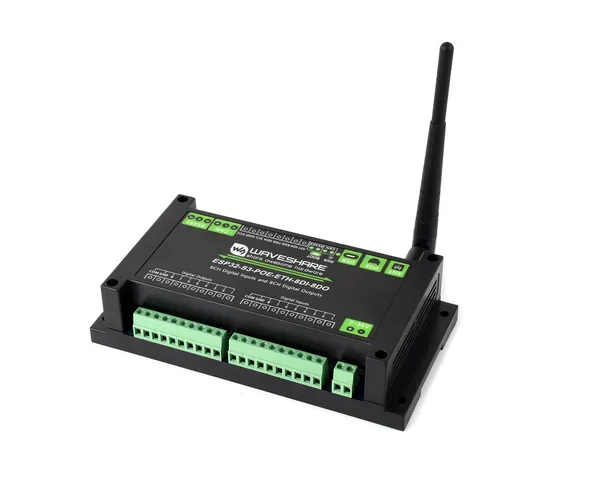 ESP32-S3 Industrial Control Board 8-Channel Controller with WiFi Bluetooth CAN IoT RS485 and RJ45 ETH interfaces POE
$38.90
ESP32-S3 Industrial Control Board 8-Channel Controller with WiFi Bluetooth CAN IoT RS485 and RJ45 ETH interfaces POE
$38.90
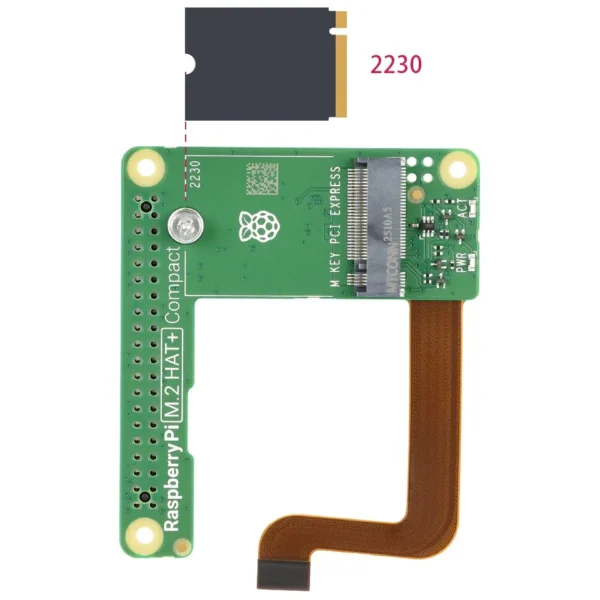 Official Raspberry Pi M.2 HAT+ Compact, Designed For Raspberry Pi 5, HAT + Standard, Supports NVMe Protocol M.2 Solid State
$22.90
Official Raspberry Pi M.2 HAT+ Compact, Designed For Raspberry Pi 5, HAT + Standard, Supports NVMe Protocol M.2 Solid State
$22.90
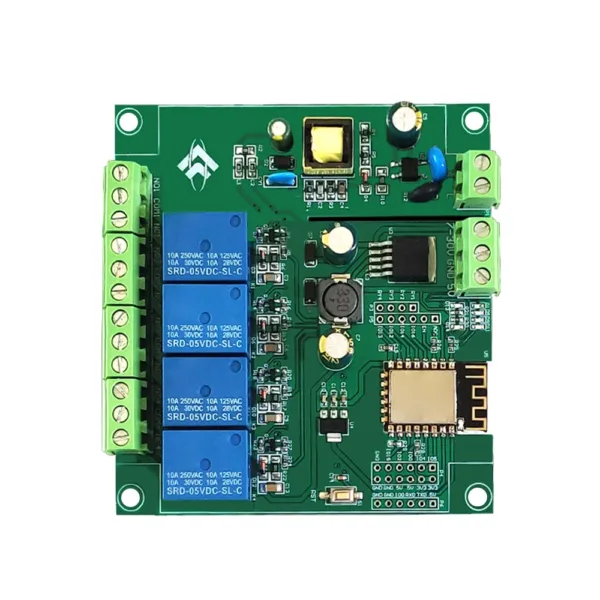 Relay Module WiFi 4‑Channel ESP8266 Development Board Voltage Monitoring Relay Industrial Parts for Wireless Control DC7‑12V/5V
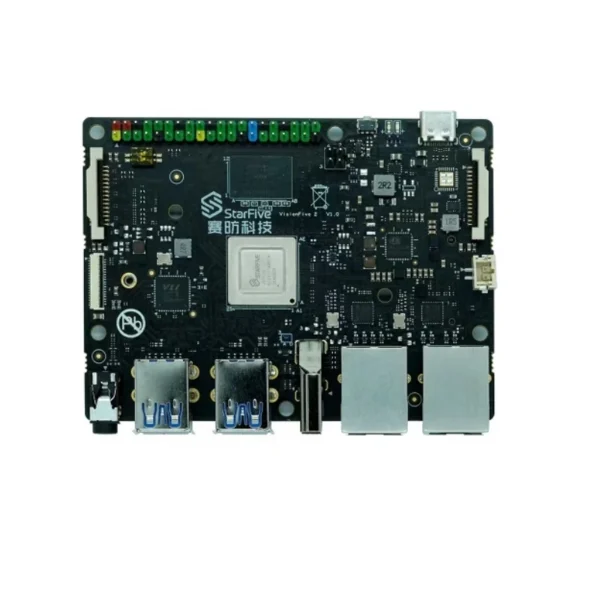 VisionFive 2 development board VisionFive2 RISC-V AI StarFive JH7110 integrated 3D GPU
$78.90 – $176.90Price range: $78.90 through $176.90
VisionFive 2 development board VisionFive2 RISC-V AI StarFive JH7110 integrated 3D GPU
$78.90 – $176.90Price range: $78.90 through $176.90
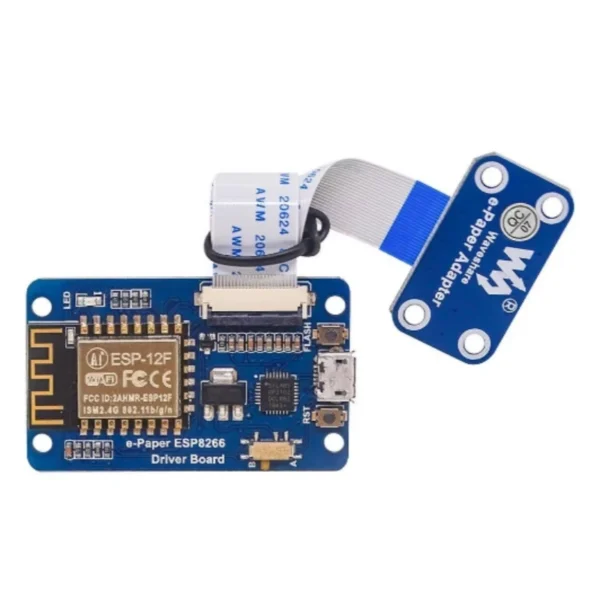 Universal e-Paper Driver Board ESP8266/ESP32 Bluetooth +WiFi Wireless, supports various Waveshare SPI e-Paper raw panels
$16.90 – $19.90Price range: $16.90 through $19.90
Universal e-Paper Driver Board ESP8266/ESP32 Bluetooth +WiFi Wireless, supports various Waveshare SPI e-Paper raw panels
$16.90 – $19.90Price range: $16.90 through $19.90