The New Standard for IoT: Intelligent, Interactive Displays
In 2026, a "smart" device without an intuitive, responsive local interface is at a severe market disadvantage. Consumers and enterprise users no longer want to open a smartphone app just to check a status or change a setting. They expect a crisp, responsive, and visually appealing local display.
However, adding a custom screen to an IoT product is one of the most frequent causes of project delays and budget overruns. We regularly encounter founders who bring us "rescue" projects where the display flickers, the touch interface registers false inputs ("ghost touches"), or the battery drains in hours due to unoptimized screen rendering.
The root cause is almost always the same: treating hardware and software as separate silos.
As a specialized custom software and hardware development service provider, we know that a successful smart display product requires a unified architectural approach. This guide breaks down the critical technical and strategic elements of custom smart display development, and how to execute them flawlessly.
1. The Hardware Foundation: Beyond Basic Microcontrollers
Not all microcontrollers are built to drive displays. Attempting to force a basic, low-memory MCU to render a modern graphical user interface (GUI) is a guaranteed path to a sluggish, frustrating user experience.
For custom smart displays in 2026, the architecture must support:
- High-Bandwidth Display Interfaces: SPI is too slow for anything beyond tiny, low-resolution OLEDs. For 3.5-inch to 7-inch displays, the hardware must utilize an 8-bit or 16-bit parallel RGB interface, or MIPI DSI, to push pixel data at 30–60 FPS without choking the CPU.
- Abundant External Memory (PSRAM): A modern GUI framework requires a frame buffer. For a 480x480 RGB565 display, a single frame buffer requires ~450KB of RAM. To achieve smooth rendering without tearing, double buffering (requiring ~900KB) driven by DMA (Direct Memory Access) is mandatory. This necessitates an SoC with dedicated, high-speed Octal SPI PSRAM (e.g., 8MB or 16MB).
- Dedicated Touch Controller Integration: Capacitive touch panels require a dedicated IC (such as the GT911 or FT6236). The hardware design must provide clean, noise-free I2C communication lines between the touch IC and the main SoC.
The Provider Advantage: A generic PCB designer might connect the pins correctly on paper, but fail to length-match the RGB data lines or isolate the touch I2C traces from high-frequency switching regulators. We design custom carrier boards with strict impedance control and EMI mitigation built into the first schematic.
2. The Software Stack: Why LVGL is the Industry Standard
Writing a custom GUI from scratch using raw frame buffer manipulation is a massive waste of engineering resources. In 2026, LVGL (Light and Versatile Graphics Library) is the undisputed industry standard for embedded IoT displays, and for good reason.
However, simply "installing LVGL" is not enough. Poor configuration leads to high CPU usage and visible lag. Our embedded software team optimizes the LVGL stack through:
- DMA-Driven Rendering: We configure the display driver to use the SoC’s LCD peripheral and DMA controller. This allows the hardware to push pixel data to the screen in the background, freeing the CPU to handle Wi-Fi connectivity, sensor polling, or Edge AI tasks.
- Asset Optimization: High-resolution PNGs and complex vector graphics consume massive amounts of flash and RAM. We implement C-array conversion and external flash (QSPI) caching strategies to keep the active RAM footprint minimal.
- SquareLine Studio Integration: For rapid UI/UX iteration, we utilize visual design tools like SquareLine Studio. This allows your product team to visualize the UI flow and animations before the final hardware is even manufactured, significantly reducing software development time.
3. Solving the "Ghost Touch" & EMI Nightmare
One of the most common and devastating pitfalls in custom display development is capacitive touch interference.
The Symptom: The device works perfectly on the engineer’s bench. But when placed in its final plastic enclosure, or when the Wi-Fi radio transmits data, the screen registers random, phantom touches, or becomes completely unresponsive.
The Root Cause: Capacitive touch controllers measure minute changes in electrical capacitance. If the PCB layout places the touch controller or its I2C traces too close to the Wi-Fi/Bluetooth antenna, or if the ground plane beneath the display is fragmented, RF noise couples into the touch sensor, overwhelming its signal-to-noise ratio.
The Expert Solution: This cannot be fixed with a software patch. It requires hardware-level EMI mitigation:
- Ground Plane Integrity: Ensuring a solid, unbroken ground plane beneath the display and touch FPC (Flexible Printed Circuit) connector.
- Trace Routing: Routing I2C clock and data lines differentially, keeping them short, and shielding them with grounded copper pour.
- Component Placement: Physically distancing the touch controller IC from the main RF antenna and high-frequency DC-DC switching converters.
- Firmware Filtering: Implementing software-level noise filtering algorithms in the touch driver to discard erratic, physically impossible touch coordinates.
4. Integrating Edge AI Without Compromising the UI
A major trend in 2026 is adding lightweight Edge AI to smart displays—such as voice wake-word detection (e.g., "Hey Device"), simple gesture recognition via a low-resolution camera, or predictive UI adjustments based on ambient light and user behavior.
The challenge is that AI inference is computationally expensive and can starve the GUI of CPU cycles, causing the display to freeze during a voice command.
How We Architect for Coexistence: We leverage the heterogeneous computing architecture of modern chips like the ESP32-S3. The ESP32-S3 features dedicated vector instructions for AI acceleration. We partition the workload:
- Core 0 is dedicated to real-time, high-priority tasks: maintaining the Wi-Fi/Matter stack, polling sensors, and running the LVGL display rendering loop.
- Core 1 handles background tasks, including the Edge AI inference engine (e.g., ESP-Skainet for voice recognition). By strictly separating these threads and utilizing FreeRTOS priorities, we ensure that an AI task never blocks the display refresh cycle, guaranteeing a buttery-smooth user experience at all times.
5. The Manufacturing Reality of Custom Displays
A flawless software and hardware design is worthless if the physical components cannot be sourced or assembled reliably. Custom displays introduce unique manufacturing complexities:
- FPC Routing and ZIF Connectors: The Flexible Printed Circuit connecting the display to the main board is fragile. The PCB footprint for the ZIF (Zero Insertion Force) connector must be reinforced with stiffeners and precise keep-out zones to prevent cracking during factory assembly.
- Backlight Bleed and Mechanical Tolerances: The mechanical enclosure must be designed with precise compression gaskets to hold the display stack-up together without applying uneven pressure, which causes visible "light bleed" around the edges of the screen.
- Supply Chain Volatility: The display panel market is notorious for sudden end-of-life (EOL) notices.
To mitigate these risks, we do not treat manufacturing as an afterthought. We integrate rigorous turnkey PCB prototype and assembly manufacturing protocols directly into our development workflow. By managing the PCBA and display integration in-house or through our vetted, specialized partners, we validate the mechanical fit, thermal performance, and assembly yield before your design is locked for mass production. We also proactively identify second-source display panels with identical dimensions and pinouts to safeguard your supply chain.
Developing a custom smart display is not a task for a generalist web development agency or a lone freelance hardware engineer. It requires a tightly integrated team that understands the intricate dance between RF engineering, high-speed PCB layout, real-time operating systems, and graphical software frameworks.
This unified approach eliminates the "blame game" between fragmented vendors, slashes your time-to-market by months, and ensures the final product in your customer’s hands is robust, responsive, and reliable.
Frequently Asked Questions (FAQ)
Q: Can you migrate our existing, laggy display interface to LVGL on an ESP32?
A: Yes. We frequently optimize legacy code. We will audit your current hardware and software, identify the bottlenecks (e.g., lack of DMA, poor memory management), and refactor the system to utilize LVGL with double-buffering, typically resulting in a 3x to 5x improvement in UI smoothness.
Q: How do you handle custom display sizing? We need a specific, non-standard form factor.
A: We have established relationships with Tier-1 display manufacturers in Asia. We can source custom-cut glass, specific brightness levels (e.g., high-nit for outdoor use), and tailored FPC lengths to perfectly match your industrial design requirements, while ensuring the components remain viable for mass production.
Q: Does adding a display and Edge AI drastically reduce battery life?
A: It can, if not designed correctly. We specialize in ultra-low-power architectures. We implement hardware-level power gating to completely shut off the display backlight and touch controller when idle, and utilize the SoC’s deep-sleep modes, waking the system only via low-power touch interrupts or scheduled sensor polling.
Q: What is the first step to starting a custom smart display project with your team?
A: It begins with a technical consultation. You do not need a finished schematic. Share your product vision, target screen size, and key features. We will help you define the Product Requirements Document (PRD) and provide a realistic architecture proposal and budget.
Ready to Build a Flawless, Responsive Smart Display?
Don’t let UI lag, touch interference, or supply chain headaches derail your product launch. Your users expect a premium, seamless experience, and your hardware must be engineered from the ground up to deliver it.
At ESP32S.com, we are your dedicated custom software and hardware development service provider, with deep, proven expertise in IoT displays, LVGL optimization, and Edge AI integration.

 DC 5V Ultrasonic Atomization Maker Mist Atomizer 500MA DIY Humidifier Type-C Interface Electronic Component Kit
$2.50 – $3.90Price range: $2.50 through $3.90
DC 5V Ultrasonic Atomization Maker Mist Atomizer 500MA DIY Humidifier Type-C Interface Electronic Component Kit
$2.50 – $3.90Price range: $2.50 through $3.90
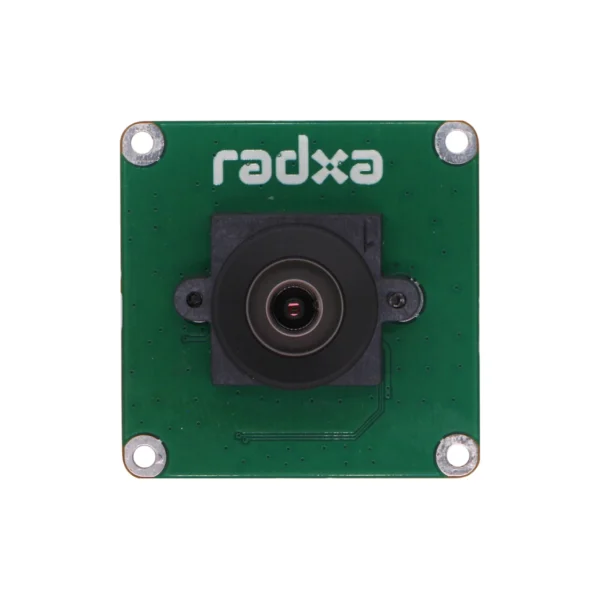 Radxa Camera 8M 219, Supports Radxa SBCs, IMX219 Sensor
$26.90
Radxa Camera 8M 219, Supports Radxa SBCs, IMX219 Sensor
$26.90
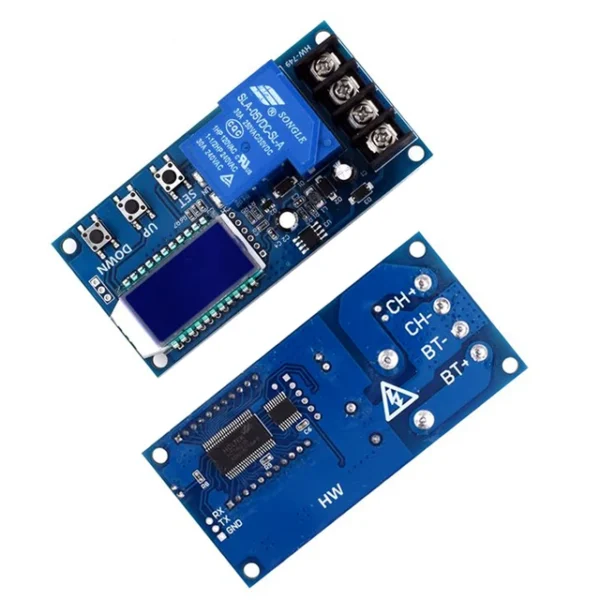 DC 6-60V 30A Lead-acid Solar Battery Charge Controller Protection Board Charger Time Switch 12V 24V 36V 48V Battery Capacity
$3.90
DC 6-60V 30A Lead-acid Solar Battery Charge Controller Protection Board Charger Time Switch 12V 24V 36V 48V Battery Capacity
$3.90
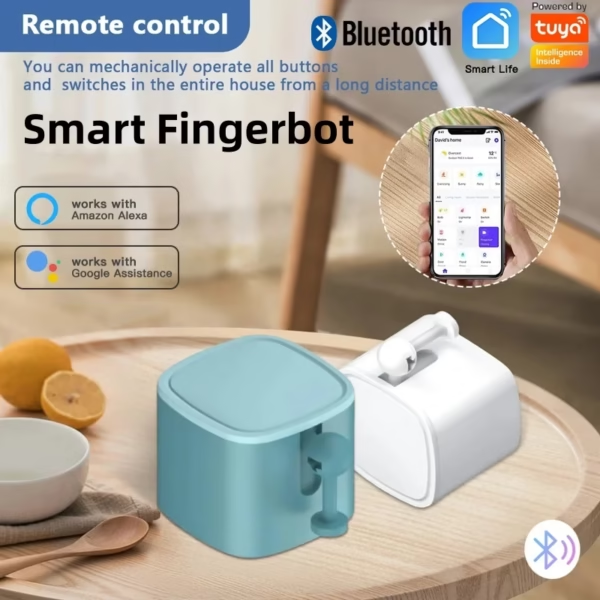 Automate Any Button: Smart Bluetooth Switch for App, Alexa, and Google Home Voice Control
 65pcs Male to Male Breadboard Jumper Wires