The High Cost of "Learning on the Job" in Hardware
Hardware development is unforgiving. Unlike software, where you can push a quick patch to fix a bug, a hardware mistake means scrapping thousands of dollars in printed circuit boards, delaying injection molding, and missing critical market windows (like a Kickstarter launch or holiday retail season).
Almost without exception, these failures stem from the same 5 hidden pitfalls. If you are planning to build a smart device, an IoT product, or a custom display interface, understanding these traps—and knowing how a professional development partner helps you avoid them—is the key to protecting your budget and your vision.
Pitfall #1: The "Works on My Desk" Illusion (Ignoring DFM)
The Problem: Many teams (especially fragmented freelance groups) focus entirely on making a prototype function. They route a PCB that works, but they place components too close together for automated SMT (Surface Mount Technology) machines, or they design an enclosure with impossible undercuts. It works perfectly on an engineer’s desk, but the factory rejects it, or the defect rate during assembly is 30%.
The Cost: A complete PCB re-spin, delayed tooling, and a 20-40% increase in per-unit manufacturing costs due to required manual labor.
How a Turnkey Provider Avoids This: We apply DFM (Design for Manufacturing) and DFA (Design for Assembly) principles from the very first schematic. Before we even order the first prototype, our engineers review the design against actual factory capabilities. By leveraging streamlined turnkey PCB prototype and assembly manufacturing services during the early validation phases, we ensure that the board is not just functional, but optimized for high-yield, low-cost mass production from Day 1.
Pitfall #2: The Display Integration Nightmare (Hardware/Software Mismatch)
The Problem: Adding a custom screen to an IoT device dramatically improves user experience, but it is a major technical hurdle. We frequently see products where the hardware engineer selects a display, but the firmware developer doesn’t know how to drive it efficiently. The result? Screen flickering, sluggish UI response, "ghost touches" caused by EMI (Electromagnetic Interference) from the Wi-Fi antenna, or a battery that drains in two hours.
The Cost: Frustrated users, terrible product reviews, and a complete firmware rewrite mid-project.
How a Turnkey Provider Avoids This: Hardware and software cannot be developed in silos. As a unified custom development service provider, our hardware and firmware teams work side-by-side. If we are building a smart display product, we architect the system holistically. We select the optimal SoC (like the ESP32-S3 for its native RGB interface and ample PSRAM), design the PCB with strict impedance control for high-speed display lines, and simultaneously write highly optimized firmware (using frameworks like LVGL) to ensure buttery-smooth UI performance and aggressive power management.
Pitfall #3: Supply Chain Blind Spots (The "Obsolete Component" Trap)
The Problem: A developer finds a cheap, perfect microcontroller or sensor on a distributor website and designs the entire product around it. Six months later, when it’s time for mass production, that component is on a 50-week lead time, or the manufacturer has issued an End-of-Life (EOL) notice.
The Cost: Months of delay while you desperately search for alternatives, or being forced to pay 10x the price on the gray market.
How a Turnkey Provider Avoids This: We don’t just design for performance; we design for supply chain resilience. Our engineering team has real-time visibility into component market trends. We proactively specify parts with long-term availability and multiple manufacturing sources. If a preferred chip has supply risks, we design the PCB footprint to be compatible with "drop-in" alternatives, ensuring your production line never stops.
Pitfall #4: The Firmware Bottleneck (Technical Debt)
The Problem: Hardware gets all the attention in the early stages, and firmware is treated as an afterthought. A developer writes "spaghetti code" just to make the device demo-ready. When the product scales, this unoptimized code leads to memory leaks, Wi-Fi dropouts, and an inability to support Over-The-Air (OTA) updates.
The Cost: A product that becomes a security liability or requires a costly, full hardware recall to fix software-level bugs.
How a Turnkey Provider Avoids This: Professional embedded software development is a core pillar of our service. We build firmware with scalability and maintainability in mind. This includes modular code architecture, rigorous testing protocols, robust OTA update mechanisms, and deep optimization for the specific hardware constraints of the device. We treat firmware with the same engineering rigor as the physical PCB.
Pitfall #5: The Fragmented Vendor Trap (The "Blame Game")
The Problem: To save money, a founder hires a freelance hardware engineer in one country, a software developer in another, and a separate industrial design firm for the enclosure.
When the final prototype fails (e.g., the touch screen doesn’t work inside the plastic enclosure), the hardware engineer blames the firmware, the firmware developer blames the PCB layout, and the mechanical designer blames the hardware team. As the founder, you are stuck in the middle, paying all of them to debug a problem that shouldn’t have happened, while your timeline collapses.
The Cost: Massive budget overruns, extreme stress, and often, project abandonment.
How a Turnkey Provider Avoids This: This is the ultimate value proposition of a comprehensive custom software and hardware development service provider. We consolidate the entire workflow under one roof. We provide a single point of accountability. If there is an integration issue, it is our problem to solve, not yours. Our cross-disciplinary team communicates daily, ensuring that the mechanical, hardware, and software designs are perfectly synchronized.
The Strategic Advantage of a Unified Development Partner
Building hardware is hard. Doing it successfully requires a delicate balance of electrical engineering, embedded software, mechanical design, and supply chain management.
Trying to piece this together with fragmented freelancers is a false economy. The hidden costs of miscommunication, rework, and manufacturing failures will always outweigh the perceived "savings" of cheap, disjointed labor.
Partnering with an experienced, end-to-end development agency gives you:
- Speed: Parallel development tracks that shave months off your time-to-market.
- Certainty: Accurate BOM costing and realistic timelines based on historical data, not guesswork.
- Quality: A product that is not just a clever prototype, but a robust, manufacturable, and certifiable commercial good.
Frequently Asked Questions (FAQ)
Q: Can you take over a project that another developer started but failed to finish?
A: Yes. We frequently handle "rescue" projects. We will conduct a comprehensive audit of your existing schematics, source code, and mechanical files, identify the root causes of the previous failures, and provide a clear, honest roadmap to get the product across the finish line.
Q: How do you ensure the custom display will work perfectly with the firmware?
A: By co-designing them. Our hardware team selects display panels with proven driver compatibility, routes the PCB to minimize noise, and our firmware team simultaneously develops and tests the GUI (e.g., using LVGL) on the actual target hardware throughout the development cycle, not just at the end.
Q: Do I have to give up ownership of my product’s Intellectual Property (IP)?
A: Absolutely not. We operate on a strict "work for hire" basis. Upon completion of the agreed milestones, 100% of the IP—including Gerber files, firmware source code, and CAD models—is transferred entirely to you. We also sign comprehensive NDAs before any project discussions begin.
Q: What is the first step to working with your custom development team?
A: It starts with a conversation. You don’t need a perfect technical specification. If you have a concept, a target audience, and a rough idea of features, we can help you define the Product Requirements Document (PRD) and provide a realistic budget and timeline.
Ready to De-Risk Your Hardware Development?
Don’t let your innovative product idea fall victim to common, avoidable development pitfalls. You need a partner who has already solved these problems and can guide you smoothly from concept to mass production.

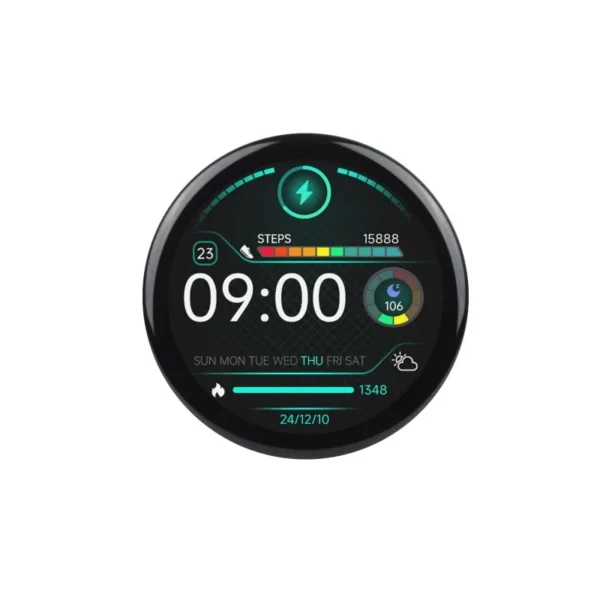 RP2350 1.46 inch Capacitive Touch Round Display Development Board, 480×480 IPS Panel Display, 65K Color
$21.90 – $23.90Price range: $21.90 through $23.90
RP2350 1.46 inch Capacitive Touch Round Display Development Board, 480×480 IPS Panel Display, 65K Color
$21.90 – $23.90Price range: $21.90 through $23.90
 Radxa 10.1 inch FHD MIPI 1200x1920 Touchscreen Display for SBCs
$105.80
Radxa 10.1 inch FHD MIPI 1200x1920 Touchscreen Display for SBCs
$105.80
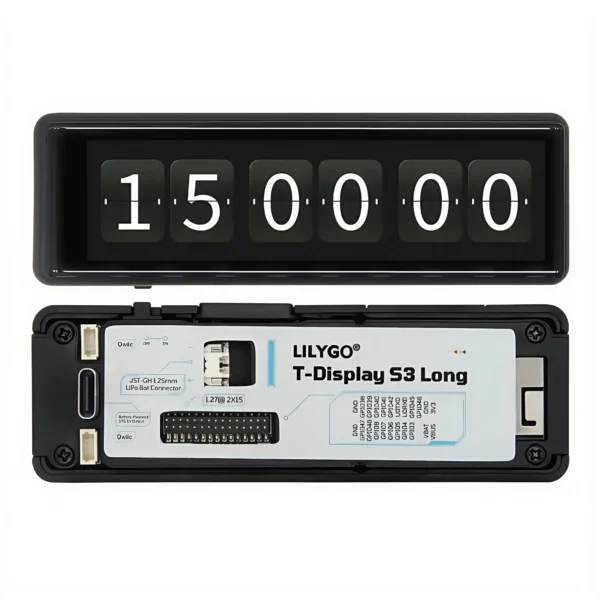 LILYGO T-Display-S3-Long 3.4-inch Touch Display ESP32-S3 Development Board TFT LCD Wireless Module WiFi Bluetooth 16MB Flash
$36.90 – $40.90Price range: $36.90 through $40.90
LILYGO T-Display-S3-Long 3.4-inch Touch Display ESP32-S3 Development Board TFT LCD Wireless Module WiFi Bluetooth 16MB Flash
$36.90 – $40.90Price range: $36.90 through $40.90
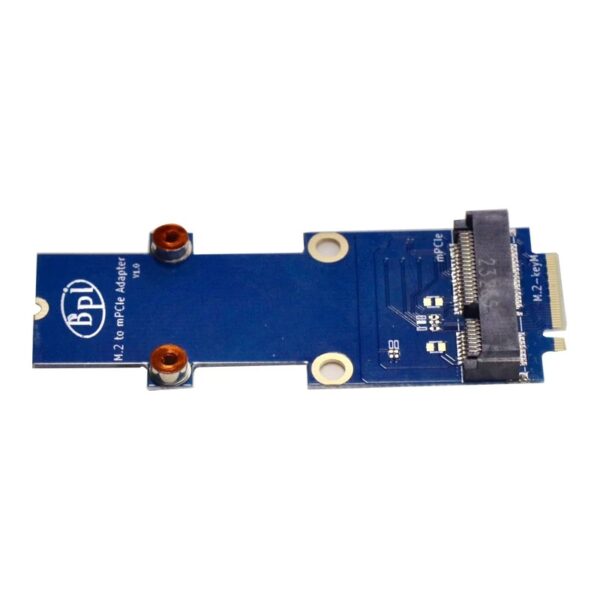 Banana Pi BPI-M.2 to mPCIe Adapter wifi 6e Applicable to BPI-R3
$7.50
Banana Pi BPI-M.2 to mPCIe Adapter wifi 6e Applicable to BPI-R3
$7.50
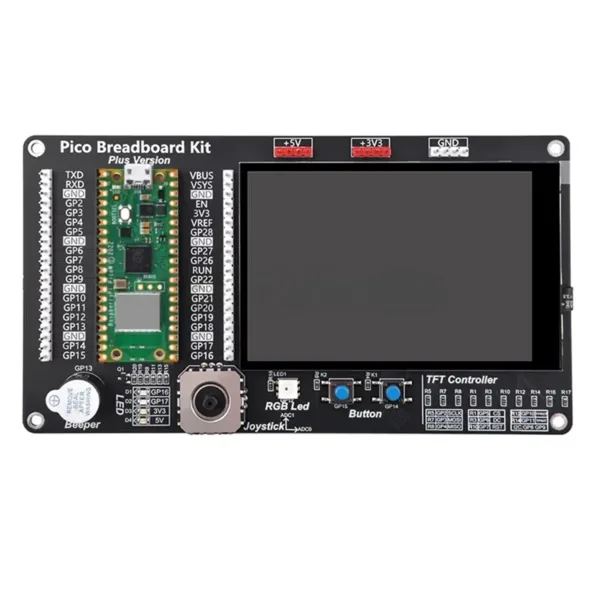 Upgraded For Raspberry Pi Pico /Pico W/2 Breadboard Kit With 3.5 Inch Touch Screen DIY Project Breakout Board With Picow