It is the ultimate nightmare for any hardware project manager: You are weeks away from your pilot run, and your supply chain dashboard lights up red. The core ESP32 module you specified has a 40-week lead time. The power management IC (PMIC) you chose has been marked as "Not Recommended for New Designs" (NRND). Or worse, a specific 0402 capacitor in your RF matching network has seen its price skyrocket by 500% due to a factory fire overseas.
Your immediate instinct might be to panic. Your second instinct might be to redesign the PCB (a "respin") to accommodate available parts.
Stop. Do not respin the board yet.
A PCB respin is a massive drain on your budget and timeline. It requires schematic updates, layout routing, new Gerber generation, fabrication, and a completely new assembly run. It can easily cost $2,000–$5,000 and delay your product launch by a month or more.
At esp32s.com, we specialize in rescuing projects from BOM crises. Through our Turnkey PCB Assembly service, we utilize Form-Fit-Function (FFF) component substitution to keep your project moving without altering your existing PCB layout.
In this guide, we will explain what true FFF substitution entails, the hidden traps of naive part swapping, and how our engineering team can safely navigate component shortages for your ESP32 IoT projects.
What is Form-Fit-Function (FFF) Substitution?
Many amateur assemblers assume that if a replacement part has the same pinout, it’s a valid substitute. This is a dangerous misconception that can lead to catastrophic field failures.
A true Form-Fit-Function (FFF) alternative must match the original component in three strict dimensions:
- Form (Physical & Mechanical): The replacement must have the exact same footprint, package dimensions, pin pitch, and height. It must fit perfectly into the existing PCB pads and not interfere with the enclosure or other tall components. Crucially, the thermal pad layout (if applicable) must be identical.
- Fit (Manufacturing & Assembly): The part must be compatible with your existing manufacturing process. This means it must withstand the same reflow soldering temperature profile, be compatible with the existing solder paste stencil apertures, and be available in standard tape-and-reel packaging for automated Pick-and-Place (PNP) machines.
- Function (Electrical & Thermal): This is where most failures occur. The replacement must match not just the primary specs (e.g., 3.3V, 1A), but also the secondary characteristics: switching frequency, quiescent current, temperature coefficient, tolerance, and parasitic inductance/capacitance.
The Hidden Traps of Naive Component Substitution in ESP32 Designs
When dealing with highly integrated SoCs like the ESP32-S3 or ESP32-C6, naive substitution can silently destroy your product's performance. Here are the most common traps we see developers fall into when trying to swap parts themselves:
Trap 1: The ESP32 Module Flash/PSRAM Illusion
Espressif releases dozens of variants of the ESP32-WROOM and WROVER modules. They look identical on the outside and have the exact same pinout. However, under the metal shield, they differ wildly in Flash type (e.g., Quad vs. Octal SPI) and PSRAM capacity.
- The Risk: If you blindly substitute an ESP32-WROOM-32U (with standard flash) for a variant requiring Octal SPI without updating the firmware or verifying the pinmux, your board will boot-loop or fail to connect to Wi-Fi.
- The FFF Fix: Our engineers cross-reference the exact silicon die inside the module. We ensure the substitute not only matches the pinout but also the internal architecture required by your compiled firmware.
Trap 2: Power Management IC (PMIC) Switching Frequencies
You need to replace a TI buck converter that is out of stock with an MPS alternative. Both are 3.3V, 2A synchronous buck converters with the same SOIC-8 footprint.
- The Risk: The original TI chip operates at a 2.1 MHz switching frequency, allowing you to use a small 1µH inductor. The MPS alternative operates at 500 kHz. If you just drop it in, the 1µH inductor will saturate at peak loads, causing the output voltage to collapse and the ESP32 to brown-out during Wi-Fi transmission.
- The FFF Fix: A true FFF evaluation analyzes the entire power tree. If the switching frequency differs, we will also source a compatible inductor and output capacitor to ensure the new PMIC operates safely within its designed parameters.
Trap 3: MLCC Dielectric Materials in RF Circuits
In the ESP32’s RF matching network (the Pi-network connecting the SoC to the antenna), you used a 10pF C0G (NP0) capacitor. Digi-Key is out of stock, so you substitute it with a 10pF X7R capacitor of the same 0402 size.
- The Risk: X7R capacitors are highly voltage-dependent and temperature-dependent. Their actual capacitance can drop by 30% when a DC bias is applied, and they exhibit high microphonic effects (piezoelectric noise). This will severely detune your antenna, dropping your Wi-Fi range by 50% and causing FCC/CE certification failures.
- The FFF Fix: For RF and high-speed digital circuits, we strictly enforce dielectric material matching. We will source C0G/NP0 alternatives, even if it means paying a slight premium, because the cost of a failed RF certification is infinitely higher.
The esp32s.com FFF Substitution Workflow: How We Save Your Project
When you use our Turnkey PCBA service and encounter a BOM shortage, you don't just get a "part not found" email. You get a comprehensive engineering rescue operation.
Step 1: Deep-Dive Datasheet Analysis
Our procurement and engineering teams work in tandem. When a part goes obsolete or faces extreme lead times, we immediately identify potential FFF candidates. We compare the datasheets down to the thermal resistance (θJA), ESR (Equivalent Series Resistance), and tolerance curves.
Step 2: The "No-Respin" Feasibility Check
We verify if the substitute can truly be dropped in without modifying the PCB. We check the 3D step files to ensure physical clearance and review the reflow profiles to ensure thermal compatibility. If a substitute requires a minor pad adjustment (e.g., a slightly larger thermal pad), we will advise you. Sometimes, a tiny, localized pad modification is vastly cheaper and faster than a full PCB respin.
Step 3: Prototype Validation (The 5-Piece Rule)
We never implement a major FFF substitution directly into mass production. We will build a validation batch of 5 to 10 units using the substitute components.
- We perform basic power-on testing.
- For RF substitutes, we can perform basic conducted power measurements.
- For power substitutes, we perform thermal imaging and load-transient testing.
- Only after you approve the validation batch do we proceed with the full run.
Step 4: BOM Locking and Traceability
Once the FFF substitute is validated, we formally update your BOM in our ERP system. We maintain strict lot traceability, ensuring that every board we ship with the substitute component is fully documented. If the original part becomes available again in the future, we will consult you before switching back.
Why Your PCBA Partner Must Be an Engineering Partner
The era of treating PCB assembly as a mere "commodity" is over. In 2026, with complex IoT designs and dynamic supply chains, your PCBA provider must act as an extension of your engineering team.
If your current manufacturer simply replies "Part out of stock, please advise" when you submit a BOM, they are adding risk to your project.
At esp32s.com, we proactively monitor the supply chain. Often, we will identify a looming shortage for your ESP32 project before you even place your order, and we will proactively suggest an FFF alternative during the initial quoting phase.
Our Promise:
- Zero Surprise Respins: We exhaust all FFF options before suggesting a PCB layout change.
- Engineering-Led Substitution: Every part swap is reviewed by our in-house hardware engineers, not just purchasing agents.
- Validation First: We build and test validation samples to guarantee the substitute performs identically in your specific application.
Is Your BOM at Risk? Let Us Rescue Your Timeline.
Don't let a single out-of-stock component derail your product launch or burn through your startup capital with unnecessary PCB respins.
Upload your current BOM and Gerber files to esp32s.com. Even if you are not ready to order, our engineering team will perform a Free Supply Chain Risk & FFF Alternative Assessment. We will tell you exactly which parts in your BOM are at risk and provide validated, drop-in alternatives to keep your project moving.
Frequently Asked Questions (FAQ)
Q: Does Form-Fit-Function (FFF) substitution require me to pay for a new PCB stencil?
A: In 95% of true FFF substitutions, the physical footprint is identical, meaning your existing SMT stencil can be used without modification. If a substitute requires a minor pad adjustment (which is rare in true FFF), we will advise you on the most cost-effective way to handle it, which is still vastly cheaper than a full PCB respin.
Q: How long does it take to validate a component substitution?
A: Once the engineering team identifies a viable FFF candidate and the parts are sourced, the validation prototype (5-10 pcs) can typically be assembled and tested within 3 to 5 business days.
Q: What if the substitute part is more expensive than the original?
A: Transparency is key. If the only viable FFF alternative costs more, we will provide you with a detailed cost-benefit analysis. We will compare the slight increase in unit cost against the $2,000+ cost and 4-week delay of a PCB respin. The decision is always yours, but we provide all the data needed to make the most profitable choice.
Q: Can you help substitute obsolete ESP32 modules?
A: Yes. We maintain deep expertise in the Espressif product line. If a specific ESP32-WROOM or WROVER variant is obsolete, we can identify pin-compatible alternatives with the exact same Flash/PSRAM architecture, ensuring your existing firmware will run without modification.

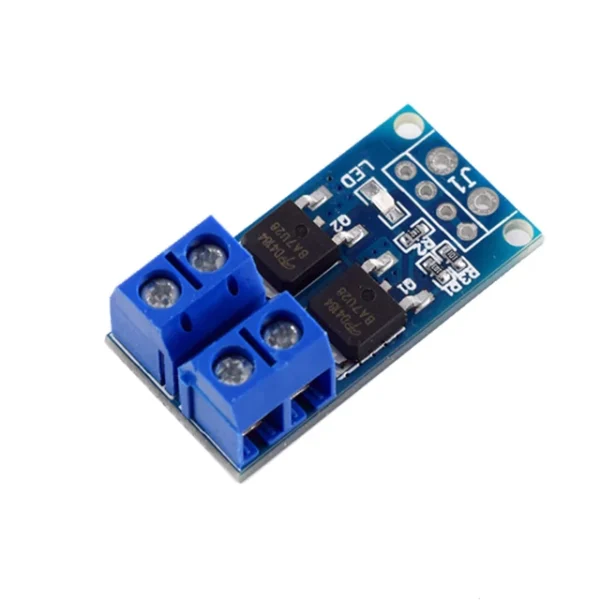 15A 400W High Power MOS Tube Field Effect Switch Trigger Switch Driver Module PWM Adjustable Electronic Switch Control Board
$1.90
15A 400W High Power MOS Tube Field Effect Switch Trigger Switch Driver Module PWM Adjustable Electronic Switch Control Board
$1.90
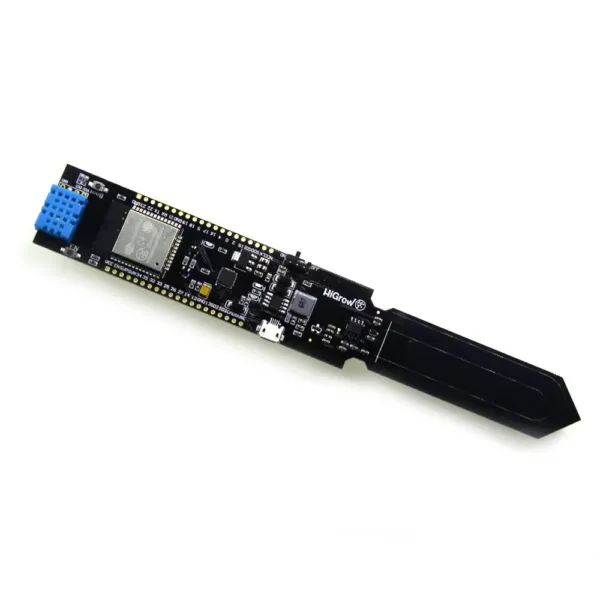 ESP32 WiFi Bluetooth-compatible Battery DHT11 Soil Temperature And Humidity Sensor Module
 AI Intelligent Small Robot Emotional Companionship Multiple Expressions Languages Dialogue Functionality Companion Smart Cl
$41.80
AI Intelligent Small Robot Emotional Companionship Multiple Expressions Languages Dialogue Functionality Companion Smart Cl
$41.80
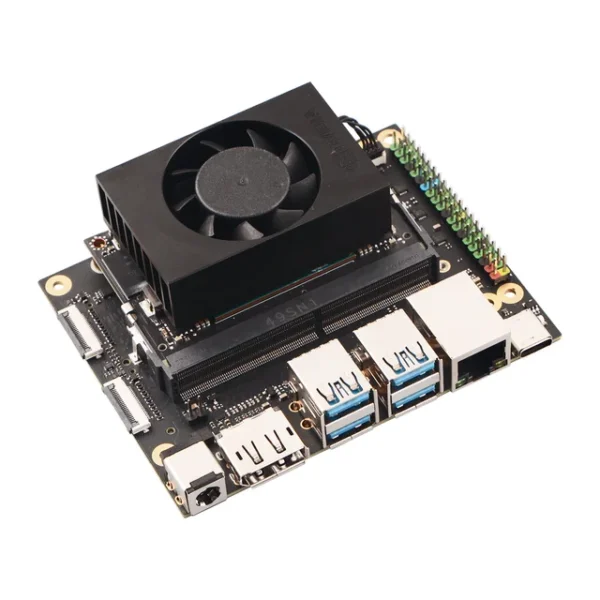 Radxa C200 Orin Developer Kit/Jetson Orin NX 8GB /Super Mode 117 TOPS / Edge AI
$819.70
Radxa C200 Orin Developer Kit/Jetson Orin NX 8GB /Super Mode 117 TOPS / Edge AI
$819.70
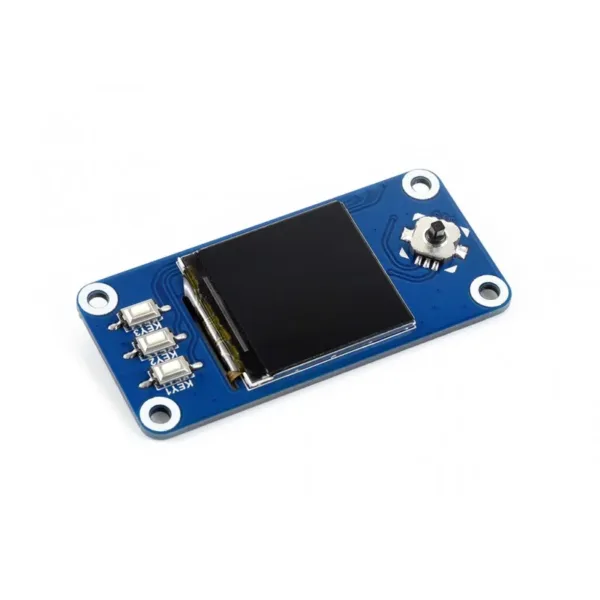 1.3 Inch SPI LCD display HAT for Raspberry Pi 240x240 Pixels SPI Interface with Embedded Controller IPS Screen