You’ve done it. After weeks of debugging in C++ or MicroPython, your ESP32 project is finally working flawlessly on a breadboard or a generic dev kit. You’ve migrated the schematic into KiCad or Altium, routed the PCB, and generated your Gerber files. You’re ready to bring your custom IoT device to life.
But then you hit the "Hardware Wall."
You search for PCB manufacturers and face a frustrating dilemma: Hobbyist prototype houses are too slow and lack quality control for production, while massive contract manufacturers (CMs) ignore you because your order quantity is only 50 or 100 units. Furthermore, you realize that the open-source reference design you based your board on wasn't actually optimized for real-world manufacturing.
At esp32s.com, we specialize in bridging this exact gap. We are the manufacturing partner for open-source hardware creators, IoT startups, and embedded engineers who need to transition their ESP32 projects from prototype to low-volume production seamlessly.
In this guide, we will walk you through our exact Turnkey PCBA (Printed Circuit Board Assembly) process, revealing how we take an ESP32 design from a digital file to a fully tested, production-ready physical board.
Phase 1: Pre-Production Engineering & Open Source Adaptation
Many developers download an open-source ESP32 hardware design from GitHub, assuming it’s ready to be manufactured. This is rarely the case. Open-source designs are often optimized for "making it work," not "making it manufacturable at scale."
Before any components are ordered, our engineering team performs a rigorous DFM (Design for Manufacturing) and DFA (Design for Assembly) review.
What We Look For in Your ESP32 Design:
- Castellated Holes vs. SMD Pads: ESP32 modules (like the WROOM-32 or WROOM-S3) often use castellated holes (half-holes on the edge). While great for hand-soldering, they can cause solder wicking issues in reflow ovens. We will advise if switching to a module with standard bottom SMD pads, or adjusting the stencil aperture, will yield better solder joints.
- Missing Manufacturing Data: Open-source repos often lack a proper Centroid (Pick-and-Place) file or have unlinked BOMs. We will help you generate and verify these files to ensure our SMT machines place every 0402 resistor exactly where it belongs.
- Thermal Relief on Power Pins: Generic designs often use solid thermal connections on large ground pads, making it impossible for the solder to flow properly during wave or reflow soldering, leading to cold joints. We fix these in the Gerber review stage.
By catching these issues before production, we save you from the ultimate nightmare: receiving 100 boards that don't power on.
Phase 2: The Turnkey PCBA Process (Step-by-Step)
Once the design is optimized, we initiate our Turnkey PCB Assembly process. "Turnkey" means we handle everything: bare PCB fabrication, component sourcing, SMT assembly, and testing. Here is what happens on our factory floor.
Step 1: Precision Component Sourcing & Kitting
The ESP32 ecosystem relies on specific, sometimes hard-to-find peripherals (like specific USB-to-UART bridges, RF connectors, or power management ICs).
- Authenticity Guarantee: We source components exclusively from authorized global distributors (Digi-Key, Mouser, Arrow, etc.). In the IoT world, counterfeit ESP32 modules or fake flash memory can cause catastrophic field failures. We guarantee 100% authentic parts.
- Dry Cabinets & MSL Management: Moisture-sensitive components (like the ESP32 SoC itself and BGA ICs) are stored in strict dry cabinets and baked if necessary, preventing the "popcorn effect" during reflow soldering.
Step 2: High-Precision SMT Assembly
Your boards are loaded onto our high-speed SMT (Surface Mount Technology) lines.
- Solder Paste Printing: We use laser-cut stainless steel stencils with nano-coating to ensure a perfect, consistent volume of solder paste on every pad—critical for the fine-pitch pins of the ESP32 module.
- Pick-and-Place: Our advanced placement machines handle everything from tiny 0201 passives to the large, heavy ESP32-WROOM modules with an accuracy of ±0.025mm.
- Reflow Soldering: The boards pass through a multi-zone reflow oven. We carefully profile the thermal curve specifically for the ESP32 module's thermal mass, ensuring all pins melt and form reliable intermetallic bonds without damaging the silicon.
Step 3: Rigorous Quality Inspection (The Trust Factor)
This is where hobbyist houses fail and professional CMs shine.
- 3D AOI (Automated Optical Inspection): Every board passes through a 3D AOI machine that checks for solder bridges, missing components, and tombstoning (when a small resistor stands up on one end).
- X-Ray Inspection for ESP32 Modules: This is non-negotiable. The ESP32 module has pins hidden underneath its metal shield and plastic casing. Optical cameras cannot see them. We use Automated X-Ray Inspection (AXI) to verify that every single hidden pad has a proper solder fillet and no voids. If an ESP32 module has a single cold solder joint, the Wi-Fi range will drop to zero. X-ray guarantees it.
Step 4: Functional Testing & Firmware Flashing (Value-Add)
A beautifully assembled board is useless if it doesn't boot.
- Power-On Testing: We perform a basic short-circuit and power-rail voltage check before shipping.
- Custom Test Fixtures: For low-volume production (e.g., 100+ units), we can build a simple "bed of nails" or pogo-pin test fixture to automatically flash your initial firmware and verify that the ESP32 is broadcasting its Wi-Fi MAC address. This turns a "dumb" assembled board into a "smart," ready-to-deploy product.
Phase 3: Scaling from 10 to 10,000 Units
The true test of a PCBA partner is whether they can support your growth. Many prototype houses will build your 10 boards perfectly, but when you order 5,000 units for mass production, their quality plummets, or they outsource it to an unknown subcontractor.
At esp32s.com, we design our production flow with scalability in mind:
- Consistent BOM Locking: Once we validate your BOM for the prototype, we lock it. You won't face surprise component substitutions in mass production without your explicit approval.
- Dedicated Production Lines: Whether you need 50 units or 5,000, your boards are assembled on the same high-precision SMT lines, inspected by the same AOI/X-ray equipment, and managed by the same engineering team.
- Supply Chain Buffer: For mass production, we can procure components in bulk and store them in our facility, shielding you from sudden market price spikes or lead-time extensions.
Why Hardware Creators Choose esp32s.com
When you are building an ESP32-based IoT device, you need more than just a "board stuffer." You need a manufacturing partner who speaks your language.
- We Speak "ESP32": We understand the RF sensitivities, the power consumption profiles, and the specific quirks of Espressif's silicon. We don't need you to explain what a "castellated hole" is; we already know how to optimize it.
- No Minimum Order Quantity (MOQ) Penalties: We believe in supporting innovation. Whether you need 5 prototype boards to show an investor, or 500 units for a Kickstarter fulfillment, you get the same high-quality turnkey service.
- Total Transparency: You get real-time updates on your component sourcing and production status. No black boxes.
Ready to Turn Your ESP32 Design into Reality?
Stop worrying about supply chain headaches, counterfeit components, or hidden solder defects. Let our engineering team handle the complex reality of PCB manufacturing so you can focus on writing great firmware and building your business.
Upload your Gerber files and BOM today, and experience the esp32s.com difference.
Frequently Asked Questions (FAQ)
Q: I have an open-source ESP32 design from GitHub. Can you manufacture it directly?
A: Yes, but we highly recommend letting our engineers perform a free DFM review first. Open-source designs often need minor tweaks (like adjusting solder paste apertures or fixing thermal reliefs) to ensure high yield during mass production. We will guide you through these adjustments.
Q: How do you ensure the ESP32 modules are authentic and not counterfeit?
A: We strictly source all ICs and modules from authorized, tier-1 global distributors (such as Arrow, Avnet, Digi-Key, and Mouser). We provide certificates of origin and traceability for all critical components upon request.
Q: Can you flash our custom firmware onto the assembled ESP32 boards?
A: Absolutely. We offer in-circuit programming and functional testing services. We can flash your compiled .bin or .hex files and perform basic I/O or Wi-Fi connectivity checks before shipping, saving you hours of manual labor.
Q: What is the typical lead time for a turnkey ESP32 prototype run?
A: For standard prototypes (5-50 pcs), once components are in stock, the PCB fabrication and assembly typically take 5 to 7 business days. If specific components require sourcing, we will provide an accurate timeline during the quoting phase.
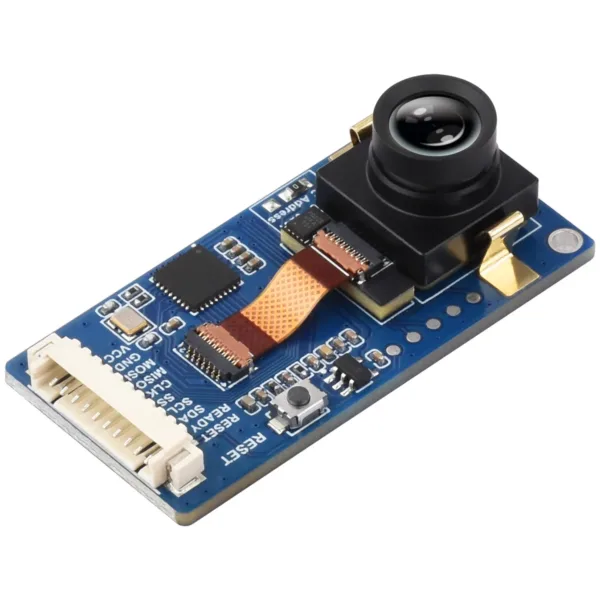 Long-wave IR Thermal Imaging Camera Module, 80 × 62 Pixels IR Array, For Raspberry Pi And Other Development Boards
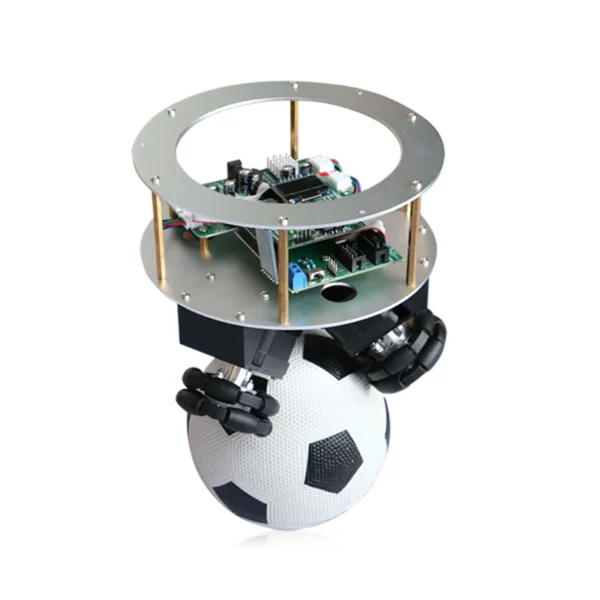 ball balance robot Balance car DIY kit
$178.90 – $640.90Price range: $178.90 through $640.90
ball balance robot Balance car DIY kit
$178.90 – $640.90Price range: $178.90 through $640.90
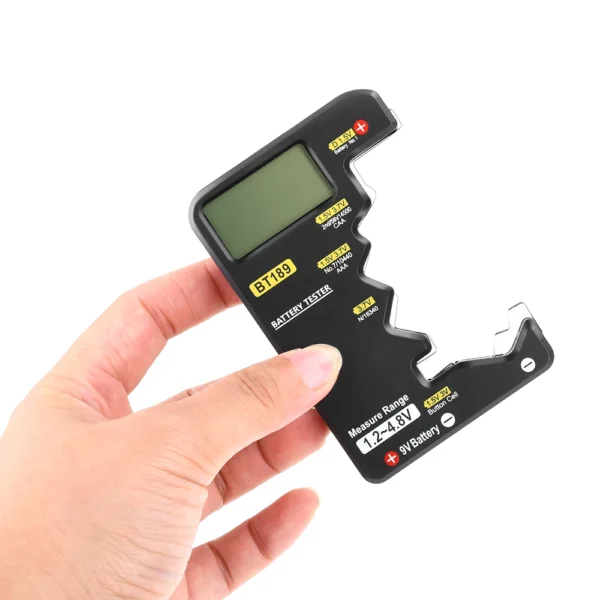 BT189 Ultra-small Battery Tester 9V AAAAA Button Cell Universal Household LCD Digital Display Battery Tester Power Bank Detector
$3.90
BT189 Ultra-small Battery Tester 9V AAAAA Button Cell Universal Household LCD Digital Display Battery Tester Power Bank Detector
$3.90
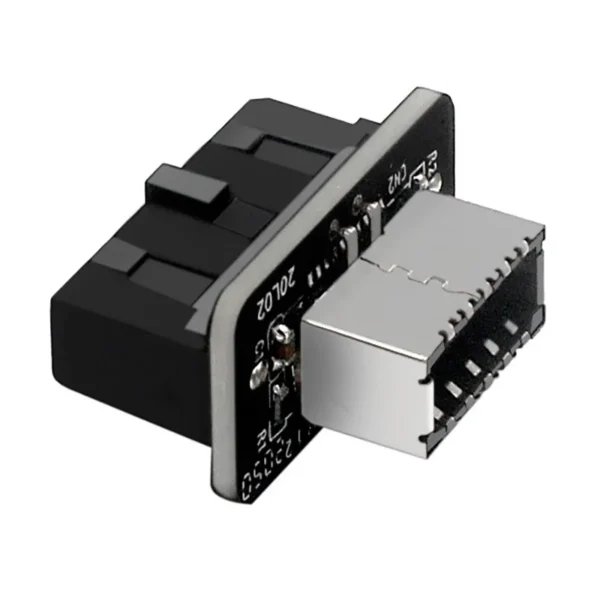 PH73S Motherboard USB3.019P/20P To Type-E 90 Degree Adapter Chassis Front Type-C Plug-In Port
$2.70
PH73S Motherboard USB3.019P/20P To Type-E 90 Degree Adapter Chassis Front Type-C Plug-In Port
$2.70
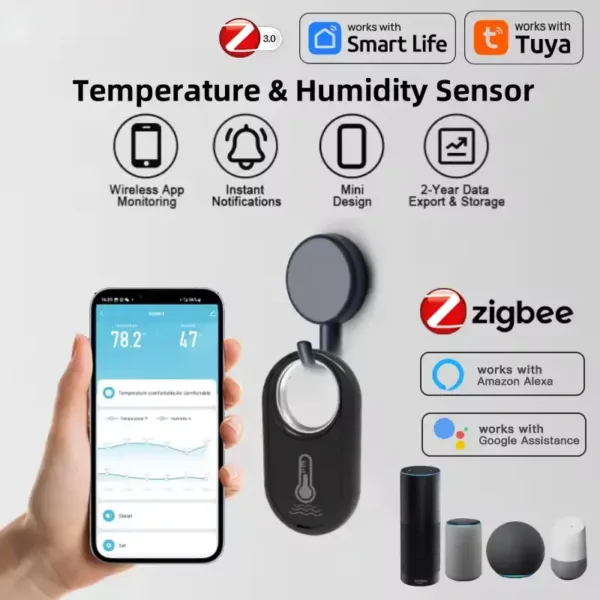 Tuya Zigbee Smart Temperature & Humidity Sensor