Building an IoT hardware startup in 2026 is a thrilling journey, but it is also a financial tightrope walk. You have a brilliant concept powered by an ESP32-S3 or a custom STM32 microcontroller, but as you move from schematic to physical prototype, you hit a harsh reality: hardware is expensive, and prototyping is even more expensive.
Many founders and hardware engineers assume that to save money on Printed Circuit Board Assembly (PCBA), they need to manage the supply chain themselves—buying bare boards from Vendor A, sourcing components from Digi-Key or Mouser, and shipping them to a local assembly house.
This "fragmented" approach feels like a cost-saving hack. In reality, it is a cost trap.
At esp32s.com, we have partnered with dozens of IoT startups to bring their hardware from concept to mass production. Through this experience, we’ve analyzed the true economics of low-volume manufacturing. In this guide, we will reveal the hidden costs of fragmented prototyping and share 4 proven strategies to reduce your PCBA prototype costs by up to 30% by leveraging a specialized Turnkey PCB Assembly service.
The Hidden Costs of "Fragmented" PCB Prototyping
Before we discuss how to save money, we must understand where your budget is actually leaking. When you manage the PCB, BOM (Bill of Materials), and assembly separately, you incur several invisible costs:
- The "Time is Money" Tax: Sourcing 50 unique components, dealing with backorders, and coordinating shipping from three different suppliers can take 20-40 hours of engineering time. At an engineer's hourly rate, this administrative burden often exceeds the actual cost savings of the parts.
- Expedited Shipping Penalties: Because component sourcing takes weeks, the actual PCB fabrication and assembly time gets compressed. You are forced to pay "rush fees" for 24-hour or 48-hour turnaround on bare boards and assembly just to meet your deadline.
- The "Wrong Part" Respin Risk: If you buy the components yourself and a subtle error occurs (e.g., ordering a 10kΩ resistor instead of 100kΩ, or buying the wrong footprint variant of an ESP32 module), the assembly house will halt production. You must pay for return shipping, buy the correct parts, and pay the assembly house for a re-run setup fee.
The Verdict: Fragmented sourcing lowers the unit price of the board, but drastically increases the Total Cost of Ownership (TCO) and time-to-market.
4 Proven Strategies to Reduce PCBA Prototype Costs by 30%
To truly optimize your hardware budget, you need to look at the entire manufacturing ecosystem. Here is how a strategic approach, combined with a Turnkey PCBA partner, slashes costs.
Strategy 1: Implement "Design for Cost" (DFC) Principles
Design for Manufacturing (DFM) ensures your board can be built. Design for Cost (DFC) ensures it can be built cheaply. Small design tweaks yield massive savings in low-volume assembly.
- Standardize Passive Components: If your BOM uses 0402, 0603, and 0805 resistors, the Pick-and-Place (PNP) machine must stop and change feeders three times. By standardizing all passives to a single package size (e.g., all 0402), you reduce machine setup time, which directly lowers the assembly fee.
- Minimize Unique BOM Lines: Every unique part number requires a unique feeder slot on the SMT line. If you can use a single 10kΩ resistor value for five different pull-up locations instead of using 10k, 12k, and 15k, you reduce the BOM line count. Fewer unique parts mean lower setup costs and fewer potential sourcing delays.
- Avoid Micro-BGAs for Prototypes: While a micro-BGA (Ball Grid Array) might save 2mm of board space, it requires expensive X-ray inspection and specialized stencil printing during assembly. For a prototype, using a QFN (Quad Flat No-leads) or QFP package can reduce assembly costs by 15-20% without sacrificing functionality.
Strategy 2: Smart BOM Sourcing & Cross-Referencing
In 2026, supply chain volatility is the enemy of hardware budgets. Relying on a single, highly specific Manufacturer Part Number (MPN) often leads to exorbitant broker markups or 30-week lead times.
- Alternative Component Sourcing: We maintain deep relationships with global distributors. If your specified TI power management IC is out of stock, our engineering team will immediately source a validated, pin-to-pin compatible alternative (e.g., from MPS or Analog Devices) at a fraction of the broker price.
- Bulk Leverage: We aggregate the BOM requirements of all our clients. When we order common ESP32 peripherals (like CH340 USB-to-UART chips or standard LDO regulators), we buy in massive bulk, passing the volume discounts directly to your prototype quote.
Strategy 3: Consolidate with Turnkey Assembly (The 30% Secret)
This is where the magic happens. When you use a Turnkey service (where the manufacturer handles PCB fabrication, component sourcing, and assembly under one roof), you unlock structural cost reductions:
- Elimination of Double Shipping: You no longer pay to ship bare boards from the PCB fab to the component supplier, and then to the assembly house. Everything flows directly to the SMT line.
- Waived Setup Fees for Repeat Customers: Many assembly houses charge a $100-$200 "engineering setup fee" for prototype runs. At esp32s.com, when we handle the entire turnkey process, we frequently waive or heavily discount these setup fees because we control the entire workflow and data pipeline.
- Single Point of Accountability: If a solder joint fails or a component is defective, there is no finger-pointing between the PCB fab, the component vendor, and the assembler. The turnkey provider absorbs the risk and the cost of the rework.
Strategy 4: Panelization and Tooling Optimization
If you are ordering 10 to 50 prototype boards, how they are panelized (arranged on the manufacturing panel) drastically affects the price.
- V-Scoring vs. Tab-Routing: V-scoring is generally cheaper and faster for rectangular boards. If your design allows for it, opting for V-score panelization over complex tab-routing with mousebites can reduce the PCB fabrication cost by up to 15%.
- Fiducial Markers and Tooling Holes: Ensuring your design includes proper global fiducial marks and tooling holes allows the assembly house to use standard, reusable fixtures. If you omit these, the assembly house must create custom, single-use tooling for your prototype, adding $50-$100 to your bill.
The "Total Cost of Ownership" (TCO) Reality Check
Let’s look at a real-world scenario for a batch of 10 prototype IoT boards featuring an ESP32-S3 module.
Note: The above is a representative model based on industry averages. Actual quotes vary by design complexity.
As the table illustrates, while the line-item price of components might look slightly cheaper when buying retail yourself, the Total Cost of Ownership for the Turnkey approach is less than half of the fragmented approach, and it arrives three times faster.
Why esp32s.com is the Strategic Partner for IoT Startups
At esp32s.com, we don't just assemble boards; we engineer supply chain efficiency. We understand that for a startup, cash flow and time are your most precious assets.
- Transparent, Itemized Pricing: We break down the PCB cost, component cost, and assembly cost. No hidden markups, no surprise fees.
- Free DFM & DFC Review: Our engineers will analyze your Gerber and BOM files not just for manufacturability, but for cost-optimization. We will suggest component alternatives and layout tweaks to lower your price before you spend a dime.
- IoT & ESP32 Expertise: Because we specialize in the ESP32 ecosystem, we know exactly which modules offer the best price-to-performance ratio in 2026, helping you avoid over-engineering your BOM.
Ready to Optimize Your Hardware Budget?
Stop leaving money on the table with fragmented manufacturing. Let us prove the math to you.
Upload your Gerber files and BOM today, and let our engineering team show you how a streamlined Turnkey PCBA approach can cut your prototype costs and accelerate your time-to-market.
Frequently Asked Questions (FAQ)
Q: What is the minimum order quantity (MOQ) for turnkey PCB assembly?
A: We are built to support hardware innovation. Our MOQ for turnkey PCBA starts at just 5 pieces, making it highly accessible for early-stage prototyping and proof-of-concept validation.
Q: Do you charge extra for sourcing components in a turnkey order?
A: No. We charge the exact market price for the components (often lower due to our bulk purchasing power) and provide a transparent, itemized invoice. Our profit margin is strictly on the assembly and fabrication services, not marked-up parts.
Q: What if a component in my BOM is out of stock or has a long lead time?
A: Our procurement team monitors global supply chains daily. If we identify a risk, we will proactively contact you with validated, pin-compatible alternative components (cross-references) to keep your project on schedule without requiring a PCB respin.
Q: How fast can I get my turnkey prototype assembled?
A: Once components are secured, our standard turnaround for prototype assembly is 3 to 5 business days. Expedited 24/48-hour assembly options are also available if your project demands it.

 WM1302 LoRaWAN Gateway Module USB US915MHz Without SX1262
$37.90
WM1302 LoRaWAN Gateway Module USB US915MHz Without SX1262
$37.90
 Type-C Mini Hot Plate PCB SMD Board Soldering Plate Adjustable Constant Temperature Heating Tool Preheating Station Repair Tools
$13.90
Type-C Mini Hot Plate PCB SMD Board Soldering Plate Adjustable Constant Temperature Heating Tool Preheating Station Repair Tools
$13.90
 LM2596HVS LM2596 HV LM2596HV DC-DC Adjustable Step Down Buck Converter Power Module DC 4V - 48V To 3V - 40V Urrent limiting
$2.30
LM2596HVS LM2596 HV LM2596HV DC-DC Adjustable Step Down Buck Converter Power Module DC 4V - 48V To 3V - 40V Urrent limiting
$2.30
 Micro SD Storage Expansion Board Micro SD TF Card Memory Shield Module SPI For Arduino Promotion
$2.90
Micro SD Storage Expansion Board Micro SD TF Card Memory Shield Module SPI For Arduino Promotion
$2.90
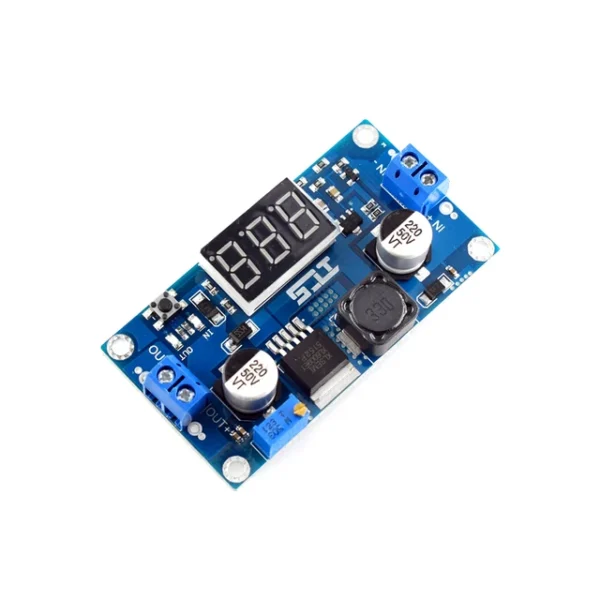 Upgraded Version XL6009 Boost Module DC-DC 5V-32V To 5V-40V 4A Adjustable Step Up Power Supply Module with Digital Display
$3.50
Upgraded Version XL6009 Boost Module DC-DC 5V-32V To 5V-40V 4A Adjustable Step Up Power Supply Module with Digital Display
$3.50