
EMC/EMI Checklist Before Your Board Goes to Certification
EMC testing is expensive, and failing it is worse than the test fee — it costs you a respin, a
The biggest enemy of a brilliant wearable design is the standard 16:9 rectangular display. When you are designing a smartwatch, a smart ring, a curved smart home thermostat, or an AR audio device, forcing a flat, rectangular screen into a curved, compact enclosure results in thick bezels, wasted space, and a compromised industrial design.
E-paper is the ultimate display technology for wearables due to its sunlight readability and zero static power consumption. But off-the-shelf rectangular glass-based e-paper modules won’t cut it. To achieve a premium, seamless look, you need custom-shaped (circular, hexagonal, notched) and flexible e-paper displays.
However, modifying e-paper is not like cutting a piece of paper. It requires advanced micro-manufacturing. After delivering custom e-paper solutions for next-generation wearables and IoT devices at esp32s.com, we’ve navigated the harsh realities of flexible substrates, edge sealing, and optical bonding. This guide reveals the engineering truths behind custom e-paper and how to successfully bring your curved design to mass production.
In high-end consumer electronics, the “active area ratio” (screen-to-body ratio) is a critical metric. If you put a standard 1.54-inch rectangular e-paper display into a 40mm round smartwatch casing, you will have massive, ugly dead zones at the corners.
Designers try to solve this by tilting the rectangular screen or using a smaller screen, but both ruin the user experience. The only true solution is a circular e-paper display or a flexible e-paper display that physically curves to match the device’s bezel.
But moving from a standard rectangular module to a custom-shaped or flexible e-paper introduces three massive engineering hurdles: Edge Sealing, Substrate Mechanics, and Optical Integration.
If you want a circular, hexagonal, or a screen with a “notch” (like a tear-drop cutout for a camera or sensor), the manufacturer must cut the standard rectangular e-paper panel.
E-paper technology relies on charged pigment particles suspended in a fluid inside millions of microcapsules. This fluid, along with the Indium Tin Oxide (ITO) electrode layers, is highly sensitive to moisture and oxygen.
When you laser-cut a rectangular panel into a circle, you expose the microscopic layers at the edge. If water vapor or oxygen penetrates this edge, the display will quickly develop “white spots,” the contrast will plummet, and the screen will fail within weeks.
You cannot simply apply a single layer of glue to the edge. At esp32s.com, our OEM/ODM process for custom-shaped displays involves a rigorous multi-layer edge sealing process:
Pro Tip for Product Managers: Custom shapes increase the risk of edge failure if not manufactured correctly. When evaluating an e-paper supplier, explicitly ask them about their Water Vapor Transmission Rate (WVTR) testing for custom-cut edges. If they don’t have a strict edge-sealing protocol, walk away.
To make a display curve seamlessly along the side of a smartwatch or a curved thermostat, you must transition from a rigid Glass Substrate to a Flexible Polyimide (PI) Substrate.
First, a crucial technical clarification: Flexible e-paper is primarily designed for static bending, not dynamic folding. Unlike OLED foldable phones that bend thousands of times a day, flexible e-paper is meant to be bent once during assembly to fit into a curved enclosure and then stay there. (Some specialized dynamic flexible e-papers exist, but they are extremely expensive and have limited bend-cycle lifespans).
In a rigid display, the driver IC is usually COG (Chip-on-Glass) bonded to the bottom bezel. In a flexible display, the entire panel bends, including the area where the IC is attached. Therefore, we must use COF (Chip-on-Film) packaging.
The challenge lies in the Bending Radius. Every flexible e-paper panel has a minimum static bending radius (typically around 3mm to 5mm). If your industrial design requires a tighter curve than the panel’s minimum bending radius, the PI substrate will crack, or the delicate copper traces on the FPC will tear.
How We Solve This at esp32s.com: During the ID (Industrial Design) evaluation phase, our engineering team performs a 3D structural stacking simulation.
High-end wearables cannot have an air gap between the cover lens (glass or sapphire) and the e-paper display. An air gap causes internal reflections, severely reducing the contrast of the e-paper and making it look cheap. Furthermore, if you need a touchscreen, the touch sensor must be seamlessly integrated.
Flat OCV is relatively easy. But performing optical lamination on a curved or circular flexible e-paper display is a manufacturing nightmare. If the pressure or temperature is uneven during the autoclave process, the flexible screen will wrinkle, or air bubbles will be trapped at the curved edges.
For wearables, adding a separate touch panel (Add-On) increases thickness. The ideal solution is On-Cell touch, where the touch sensor is directly integrated into the e-paper encapsulation film. However, routing the touch traces on a flexible, curved substrate without interfering with the e-paper’s refresh waveforms requires precise impedance control.
Our Turnkey Approach: At esp32s.com, we don’t just supply the bare flexible panel. We provide a fully laminated module. We use specialized curved jigs during the OCV process to ensure uniform pressure across the curved surface. We also integrate ultra-thin (under 0.2mm) flexible capacitive touch sensors (FPCB-based or metal mesh) directly onto the flexible e-paper, ensuring the final module thickness remains under 1.5mm, perfect for sleek wearables.
Here is the harshest reality for hardware startups and mid-tier consumer brands: If you go to a Tier-1 display manufacturer (the giants who supply Apple or Samsung) and ask for a custom circular flexible e-paper display, they will likely ignore you. If they don’t, they will demand a MOQ (Minimum Order Quantity) of 50,000 to 100,000 units and a lead time of 6 to 9 months.
This is a death sentence for agile hardware companies. You need to test the market with a 1,000-unit pilot run, not gamble on 100,000 units of an unproven custom design.
We built esp32s.com specifically to bridge the gap between world-class e-paper manufacturing and the agile needs of innovative tech companies. We act as your dedicated display OEM/ODM partner, offering capabilities that traditional giants refuse to provide:
Before you finalize your industrial design and approach a manufacturer, ensure you have defined the following parameters:
Designing a wearable or high-end consumer device with a custom-shaped or flexible e-paper display is a bold move. It elevates your product above the sea of rectangular LCDs and OLEDs, offering unmatched battery life and sunlight readability. But it requires a manufacturing partner who understands the micro-mechanics of flexible substrates and edge sealing.
Don’t let rigid display supply chains stifle your industrial design.
Explore our flexible and custom e-paper capabilities today. Contact our engineering team directly with your CAD files. We will provide a free DFM (Design for Manufacturing) review and a realistic assessment of how we can integrate a seamless, curved e-paper display into your next flagship product.
Q: Can flexible e-paper be folded like a smartphone?
A: No. Flexible e-paper (using a PI substrate) is designed for static bending—meaning it is bent once during device assembly to fit a curved enclosure. It is not designed for the high-cycle dynamic folding (hundreds of thousands of folds) like OLED foldable phones.
Q: What is the minimum bending radius for your flexible e-paper displays?
A: Typically, our standard flexible e-paper panels support a static bending radius of around 3mm to 5mm. However, this depends on the display size and the specific COF (Chip-on-Film) layout. We will evaluate your specific curvature during the DFM process.
Q: How do you prevent moisture from destroying a custom circular e-paper screen?
A: When we laser-cut a panel into a custom shape, the exposed edges are highly vulnerable. We use a multi-step edge sealing process, including inorganic barrier layers and UV-curable desiccant resins, to hermetically seal the microcapsules from moisture and oxygen, ensuring a multi-year lifespan.
Q: What is the MOQ for a custom-shaped circular e-paper display?
A: Unlike Tier-1 manufacturers that demand 50k+ units, esp32s.com supports agile hardware companies. Our MOQ for custom shapes and flexible configurations typically starts at 1,00 to 5,000 units for mass production, with sample batches available for evaluation.
Q: Can you integrate a touchscreen with a curved flexible e-paper display?
A: Yes. We specialize in On-Cell touch integration and full OCV (Optical Clear Lamination) for curved displays. We can bond the flexible e-paper, the touch sensor, and your cover lens (glass or sapphire) into a single, premium, ultra-thin module.
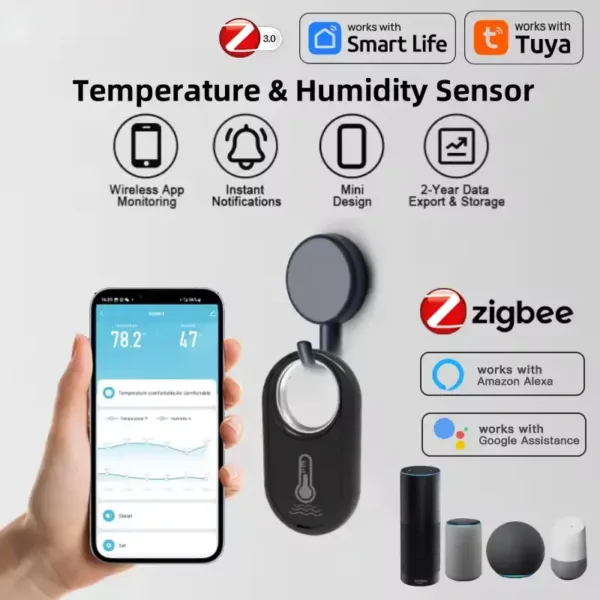 Tuya Zigbee Smart Temperature & Humidity Sensor
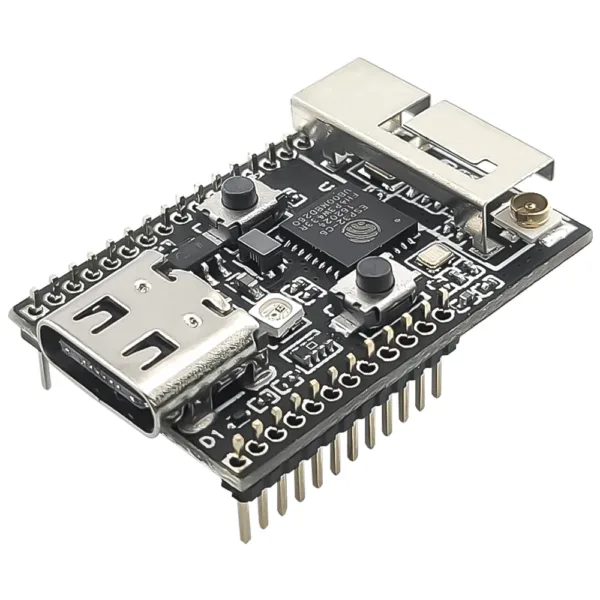 Wifi6 ESP32 C6 Development Board RISC-V 32-Bit ESP32-C6 N4 BT Wifi Module with Crystal Oscillator RGB LED 4MB FLASH USB Type-C
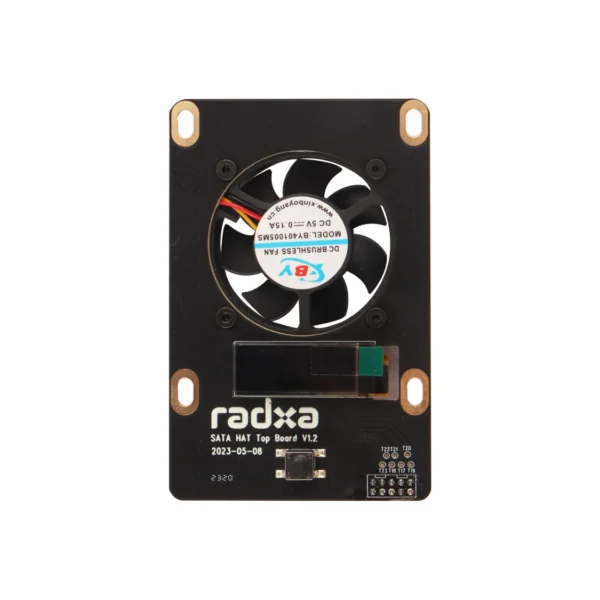 Radxa Penta SATA HAT Top Board, Designed for Radxa Penta SATA HAT
$16.90
Radxa Penta SATA HAT Top Board, Designed for Radxa Penta SATA HAT
$16.90
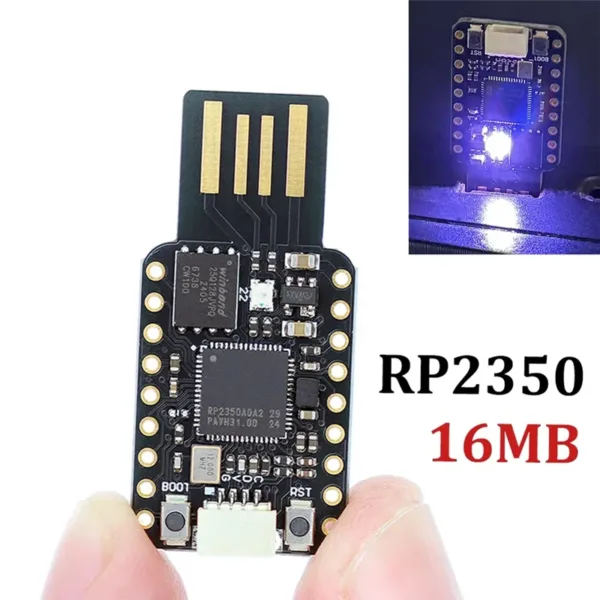 RP2350A Dual-Core Mini Development Board with 16MB Flash & USB for Raspberry Pi PICO2
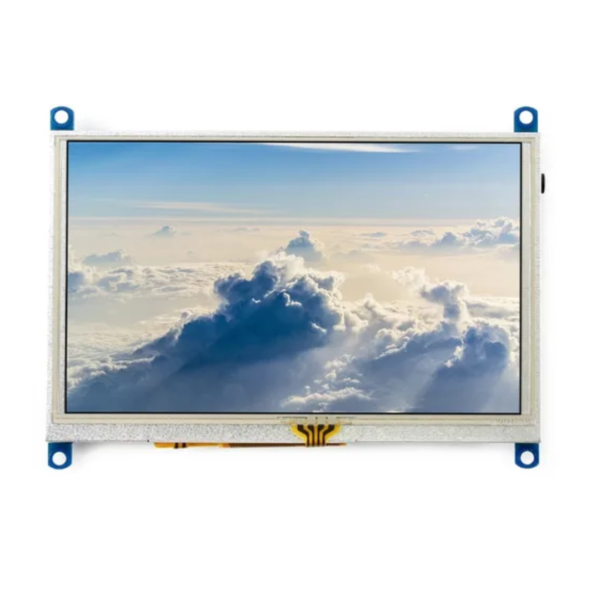 5inch Resistive Touch Screen LCD G 800x480 Display Computer Monitor Supports Raspberry Pi/BB Black/Banana Pi/Orange Pi
$49.80
5inch Resistive Touch Screen LCD G 800x480 Display Computer Monitor Supports Raspberry Pi/BB Black/Banana Pi/Orange Pi
$49.80
EMC testing is expensive, and failing it is worse than the test fee — it costs you a respin, a
We review a lot of boards — some designed in-house, some by other contractors, some by founders doing their own
When a battery-powered product dies too soon, the instinct is to blame the firmware. Surely there is a sleep mode
A wearable PCB is not just a small PCB. It is a board where every constraint that normally has some
The STM32 family is the workhorse of embedded hardware, and almost every project that uses one starts the same way:
The nRF52840 is one of the most popular BLE and multiprotocol chips in the world, and for good reason: it
No account yet?
Create an Account