EMC/EMI Checklist Before Your Board Goes to Certification
EMC testing is expensive, and failing it is worse than the test fee — it costs you a respin, a
The ESP32 microcontroller, developed by Espressif Systems, has fundamentally transformed the IoT prototyping landscape since its introduction. As a seasoned embedded systems developer with over a decade of experience transitioning from 8-bit microcontrollers to modern SoC platforms, I've witnessed firsthand how the ESP32 has lowered barriers to entry while expanding what's possible for hobbyists and professionals alike. This isn't just another technical tutorial—it's a curated pathway based on real implementation experience across hundreds of projects, from smart home devices to industrial sensors.
In this comprehensive guide, we'll leverage industry expertise and practical insights to navigate your ESP32 development journey efficiently. You'll gain not just theoretical knowledge, but actionable understanding grounded in real-world application and best practices recognized by the global developer community.
The ESP32 represents a sophisticated convergence of connectivity, processing power, and energy efficiency in an exceptionally cost-effective package. While specifications tell part of the story, practical implementation reveals why this platform has earned such widespread adoption:
Dual-Core Processing Power: The Xtensa® dual-core LX6 microprocessor (typically running at 240MHz) isn't just about raw speed—it enables sophisticated application architectures. In practice, I often dedicate one core to time-critical operations (like sensor polling or motor control) while the other handles connectivity (Wi-Fi/Bluetooth stacks) or user interface tasks. This architectural advantage fundamentally changes how you design responsive IoT systems compared to single-core predecessors.
Integrated Wireless Connectivity: The ESP32's 2.4 GHz Wi-Fi (802.11 b/g/n) with support for both station and access point modes enables direct integration into existing networks or creation of independent mesh networks. Complementing this, the dual Bluetooth capabilities (Classic and BLE 4.2) allow for flexible short-range communication with smartphones, peripherals, and beacons. From experience, the ability to seamlessly switch between these protocols based on context is a game-changer for dynamic IoT deployments.
Comprehensive Peripheral Suite: Beyond the standard GPIO, UART, SPI, and I²C interfaces, the ESP32 includes specialized capabilities:
18-channel 12-bit ADC for precise analog sensor measurements
2-channel 8-bit DAC for analog output
Capacitive touch sensors enabling innovative interface designs without mechanical components
Hall effect sensor for detecting magnetic fields (position sensing applications)
Advanced Power Management: The ESP32's various sleep modes (modem sleep, light sleep, deep sleep) enable battery-powered applications lasting months or even years. Practical tip: The ULP (Ultra Low Power) co-processor can perform simple tasks like reading sensors while the main cores sleep, dramatically extending operational life in field deployments I've designed.
While the ESP8266 pioneered accessible Wi-Fi microcontrollers, the ESP32 represents a substantial evolution. This comparison isn't merely academic—it directly impacts project feasibility and longevity:
Processing Architecture: The ESP32's dual-core design provides approximately 200% more processing power than the ESP8266's single core, with significantly more memory (520KB SRAM vs. 160KB). In practice, this means the ESP32 can comfortably handle secure TLS connections, complex sensor fusion algorithms, and local data processing that would overwhelm its predecessor.
Connectivity Options: The addition of Bluetooth 4.2 (both Classic and BLE) expands potential use cases dramatically. In my smart home installations, this enables temporary Bluetooth configuration interfaces while maintaining persistent Wi-Fi connectivity—a pattern impossible with ESP8266.
GPIO and Peripheral Expansion: With approximately 70% more usable GPIO pins and dedicated peripherals like touch sensors and hall effect sensors, the ESP32 reduces the need for external ICs in many designs, simplifying layouts and lowering total system cost in production scenarios.
Security Foundation: Built-in hardware acceleration for cryptographic operations (AES, SHA-2, RSA) enables practical implementation of secure communications without excessive performance penalties—a critical consideration for any device connecting to networks or cloud services.
The term "ESP32" refers both to the chip itself and the numerous development boards that package it with supporting circuitry. Based on extensive testing across multiple manufacturers and board revisions, here's my evidence-based approach to selection:
Regulatory Compliance and Certification: Authoritative boards should display FCC, CE, or other regional certifications. These indicate proper RF shielding and testing—non-certified boards may cause Wi-Fi interference or fail in production environments.
USB-to-Serial Implementation: The quality of the CP2102, CH340, or FTDI chip used significantly impacts programming reliability. Through troubleshooting hundreds of connectivity issues, I've found genuine CP2102 chips provide the most stable experience across operating systems.
Power Circuitry Design: Look for boards with robust voltage regulation (AMS1117 or better) and proper decoupling capacitors. Inferior designs cause random resets when powering external components—a frustrating issue avoided with quality boards.
Pin Access and Documentation: The best boards provide clearly labeled pins and comprehensive documentation showing alternate functions and limitations. The ESP32 DEVKIT DOIT V1 remains my top recommendation for beginners due to its balanced design and extensive community knowledge base.
| Board Model | Best For | Key Advantages | Considerations |
|---|---|---|---|
| ESP32 DEVKIT DOIT V1 | General beginners | Excellent pin access, reliable USB-serial, extensive tutorials | Larger footprint than some alternatives |
| ESP32-PICO-KIT | Space-constrained projects | Extremely compact, includes ceramic antenna | Limited GPIO breakout, requires adapter for breadboarding |
| ESP32-CAM | Video/imaging applications | Integrated camera, microSD slot, compact design | Limited GPIO availability, specialized use case |
| TTGO T-Display | Projects needing UI | Integrated ST7789 display (1.14"), retains most GPIO | Slightly higher cost, specific pin mapping |
| Adafruit HUZZAH32 | Battery-powered applications | Built-in LiPo charging, power management, Feather compatibility | Premium price point, Adafruit ecosystem focus |
Professional Recommendation: For your first ESP32 board, invest in the ESP32 DEVKIT DOIT variant with 36 or 38 pins. Its balance of accessibility, reliability, and community support provides the most frictionless learning experience while remaining capable for serious projects.
The ESP32's GPIO multiplexing offers remarkable flexibility but requires deliberate planning. Based on designing numerous production systems, here's my methodological approach:
Default State Awareness: Many pins have predefined states at boot that impact connected peripherals. For instance, GPIOs 6-11 are typically connected to internal flash memory—using these for other purposes can crash your system. Always consult the official ESP32 datasheet before finalizing pin assignments.
Analog Capability Planning: While the ESP32 supports ADC on 18 channels, note that only ADC2 channels conflict with Wi-Fi operations. For reliable analog readings during Wi-Fi activity, dedicate ADC1 channels (GPIO32-39) to your sensors.
Special-Function Pins: Certain pins serve critical purposes:
GPIO0 determines boot mode (pulled low for programming)
GPIO2 often connects to onboard LEDs
GPIO34-39 are input-only (cannot output signals)
GPIO16-17 connect to internal PSRAM in some modules
Noise Reduction Techniques: ESP32 ADCs can exhibit noise, particularly when Wi-Fi is active. Implementing hardware filtering (RC circuits) and software averaging significantly improves measurement stability in my environmental monitoring deployments.
The ESP32's 3.3V operation requires careful power planning:
The onboard regulator typically handles 500mA—adequate for the ESP32 itself but insufficient for multiple external components
For power-hungry peripherals (displays, motors, multiple sensors), use external 3.3V regulators fed from VIN (5V) or a dedicated power source
Implement decoupling capacitors (100nF ceramic + 10μF electrolytic) near the ESP32's power pins to stabilize voltage during RF transmission bursts
While the basic Arduino IDE setup is well-documented, these professional practices reduce friction and improve productivity:
Board Manager Installation: Add https://espressif.github.io/arduino-esp32/package_esp32_index.json to your Additional Boards Manager URLs. This official repository ensures you receive tested, stable releases rather than community forks with potential inconsistencies.
Driver Installation Verification: After installing CP210x or CH340 drivers, verify the COM port assignment in Device Manager (Windows) or via ls /dev/cu.* (macOS). Many "board not detected" issues stem from driver conflicts or incorrect port selection.
Optimized IDE Configuration:
Increase compile speed by setting "Show verbose output during: compilation" in Preferences
Enable "Compiler warnings: All" to catch subtle code issues early
Adjust the "Code complete delay" to 0 for more responsive autocomplete
Initial Test Protocol: Upload the "Blink" example but modify the LED pin to match your board (typically GPIO2). This validates the entire toolchain—drivers, board selection, USB connection, and upload process—before introducing code complexity.
While Arduino IDE serves beginners well, progressing to more capable environments improves productivity for complex projects:
PlatformIO with VSCode: This professional-grade ecosystem offers superior dependency management, built-in serial monitoring, and project organization. The transition curve pays dividends once projects exceed simple scripts.
ESP-IDF (Official Framework): For production systems, Espressif's official IoT Development Framework provides maximum control and optimization. Begin exploring this once comfortable with core ESP32 concepts—the learning investment unlocks advanced features like over-the-air updates and power optimization.
MicroPython for Rapid Prototyping: Ideal for proof-of-concepts and educational contexts, MicroPython enables rapid iteration at the expense of some performance and memory efficiency.
Day 1-2: Hardware familiarization and IDE setup
Day 3-4: Digital I/O (buttons, LEDs, basic GPIO control)
Day 5-7: Wi-Fi connectivity (STA and AP modes), basic web server
Day 8-10: Analog sensors (temperature, light, potentiometers)
Day 11-12: I²C/SPI peripherals (displays, environmental sensors)
Day 13-14: Data logging (SD card, SPIFFS, cloud integration)
Day 15-16: Bluetooth/BLE implementation
Day 17-18: Power management and sleep modes
Day 19-21: Project integration combining multiple elements
Based on supporting hundreds of developers through common pitfalls:
Upload Failures: Ensure GPIO0 is grounded during upload (some boards automate this), check USB cable quality (data cables vs. charge-only cables), and verify driver installation.
Wi-Fi Connection Issues: The ESP32's antenna design is polarization-sensitive. Position the board with the PCB antenna (typically the zigzag trace) perpendicular to your router's antennas for optimal signal strength.
ADC Inaccuracy: Implement oversampling and averaging in software, avoid taking measurements during Wi-Fi transmission bursts, and ensure stable 3.3V reference voltage.
Random Resets: This typically indicates insufficient power delivery or electrical noise. Add bulk capacitance (100-470μF) near the board's power input, ensure stable 5V USB power, and check for wiring shorts.
After mastering the fundamentals, consider these specialized development trajectories:
Low-Power Design: Implement deep sleep with ULP co-processor wake triggers for battery applications lasting years
Secure Communications: Leverage hardware cryptography for TLS/SSL connections to AWS IoT, Google Cloud IoT, or private MQTT brokers
Real-Time Applications: Utilize FreeRTOS (built into ESP-IDF) for task scheduling, queues, and semaphores in complex systems
Custom PCB Design: Transition from development boards to custom designs using ESP32 modules like ESP32-WROOM or ESP32-PICO-D4
For authoritative reference beyond this guide:
Official Documentation: Espressif ESP32 Technical Reference Manual
Community Support: ESP32 Forum for peer troubleshooting
The ESP32 represents one of the most capable platforms in the history of embedded development, democratizing professional-grade IoT implementation. By approaching your learning journey with this structured, experience-based methodology, you'll avoid common pitfalls while building transferable skills applicable across the embedded systems landscape. The initial investment in proper setup and fundamental understanding pays exponential dividends as your projects increase in sophistication.
What specific application are you planning to build with your ESP32? Share your project goals in the comments below for personalized implementation advice from our community of experienced developers.
======================================
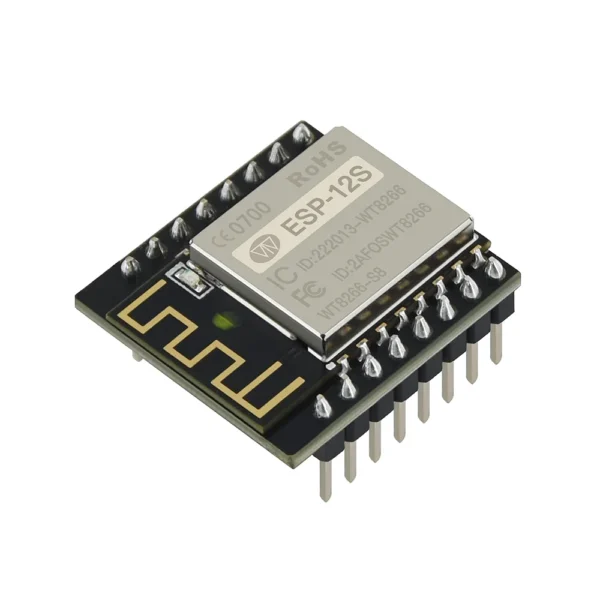 3D Printer Parts WIFI Module MKS Robin Wifi V1.1 Remote Control Wireless Router ESP8266 For MKS Robin Mainboard
$8.70
3D Printer Parts WIFI Module MKS Robin Wifi V1.1 Remote Control Wireless Router ESP8266 For MKS Robin Mainboard
$8.70
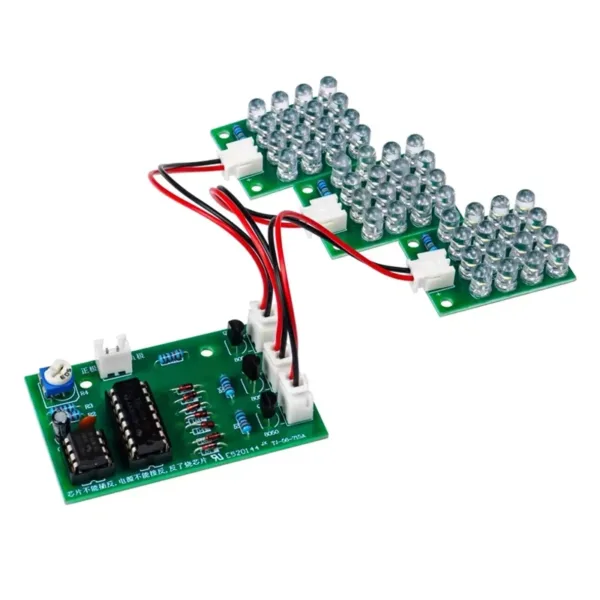 DIY Electronic Welding Practice Kit NE555 Red, White And Blue Flash LED Alarm Light Strobe Module Production Design Kit
$6.90
DIY Electronic Welding Practice Kit NE555 Red, White And Blue Flash LED Alarm Light Strobe Module Production Design Kit
$6.90
 RP2350 2.8inch Round Display Development Board, 480×480, Based On The Raspberry Pi RP2350B Dual-core & Dual-architecture Microco
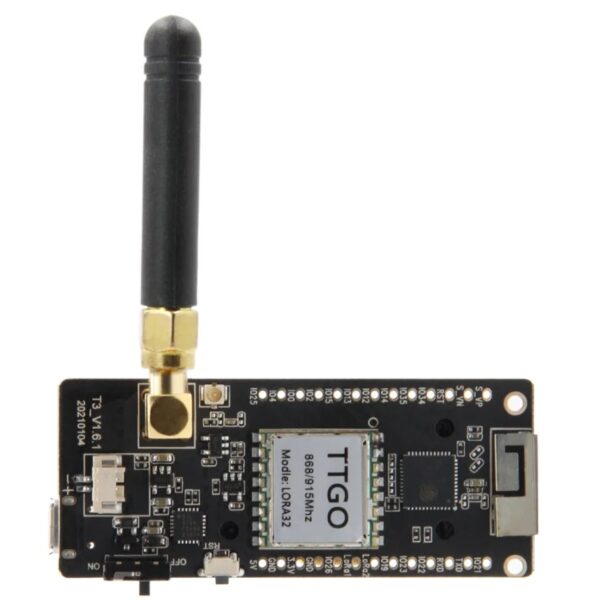 LoRa32 V2.1_1.6 Version 433/868/915Mhz ESP32 LoRa OLED 0.96 Inch SD Card Bluetooth WIFI Wireless Module ESP-32 SMA
$24.90
LoRa32 V2.1_1.6 Version 433/868/915Mhz ESP32 LoRa OLED 0.96 Inch SD Card Bluetooth WIFI Wireless Module ESP-32 SMA
$24.90
 5.79 Inch Four-Color E-Ink Long Strip Screen 792x272 E-Paper Display
$21.90 – $42.90Price range: $21.90 through $42.90
5.79 Inch Four-Color E-Ink Long Strip Screen 792x272 E-Paper Display
$21.90 – $42.90Price range: $21.90 through $42.90
EMC testing is expensive, and failing it is worse than the test fee — it costs you a respin, a
We review a lot of boards — some designed in-house, some by other contractors, some by founders doing their own
When a battery-powered product dies too soon, the instinct is to blame the firmware. Surely there is a sleep mode
A wearable PCB is not just a small PCB. It is a board where every constraint that normally has some
The STM32 family is the workhorse of embedded hardware, and almost every project that uses one starts the same way:
The nRF52840 is one of the most popular BLE and multiprotocol chips in the world, and for good reason: it
No account yet?
Create an Account