EMC/EMI Checklist Before Your Board Goes to Certification
EMC testing is expensive, and failing it is worse than the test fee — it costs you a respin, a
When embarking on a smart project, the choice between the ESP32 S2 vs S3 can significantly impact performance, connectivity, and capabilities. Both variants from Espressif Systems are designed to cater to the rising demand for IoT devices, but understanding their differences is crucial for making an informed decision. In this article, we will delve into the key specifications and features of each of these chips, ultimately guiding you through the ESP32 variants comparison.
The ESP32 S2 and S3 are part of Espressif's broader ESP32 family, which has been a favorite among hobbyists and developers for its versatility and performance. The S2 was launched as an upgrade to the original ESP32, focusing on enhancing connectivity and performance while keeping costs low. Conversely, the S3 is designed for advanced applications, integrating enhanced AI capabilities directly on the chip.
When it comes to processing power, the ESP32 S2 features a single-core Xtensa processor with a clock speed of up to 240 MHz. It is suitable for applications requiring decent performance without severe demands on power consumption.
The ESP32 S3, on the other hand, boasts a dual-core Xtensa processor, allowing it to handle more complex tasks and perform better in multi-threaded scenarios. This is particularly advantageous for projects that require more intensive processing, such as machine learning algorithms or high-resolution graphic displays.
Another critical factor in the ESP32 variants comparison is memory. The S2 typically comes with 320 KB of SRAM and supports external memory (up to 16 MB via SPI). This is ample for lightweight applications and simple IoT tasks.
In contrast, the S3 enhances this with 512 KB of SRAM, allowing for more extensive application code and data storage. For developers focusing on advanced AI functionalities, the additional memory can significantly improve the performance and capability of applications.
Both ESP32 variants are equipped with Wi-Fi and Bluetooth capabilities, essential for most smart applications. However, the S3 introduces Bluetooth 5.0 support, including improved range and speed compared to the Bluetooth 4.2 found in the S2. This upgrade can be crucial for applications where device interconnectivity and communication latency are critical.
Additionally, when we consider IO options, both chips offer a decent number of GPIOs. However, the S3 includes support for more specialized peripherals, such as a camera interface and various audio output options, making it more versatile for multimedia-related tasks.
One of the standout differences in the ESP32 S2 vs S3 comparison is the emphasis on artificial intelligence in the S3 variant. The S3 has specific hardware acceleration for AI tasks, including vector instructions designed for neural network operations. This inclusion enables developers to implement machine learning models more efficiently, making the S3 an excellent choice for sophisticated applications requiring real-time data processing, such as image recognition or anomaly detection.
Power consumption is another essential aspect for many developers, particularly those creating battery-operated devices. The S2 excels in low-power consumption modes, making it ideal for battery-sensitive applications. The S3, while still power-efficient, demands more power under heavy loads due to its enhanced capabilities.
When it comes to ESP32 chip selection, it ultimately boils down to the specific requirements of your project. For basic IoT applications such as smart sensors or simple home automation systems, the ESP32 S2 should suffice, offering a balance of performance, capabilities, and power consumption at a lower cost.
On the other hand, if your project requires advanced processing, machine learning, or multimedia handling, opting for the ESP32 S3 would be beneficial. Its capabilities in AI, dual-core processing, and enhanced memory make it the premier choice for next-generation smart solutions.
In summary, the ESP32 S2 vs S3 comparison reveals that while both variants are built for today's smart projects, they cater to different needs and complexities. Recognizing the distinctions—be it processing power, memory capacity, or AI capabilities—can greatly optimize your development efforts. Whether you opt for the economically efficient S2 or the high-performance S3, both chips hold the potential to turn innovative ideas into reality. As IoT continues to evolve, understanding these variations ensures that your projects are not only functional but also future-proof.
======================================
 10.1inch Capacitive Touch Display for Raspberry Pi/Jetson Nano/PC, 10-Point, 1280×800 HDMI, Full Color
$74.90
10.1inch Capacitive Touch Display for Raspberry Pi/Jetson Nano/PC, 10-Point, 1280×800 HDMI, Full Color
$74.90
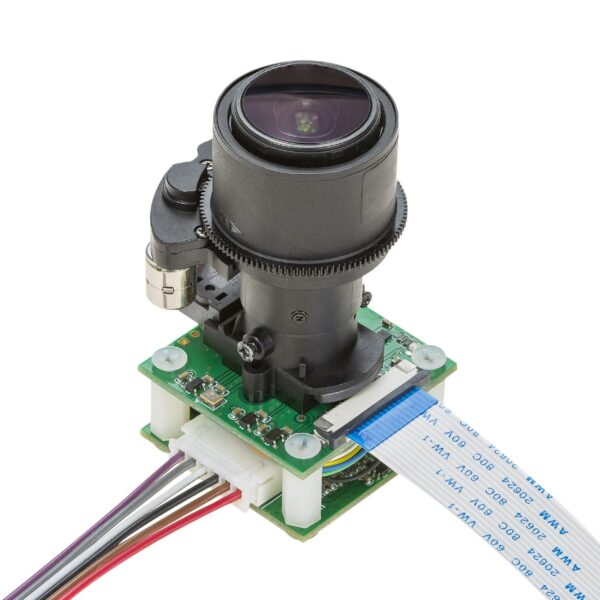 Arducam 5MP 1080p Pan Tilt Zoom PTZ Camera for Raspberry Pi 4/3B+/3
$139.60
Arducam 5MP 1080p Pan Tilt Zoom PTZ Camera for Raspberry Pi 4/3B+/3
$139.60
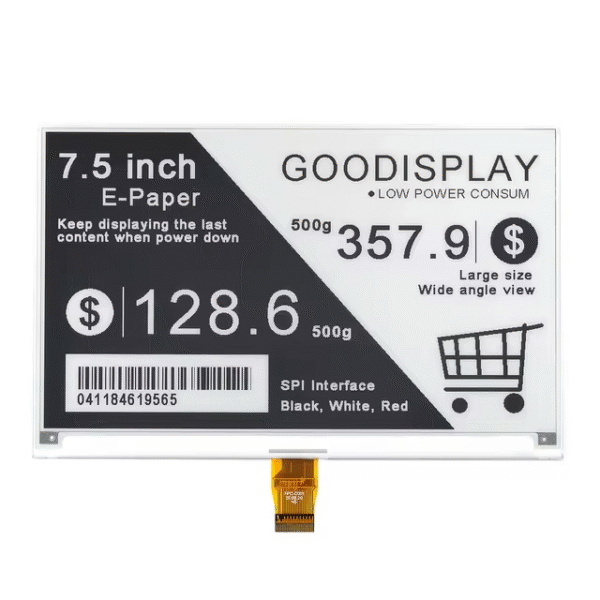 7.5 inch E-Paper Screen Module 4-Grayscale 800x480 E-Ink Display HAT 1.5s Fast Refresh SPI Interface
$45.90 – $66.80Price range: $45.90 through $66.80
7.5 inch E-Paper Screen Module 4-Grayscale 800x480 E-Ink Display HAT 1.5s Fast Refresh SPI Interface
$45.90 – $66.80Price range: $45.90 through $66.80
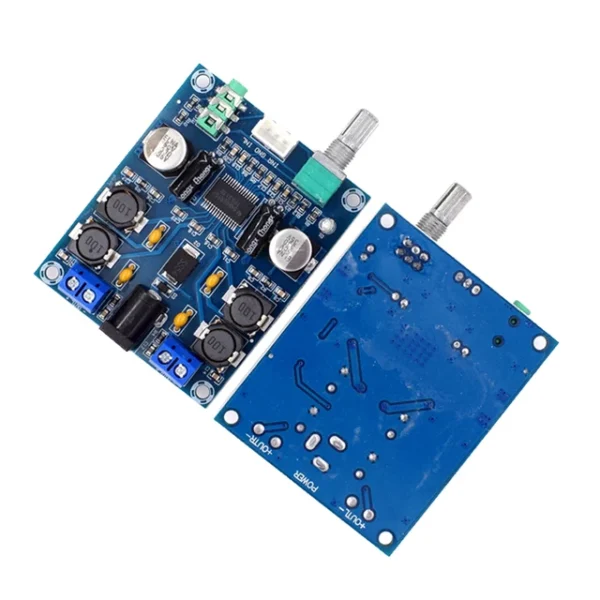 TPA3118D2 Digital Amplifier Bboard High-definition Version Audio Power Amplifier Board Output 45W * 2
$5.90
TPA3118D2 Digital Amplifier Bboard High-definition Version Audio Power Amplifier Board Output 45W * 2
$5.90
 CH32V003 Development Board Kit CH32V003/CH32V203 Evaluation Board WCH QingKe RISC Learning Kit
$5.90 – $10.90Price range: $5.90 through $10.90
CH32V003 Development Board Kit CH32V003/CH32V203 Evaluation Board WCH QingKe RISC Learning Kit
$5.90 – $10.90Price range: $5.90 through $10.90
EMC testing is expensive, and failing it is worse than the test fee — it costs you a respin, a
We review a lot of boards — some designed in-house, some by other contractors, some by founders doing their own
When a battery-powered product dies too soon, the instinct is to blame the firmware. Surely there is a sleep mode
A wearable PCB is not just a small PCB. It is a board where every constraint that normally has some
The STM32 family is the workhorse of embedded hardware, and almost every project that uses one starts the same way:
The nRF52840 is one of the most popular BLE and multiprotocol chips in the world, and for good reason: it
No account yet?
Create an Account