
EMC/EMI Checklist Before Your Board Goes to Certification
EMC testing is expensive, and failing it is worse than the test fee — it costs you a respin, a
ESP32 to ESP32 over WiFi can be made remarkably efficient through the use of ESP-NOW, a wireless communication protocol developed by Espressif Systems. Designed to enable robust and low-latency communication between ESP32 devices, ESP-NOW facilitates a seamless mesh-like network that supports multiple nodes. This has proven to be an invaluable tool for a wide range of applications, from IoT devices to remote sensors.
ESP-NOW is a wireless communication protocol that allows multiple ESP32 devices to exchange data directly without the need for a central WiFi network or router. This protocol operates on the 2.4 GHz frequency, allowing devices to communicate over relatively long distances with minimal power consumption.
Key features of ESP-NOW include:
- Low Power Consumption: Ideal for battery-powered devices.
- Low Latency: Faster than traditional WiFi, reducing the delay in data transmission.
- Scalability: Multiple devices can be interconnected, forming a mesh network.
Before diving into coding, ensure you have the necessary hardware and software. You'll need at least two ESP32 modules and the Arduino IDE installed on your computer.
1. Install ESP32 Board in Arduino IDE:
- Open Arduino IDE and go to File > Preferences.
- Enter `https://dl.espressif.com/dl/package_esp32_index.json` in the "Additional Board Manager URLs" field.
- Go to Tools > Board > Boards Manager and install the "ESP32" package.
2. Connect ESP32 Devices:
- Use USB cables to connect each ESP32 module to your computer.
- Select the correct port and board from the Tools menu in Arduino IDE.
Let’s set up a basic project where one ESP32 acts as a transmitter and another as a receiver. The transmitter will send a simple message to the receiver using ESP-NOW.
Start by programming the ESP32 that will send the data:
```cpp
#include
#include
// MAC address of the receiver
uint8_t broadcastAddress[] = {/ insert MAC address here /};
void setup() {
Serial.begin(115200);
WiFi.mode(WIFI_STA);
if (esp_now_init() != ESP_OK) {
Serial.println("Error initializing ESP-NOW");
return;
}
esp_now_peer_info_t peerInfo;
memcpy(peerInfo.peer_addr, broadcastAddress, 6);
peerInfo.channel = 0;
peerInfo.encrypt = false;
if (esp_now_add_peer(&peerInfo) != ESP_OK) {
Serial.println("Failed to add peer");
return;
}
}
void sendData() {
const char message = "Hello ESP-NOW!";
esp_now_send(broadcastAddress, (uint8_t )message, strlen(message));
}
void loop() {
sendData();
delay(2000);
}
```
Next, set up the ESP32 that will receive the data:
```cpp
#include
#include
void setup() {
Serial.begin(115200);
WiFi.mode(WIFI_STA);
if (esp_now_init() != ESP_OK) {
Serial.println("Error initializing ESP-NOW");
return;
}
esp_now_register_recv_cb(onReceive);
}
void onReceive(const uint8_t mac_addr, const uint8_t data, int data_len) {
Serial.print("Received Data: ");
Serial.println((char *)data);
}
void loop() {
// No code required here
}
```
- Direct Communication: Bypasses the need for a central router, facilitating more straightforward setups.
- Battery Efficiency: With lower power requirements, ESP-NOW is suitable for IoT devices where battery life is crucial.
- Flexible Topology: Supports communication in star, peer-to-peer, or mesh network configurations.
ESP-NOW has opened pathways to innovative applications such as:
- Home Automation: Wirelessly control lights, appliances, and thermostats.
- Remote Sensing: Deploy sensors in agriculture, monitoring environmental conditions.
- Security Systems: Create robust, scalable networks for alarms and surveillance.
Embarking on an ESP-NOW project allows developers to explore the full potential of ESP32 devices. By mastering this communication protocol, you can craft sophisticated, wireless networks that are energy-efficient and highly responsive. This ESP-NOW tutorial provides a foundational understanding, enabling you to develop solutions tailored to a diverse set of needs. Whether you're automating your home or setting up remote sensors, ESP-NOW offers a flexible and reliable platform.
======================================
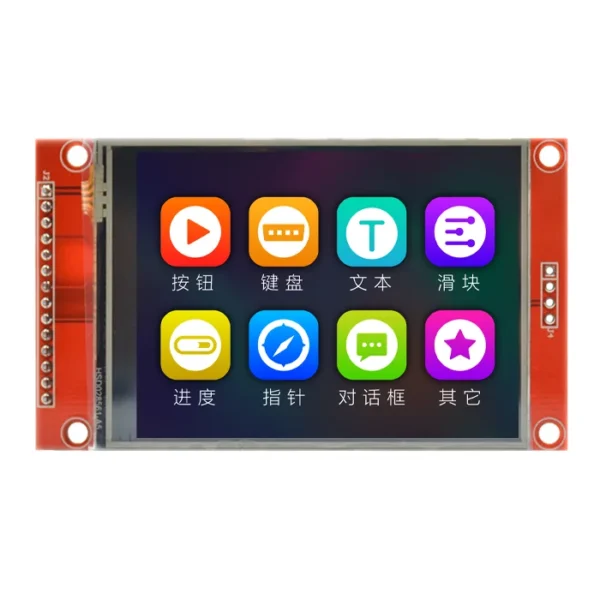 Factory Orginal 2.8" 240*320 ILI9341 Smart Display Screen 2.8inch SPI LCD TFT Module With/Without Touch TFT display
$6.90 – $7.90Price range: $6.90 through $7.90
Factory Orginal 2.8" 240*320 ILI9341 Smart Display Screen 2.8inch SPI LCD TFT Module With/Without Touch TFT display
$6.90 – $7.90Price range: $6.90 through $7.90
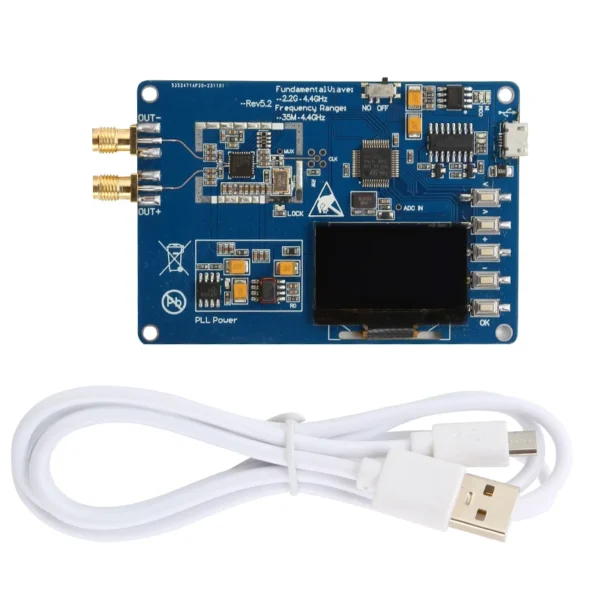 35MHz-4400MHz RF Signal Generator ADF4351 Module Sweep Frequency Generator PLL With OLED Display
$53.90
35MHz-4400MHz RF Signal Generator ADF4351 Module Sweep Frequency Generator PLL With OLED Display
$53.90
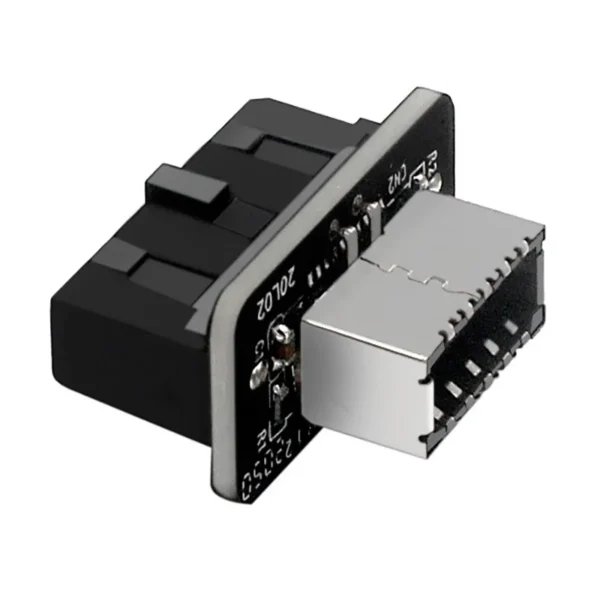 PH73S Motherboard USB3.019P/20P To Type-E 90 Degree Adapter Chassis Front Type-C Plug-In Port
$2.70
PH73S Motherboard USB3.019P/20P To Type-E 90 Degree Adapter Chassis Front Type-C Plug-In Port
$2.70
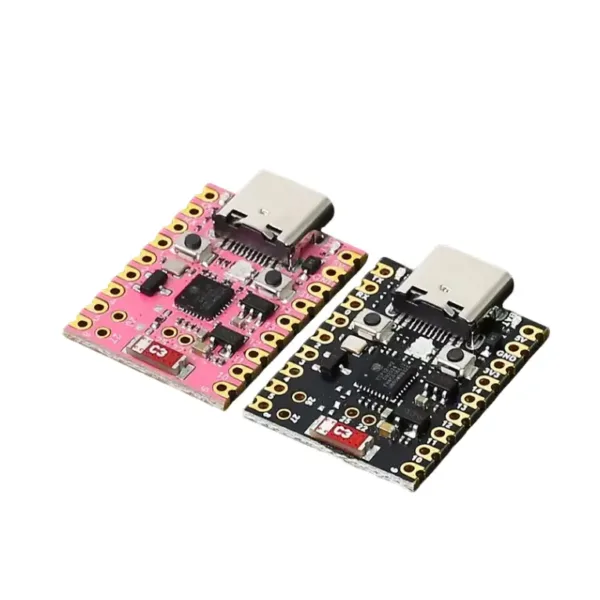 ESP32-H2 Supermini Development Board
 Grove PN532 NFC Module WIth NFC Antenna 13.56MHz Contactless Communication Support ISO14443 Type A and Type B protocols I2C UART
$34.90
Grove PN532 NFC Module WIth NFC Antenna 13.56MHz Contactless Communication Support ISO14443 Type A and Type B protocols I2C UART
$34.90
EMC testing is expensive, and failing it is worse than the test fee — it costs you a respin, a
We review a lot of boards — some designed in-house, some by other contractors, some by founders doing their own
When a battery-powered product dies too soon, the instinct is to blame the firmware. Surely there is a sleep mode
A wearable PCB is not just a small PCB. It is a board where every constraint that normally has some
The STM32 family is the workhorse of embedded hardware, and almost every project that uses one starts the same way:
The nRF52840 is one of the most popular BLE and multiprotocol chips in the world, and for good reason: it
No account yet?
Create an Account