
EMC/EMI Checklist Before Your Board Goes to Certification
EMC testing is expensive, and failing it is worse than the test fee — it costs you a respin, a
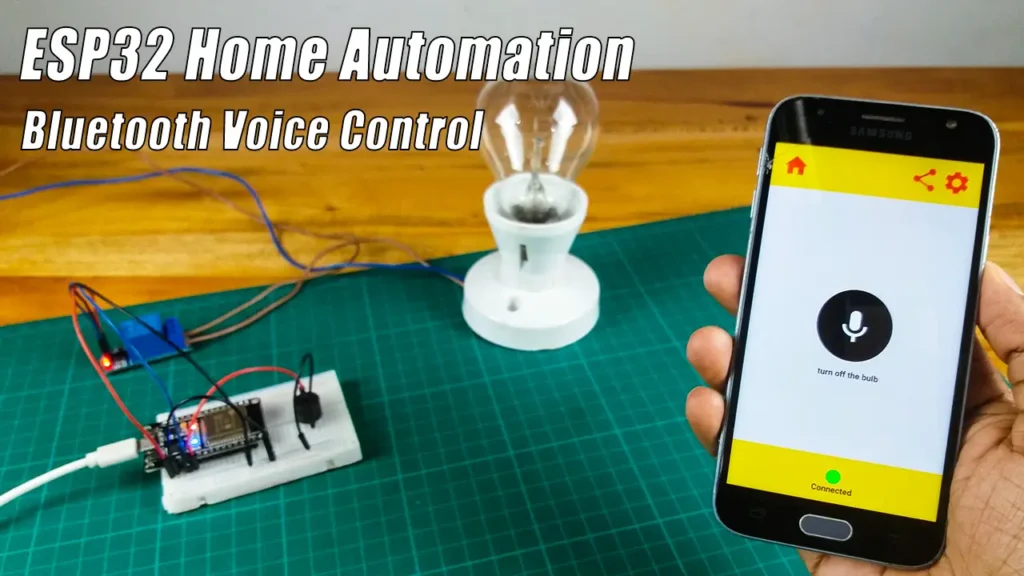 Tired of fumbling for switches or digging out your phone? Imagine controlling lights, fans, or even your coffee maker with just your voice. Thanks to the powerful and affordable ESP32 microcontroller, building your own voice-controlled home automation system is not just possible – it’s incredibly accessible for makers of all levels.
The ESP32 isn't just another microcontroller; it's packed with features tailor-made for smart home projects:
Dual-Core Power: Effortlessly handles voice processing tasks while managing device control.
Wi-Fi & Bluetooth Built-in: Seamlessly connects to your home network and integrates with platforms like IFTTT or MQTT brokers.
Rich Peripherals: Plentiful GPIO pins for connecting relays, sensors, LEDs, and more.
Low Cost, High Value: Delivers incredible capability without breaking the bank.
While the ESP32 can do basic on-device speech recognition for simple commands ("on", "off", "light"), its real power shines when paired with cloud services or dedicated speech recognition chips for natural language understanding:
Capture: An external microphone module (like the INMP441 or MAX9814) captures your voice command.
Process (Option A - Cloud Power): The ESP32 sends the audio snippet securely to a powerful cloud service like Google Cloud Speech-to-Text, Amazon Transcribe, or Wit.ai. These services convert your speech into text with high accuracy.
Process (Option B - On-Device): For simpler setups, libraries like Voice Recognition Module V3 (requires a specific module) or ESP-SR (Espressif's own Speech Recognition framework - check compatibility) can handle basic commands directly on the ESP32, ideal for "light on" / "light off".
Interpret & Act: The ESP32 receives the text command (from cloud) or recognizes the keyword (on-device). Your code parses this command ("turn on bedroom light") and triggers the appropriate action via GPIO (e.g., activating a relay controlling a lamp).
Feedback (Optional): Add an LED or small speaker for audible/visual confirmation ("OK, turning on light").
ESP32 Board: (e.g., ESP32 DevKit C, NodeMCU-32S, ESP32-S3 for enhanced AI capabilities).
Microphone Module: Electret mic with amplifier (MAX9814) or digital I2S mic (INMP441, SPH0645LM4H).
Relay Module: To safely switch higher-voltage AC devices (ensure proper safety precautions!).
Jumper Wires & Breadboard (or PCB): For prototyping.
Power Supplies: Appropriate 5V/3.3V for ESP32 and relays.
(Optional): Basic sensors (motion, temperature), LEDs for status, enclosures.
Voice-Activated Lighting: Control lamps or overhead lights in any room. "ESP32, lights on!"
Smart Fan/Appliance Control: Turn fans, heaters, or coffee makers on/off hands-free. "Turn on the living room fan."
Voice-Controlled Blinds/Curtains: Integrate servo motors or DC motors. "Open the bedroom blinds."
Multi-Device Scene Control: Create voice-activated scenes. "Movie mode" dims lights and turns on the TV (via IR blaster).
Voice Query Sensors: Ask for status updates. "What's the living room temperature?" (Requires sensor and text-to-speech synthesis).
Microphone Quality & Placement: Crucial for accurate pickup. Shield from noise if possible. Experiment with gain settings.
Wake Word vs. Continuous Listening: Using a wake word ("Hey ESP32") conserves power and avoids false triggers compared to always listening for any command.
Network Stability: Cloud-based solutions require a reliable Wi-Fi connection.
Security: If using cloud services, handle API keys securely. Never hardcode them! Consider MQTT over TLS for device communication. For purely local on-device recognition, security concerns are minimized.
Start Simple: Begin with one device and one command ("on"/"off"). Successfully deploy this before adding complexity.
Leverage Existing Libraries: Use well-supported libraries for Wi-Fi, MQTT (PubSubClient), HTTP clients, and specific speech recognition modules to save time.
Power Management: Essential for battery-operated devices. Utilize the ESP32's deep sleep capabilities, waking only upon detecting sound (using the microphone's output or an external circuit).
Integrate with MQTT: Make your voice commands control other smart devices on your home network (e.g., other ESPs, Raspberry Pi projects).
Add Local Feedback: Use a small OLED display or NeoPixel LEDs to show command status or sensor readings.
Combine with Automation: Trigger voice-controlled actions based on sensors (e.g., motion detection turns on lights, then voice controls them off).
Building your own ESP32 voice controller isn't just about the end result; it's about empowerment, customization, and learning. You own the hardware, control the data flow (especially with on-device options), and tailor it exactly to your needs and preferences – something off-the-shelf solutions often can't match.
The ESP32 democratizes voice control. With its power, connectivity, and vast community support, creating responsive and useful voice-activated automations is within your reach. Grab your ESP32 board, a microphone, and start coding your way to a truly hands-free smart home experience.
What's the first device YOU want to control with your voice? Share your project ideas in the comments below!
======================================
No account yet?
Create an Account